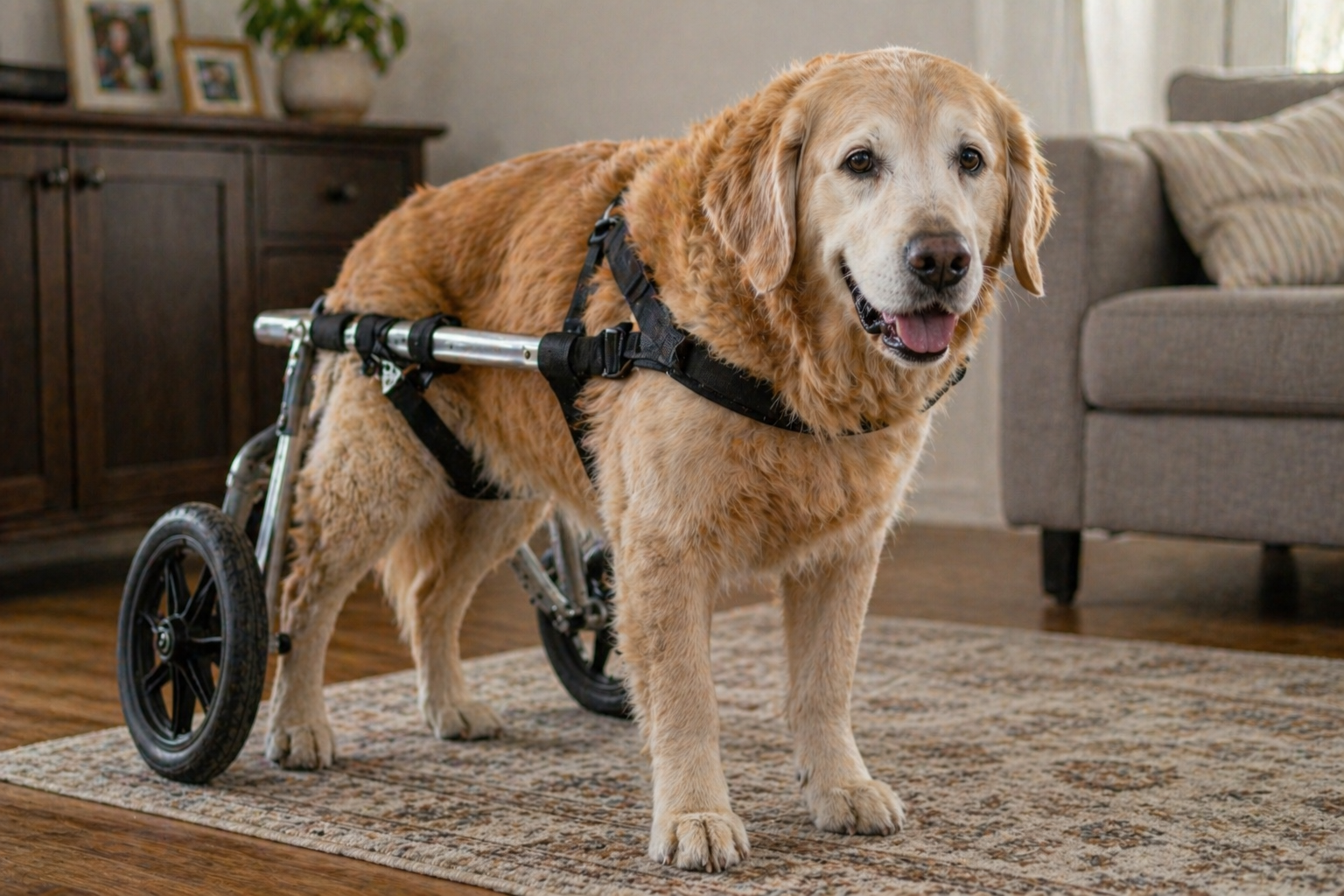
The best mobility aids for senior dogs are not the ones with the most reviews. They are the ones that match where your specific dog is struggling. A rear support harness helps a dog with weak hind legs. A ramp helps a dog that can still walk but cannot jump. An orthopedic bed helps a dog that moves fine during the day but wakes up stiff every morning. Choosing the wrong category produces no result, no matter how good the product.
This guide covers every major category of mobility aid, what each one addresses, and when it becomes the right choice. Each section links to a dedicated article with product recommendations and buying advice.
Table of Contents
Why Mobility Declines in Senior Dogs
Mobility loss in older dogs is rarely a single event. It develops gradually across several interconnected processes, and understanding which one is driving the problem determines which aid will actually help.
Osteoarthritis is the most common cause. Cartilage in the joints breaks down over time, causing pain, stiffness, and reduced range of motion. Research consistently shows that up to 80% of dogs over age eight have some degree of osteoarthritis, many of them without owners realising it because dogs are skilled at masking pain. The first visible signs are often subtle: slower to rise in the morning, hesitation at the bottom of stairs, shorter walks with less enthusiasm.
Muscle atrophy compounds the joint problem. Senior dogs lose lean muscle mass more easily than younger dogs, and that muscle loss reduces the stability and cushioning around the joints. A dog losing muscle in the hindquarters looks like a dog that is aging normally until the weakness becomes functionally limiting.
Degenerative myelopathy affects the spinal cord and produces progressive hind leg weakness that is neurological rather than joint-related. It is more common in German Shepherds, Corgis, and Boxers. The distinction matters because the management approach is different from arthritis: mobility aids that support hind leg function are essential, but the underlying condition does not respond to joint supplements.
Hip dysplasia, intervertebral disc disease, and vestibular disease each produce their own pattern of mobility decline. The common thread is that the right aid depends on correctly identifying where the problem is originating, which is why a veterinary assessment before investing in mobility equipment is worth doing.
Signs Your Senior Dog Needs a Mobility Aid
Most dogs show signs of mobility decline well before owners act on them. Catching the signals early means starting support before the dog has compensated in ways that create secondary problems.
Stiffness after rest that improves with movement is one of the earliest signs. A dog that struggles to rise but moves more freely after five minutes of walking has joint pain that warms up. This pattern is characteristic of osteoarthritis and is a clear signal that joint support, whether through supplements, an orthopedic bed, or a harness for rising, is worth starting.
Hesitation at stairs, reluctance to jump into the car, or avoiding furniture the dog previously used without thought all indicate that specific movements have become painful or uncertain. These are the situations where ramps and steps produce the most immediate improvement because they remove the movement that is causing the problem rather than managing it after the fact.
Hind legs slipping on smooth floors is a sign of either reduced muscle strength, reduced proprioception, or both. Grip socks or non-slip mats address the immediate safety issue. A harness addresses the underlying stability problem on walks.
Visible muscle loss along the spine and hindquarters, a sunken appearance above the hips, or a dog that stands with its hind legs closer together than before are signs of muscle atrophy that indicate the mobility decline is more advanced. At this stage a full support harness rather than a rear sling is often the more appropriate choice.
The Main Categories of Mobility Aids
Support Harnesses and Slings
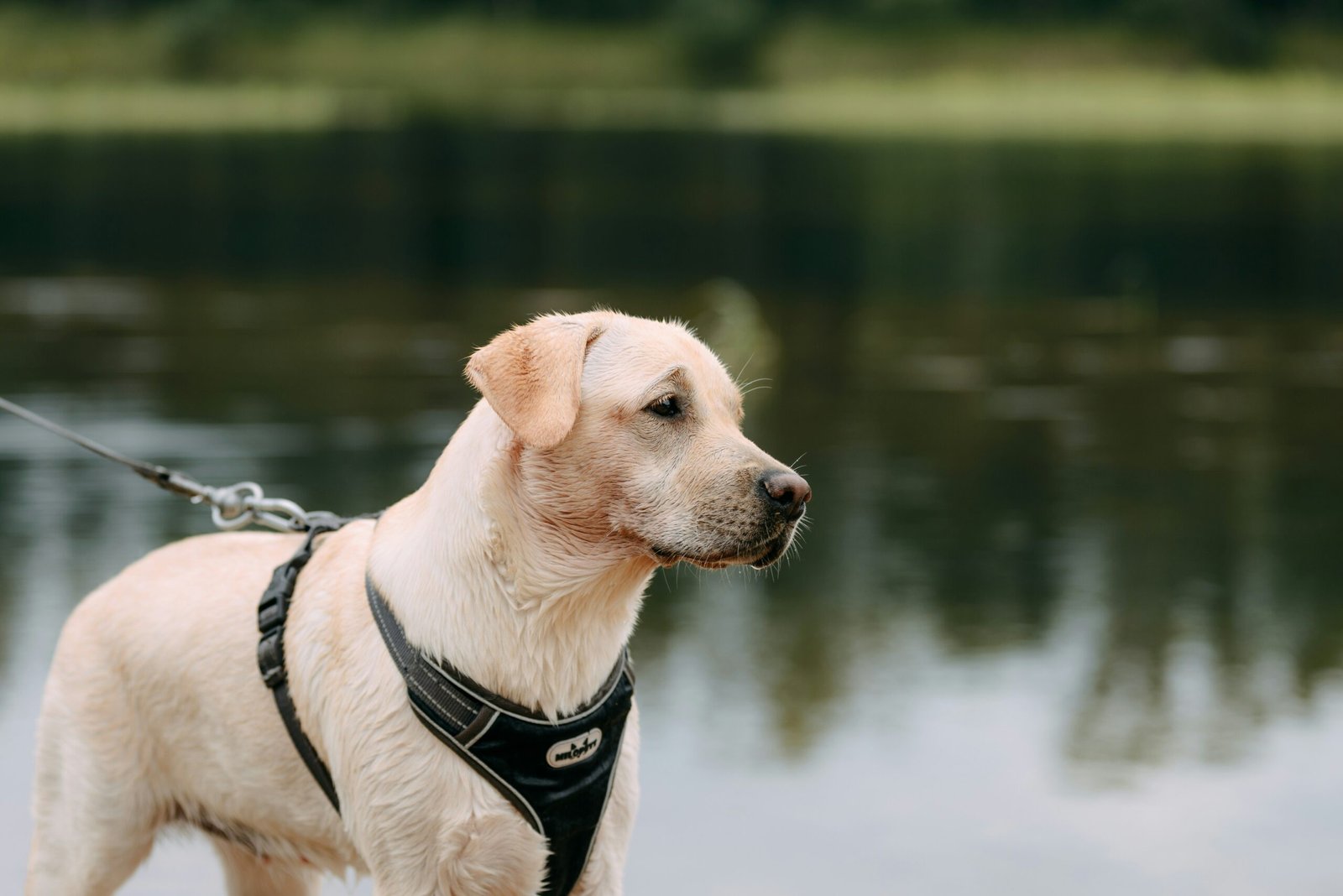
A support harness is usually the first mobility aid owners need. It gives you a way to help your dog rise, navigate stairs, or get in and out of the car without putting stress on painful joints or lifting the dog’s full weight unsupported.
Rear support harnesses address weakness in the hind legs and are the most commonly needed type for senior dogs. Front support harnesses assist dogs with shoulder or neck problems. Full-body harnesses support both ends simultaneously and are most appropriate for dogs with widespread mobility decline or degenerative myelopathy.
The choice between a harness and a sling depends on how much support the dog needs and how often it needs to be put on and taken off. For a detailed breakdown of both options and which situations suit each.
For specific product recommendations including the Help ‘Em Up Harness, PetSafe CareLift, and budget alternatives, see the guide to best support harnesses for senior dogs.
Dog Ramps and Steps
Every jump a senior dog makes sends impact force through joints that are already under stress. A car ramp eliminates the most damaging repeated jump most dogs make daily. Indoor steps reduce the height of furniture jumps. Both are passive aids that work continuously without any effort from the owner beyond the initial setup.
Car ramps are the most universally useful mobility aid for dogs that can still walk independently. A dog that hesitates before jumping into the car, takes a run-up, or lands awkwardly needs a ramp regardless of whether other mobility problems are present. The reduction in daily joint impact accumulates meaningfully over weeks and months.
Indoor steps work best for dogs that sleep on furniture or a bed. Lowering the barrier to getting up and down removes a daily pain point and also reduces the risk of falls in dogs whose hind leg stability has declined.
Key features to look for in a car ramp are non-slip surface, sufficient length to create a gentle gradient, and stability at the top where it connects to the vehicle. A steep short ramp trades one problem for another. I made a list of the best dog ramps read it here: Best Dog Ramps for Senior Dogs (Top 6)
Orthopedic Beds
An orthopedic bed is relevant for almost every senior dog with joint problems, not just those with severe mobility decline. The hours a dog spends lying down are when pressure builds on the joints that are already inflamed. A standard flat bed or sleeping on a hard floor increases that pressure. A memory foam or high-density orthopedic bed distributes it.
The practical sign that an orthopedic bed is making a difference is reduced morning stiffness. A dog that rises more easily and warms up faster after sleeping on an orthopedic surface is responding to the reduced overnight joint pressure. This is one of the lowest-effort, highest-impact interventions available for a dog with arthritis.
Size and foam density both matter. A bed that is too small forces the dog into a compressed position. A foam that is too soft provides inadequate support for heavier dogs. For specific product recommendations across size categories and budgets, see the guide to Orthopedic bed for senior dogs.
Strollers
A stroller is not a product most dog owners consider until the alternative is not taking the dog outside at all. For a dog that can no longer walk the distance of a full outing but still benefits from environmental stimulation, fresh air, and time outside with their owner, a stroller extends what is possible without forcing the dog to push through pain or fatigue.
Senior dogs in the later stages of mobility decline, dogs recovering from surgery, or dogs with degenerative conditions that make extended walking painful are the primary candidates. Small and medium breeds are the most practical fit for strollers, though large breed options exist.
For product recommendations across size ranges, see the guide to best senior dog strollers.
Wheelchairs
For dogs with significant hind leg weakness or paralysis, a wheelchair restores independent mobility in a way no other aid can. Modern dog wheelchairs are lightweight, fully adjustable, and comfortable enough for daily use, and most dogs adapt within days of their first fitting.
Wheelchairs are most commonly used for dogs with degenerative myelopathy, severe hip dysplasia, IVDD, or following spinal injury. They are not a last resort for a dog that is suffering. They are a genuine quality-of-life tool that gives dogs back the ability to move independently, and many dogs use one happily for years.
Heat Therapy
Heat applied to arthritic joints increases blood flow, reduces stiffness, and provides meaningful pain relief. It is one of the most accessible and evidence-supported tools available for managing arthritis pain at home, and it costs far less than most mobility equipment.
A heated pad used before a walk or first thing in the morning when stiffness is worst can visibly reduce the warm-up time a dog needs before moving comfortably. It does not address the underlying condition but reduces the daily pain load in a way that complements everything else.
For guidance on safe use and product recommendations, see Best Heating Pad for Dogs with Arthritis: 5 Options Compared
Pain Relief Chews
Pain relief chews sit at the intersection of mobility support and supplementation. Products containing Boswellia, turmeric with piperine, and CBD address the inflammatory component of arthritis pain, which directly affects how willingly a dog moves. A dog in less pain moves more, maintains more muscle, and has better joint stability as a result.
The relationship between pain management and mobility is more direct than most owners realise. A dog that refuses to walk is often a dog in pain, not a dog that has lost the physical ability to walk. Reducing that pain can restore movement that appeared to have been lost.
Joint Supplements
Joint supplements address the structural side of mobility decline rather than the immediate pain. Glucosamine and chondroitin slow cartilage breakdown and support repair. Omega-3 fatty acids reduce systemic inflammation. Green-lipped mussel adds anti-inflammatory compounds not found in standard fish oil. These work over weeks and months rather than immediately, but they are the most important long-term tool for maintaining the cartilage that supports joint function.
For dogs showing early mobility decline, starting joint supplements before the problem is severe produces better long-term outcomes than waiting until significant cartilage loss has occurred. For a full breakdown of the best options, see the guide to Best Supplements for Senior Dogs: What Actually Works
How to Choose the Right Aid for Your Dog
The starting point is identifying where the mobility problem is most limiting daily life.
If the primary problem is getting up from lying down, a rear support harness and an orthopedic bed address the two moments where that difficulty is most acute: rising and overnight joint recovery.
If the primary problem is specific movements like car entry or stairs, a ramp or steps resolve the problem directly without requiring broader intervention.
If the primary problem is distance, the dog tires quickly or shows pain after short walks, a stroller for longer outings combined with joint supplements and pain relief chews for daily management is the right combination.
If multiple problems are present simultaneously, which is common in dogs over age ten, the most impactful starting point is usually the orthopedic bed and joint supplements because both work continuously rather than only during specific activities. Add a harness or ramp once the baseline joint support is in place. Movement itself still matters throughout this process, our guide on exercise for senior dogs covers how much activity is actually appropriate once the right aids are in place.
For guidance on modifying the home environment to support a dog with mobility issues beyond the specific aids covered here, see the guide to how to create a mobility-friendly home for your dog.
FAQ
At what age should I start using mobility aids for my senior dog?
There is no fixed age. The trigger is functional change rather than a birthday. When a dog starts hesitating at stairs, struggling to rise, or avoiding movements they previously made without thought, that is the moment to start. Large breeds often reach this point at six or seven. Small breeds may not need support until nine or ten. Earlier intervention produces better outcomes because it reduces the secondary muscle loss that comes from a dog moving less to avoid pain.
Can mobility aids replace veterinary treatment for arthritis?
No. Mobility aids manage the functional consequences of arthritis. Veterinary treatment, whether NSAIDs, physical therapy, or other interventions, manages the underlying condition. A dog in significant pain needs veterinary assessment first. Mobility aids work best as part of a broader management approach that includes medical treatment where indicated.
Will my dog accept a harness or stroller?
Most dogs adjust within a few days of consistent exposure. Introduce any new aid gradually: let the dog sniff and investigate before putting it on, use the harness for short positive sessions before relying on it for full support, and pair new equipment with something the dog enjoys. Dogs that are already uncomfortable often accept aids more readily than expected because the aid reduces the discomfort of the movement it supports.
Do mobility aids work for degenerative myelopathy?
Yes, but differently than for arthritis. Degenerative myelopathy is neurological and progressive, which means mobility aids manage function rather than addressing the underlying cause. Rear support harnesses and carts or wheelchairs are the primary tools for dogs with DM, and they can maintain quality of life for considerably longer than the dog could manage without support. Physical therapy and regular structured movement also slow progression. See the guide to how to help senior dogs with arthritis at home for broader home management principles that apply to DM as well.
How do I know if a mobility aid is actually helping?
Watch for the specific problem the aid was introduced to solve. A harness should make rising easier and reduce hesitation on stairs within the first few uses. An orthopedic bed should produce less morning stiffness within one to two weeks. A ramp should eliminate the hesitation before jumping within a few days of the dog becoming comfortable with it. If the problem the aid was introduced to address has not improved within two to three weeks of consistent use, either the aid is not the right fit or there is a pain component that needs to be addressed first.
Final Thoughts
The best mobility aids for senior dogs are the ones that address the specific problem your dog is experiencing, used consistently, and started before the decline has become severe. None of them reverse the underlying condition. All of them can meaningfully improve daily comfort and extend the period during which your dog moves independently and without significant pain.
Start with the problem that is most limiting your dog’s daily life. Match the aid to that problem using the guides linked above. Add joint supplements and pain management as the foundation that everything else builds on. Reassess every few months as the dog’s needs change.
Sources
- American Veterinary Medical Association — Osteoarthritis in Dogs
- VCA Animal Hospitals — Arthritis in Dogs
- Tufts University Cummings Veterinary Medical Center — Mobility and Pain Management
- Dog Aging Project — Mobility Tips for Senior Dogs
- Walkin’ Pets — How to Improve Older Dog Mobility
- https://www.avma.org/resources-tools/pet-owners/petcare/osteoarthritis-dogs
- https://www.ncbi.nlm.nih.gov/pmc/articles/PMC6063540/
- https://www.aspca.org/pet-care/dog-care/behavior-problems-older-dogs



Pingback: Joint Problems in Senior Dogs: Causes, Symptoms & Best Remedies
Pingback: Soothing Tips For Dogs In Pain - seniordog-care
Pingback: Best Orthopedic Dog Beds for Senior Dogs & Large Breeds (2025 Review)
Pingback: Top 7 Best Pain Relief Products for Senior Dogs
Pingback: Best Heated Pads for Dogs with Arthritis (2025 Buyer’s Guide)
Pingback: Best Pain Relief Chews for Senior Dogs (Top 8) - seniordog-care
Pingback: Best Senior Dog Strollers for Small, Medium, and Large Breeds
Pingback: Signs of Dementia in Senior Dogs - seniordog-care
Pingback: How to Help Senior Dogs with Arthritis at Home (2026 Guide)
Pingback: Grooming a Senior Dog: A Complete Home Guide - seniordog-care
Pingback: Senior Dog Grooming: The Complete Guide - seniordog-care
Pingback: What Causes Mobility Issues in Senior Dogs - seniordog-care
Pingback: How to Create a Mobility-Friendly Home for Your Senior Dog - seniordog-care
Pingback: Bladder Control in Senior Dogs: Why It Happens and What to Do
Pingback: Dog Strollers vs Dog Carriers: for Senior Dogs - seniordog-care