
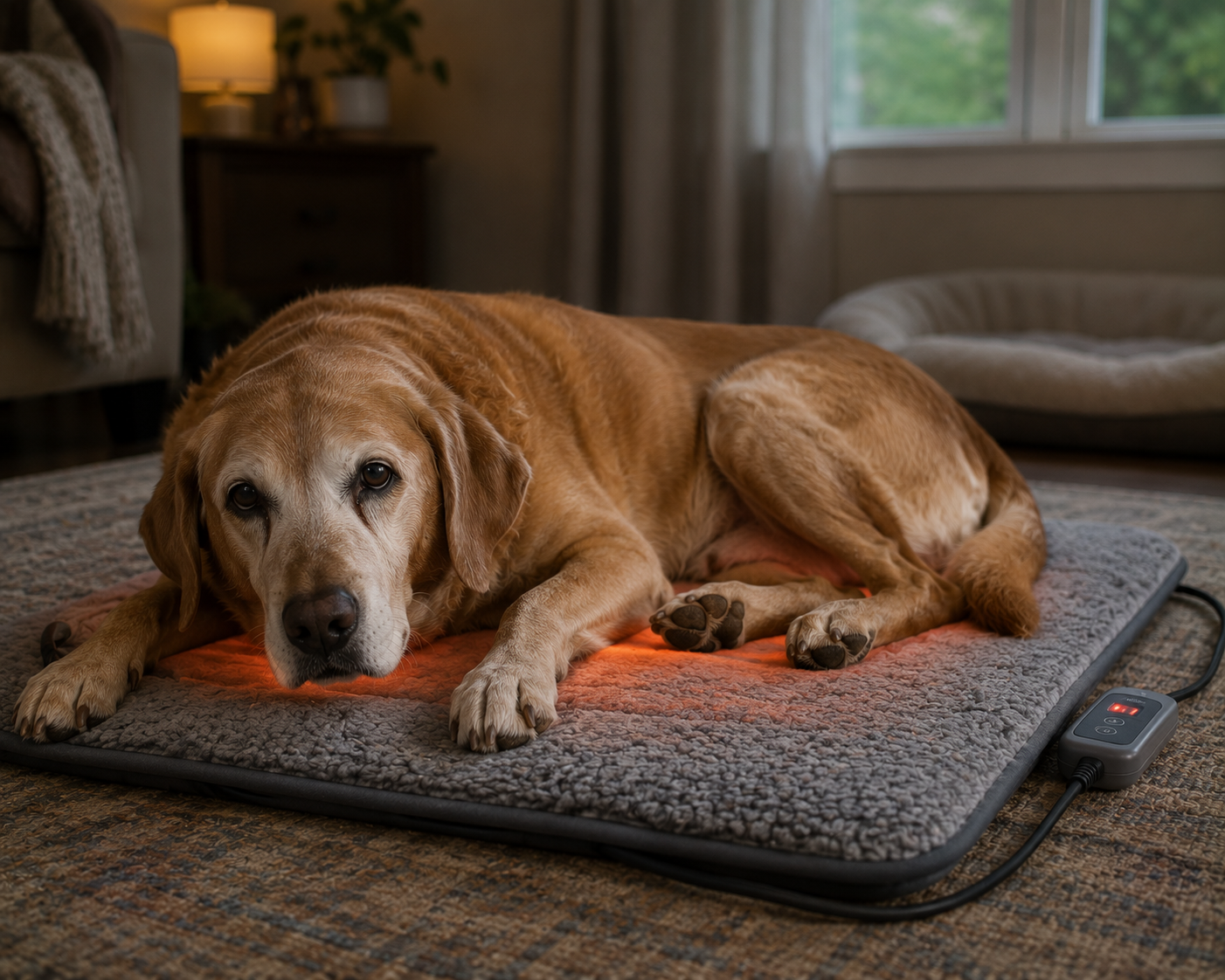
The best heating pad for dogs with arthritis is one of those products that most owners see as a nice extra rather than something that actually makes a difference. That was my own thinking too. When my dog was struggling with stiffness, warmth therapy was not something I tried. Looking back, it should have been one of the first things I looked into. The evidence for heat reducing joint stiffness and muscle tension is straightforward, and the practical barrier to getting started is low.
Most owners know a heating pad could help. The problem is not awareness. It is the assumption that it is not really necessary, that the dog manages fine enough without it. That assumption costs the dog months of preventable discomfort that a simple daily routine could have reduced.
This guide covers five of the best heating pad options for dogs with arthritis, how they differ, and how to use them safely.
This post may contain affiliate links. If you buy through these links, I may earn a small commission at no extra cost to you. As an Amazon Associate, I earn from qualifying purchases.
Table of Contents
QUICK PICKS
Best Overall: K&H Lectro-Soft Heated Dog Pad Consistent low-voltage warmth, quilted washable cover, reliable temperature regulation. The most practical daily-use option for most dogs with arthritis.
Best Budget: RIOGOO Pet Heating Pad Seven-layer safety structure, built-in thermostat, 24-hour timer, waterproof cover. More safety features than pads costing twice as much.
Best for Serious Arthritis: Thermotex Far Infrared Heated Pet Bed Far-infrared technology penetrates deeper into tissue than standard surface warmth. FDA-registered technology. The strongest therapeutic option on this list for dogs with moderate to severe arthritis.
Best Cord-Free: Snuggle Safe Microwavable Pad No electricity, no cords. Microwave and use. Practical for travel, crates, and dogs that chew cords.
Best for Crates: K&H Self-Warming Crate Pad Uses the dog’s own body heat, no electricity required. Safe for overnight crate use with zero cord risk.
Why Heat Therapy Helps Dogs with Arthritis
Heat therapy works through a straightforward biological mechanism. Warmth causes blood vessels to dilate, which increases circulation to the muscles and soft tissue surrounding arthritic joints. Better circulation means more oxygen and nutrients reaching the affected area, and faster removal of the inflammatory byproducts that contribute to stiffness and pain.
The practical result is what owners notice most. A dog that wakes stiff and slow after a night on a cold floor moves differently after time on a warm surface. Muscles that have tightened during rest loosen more quickly. The morning stiffness that makes the first steps of the day difficult for arthritic dogs is exactly the type of discomfort that heat addresses most effectively.
Heat therapy is not a cure for arthritis and it does not replace veterinary treatment. It is a comfort measure that reduces the daily experience of pain and stiffness when used consistently alongside other care. For a deeper look at the evidence behind heat therapy specifically for dogs with arthritis, the article on whether heating pads are good for dogs with arthritis covers this in detail.
One important distinction: heat is appropriate for chronic joint stiffness, not for acute inflammation. If a joint is visibly swollen, hot to the touch, or the dog has recently injured itself, heat makes inflammation worse. Ice or cold therapy is correct for acute inflammation. Warmth is for the chronic, daily stiffness of established arthritis.
What to Look for in a Heating Pad for Dogs with Arthritis
Temperature control. Senior dogs have reduced skin sensitivity in some areas and cannot always reliably move away from a surface that is too warm. A pad with automatic temperature regulation or an upper heat limit prevents burns from prolonged contact.
Safety features. Look for chew-resistant cords, overheat protection, and waterproof or water-resistant covers. Senior dogs with arthritis sometimes have reduced bladder control. A pad that cannot handle moisture is a practical problem.
Ease of cleaning. A removable, machine-washable cover is a necessity for daily use, not a bonus feature.
Size. The pad needs to be large enough for the dog to rest its full body on comfortably, or at minimum the area of the body where stiffness is most significant. A pad that only covers part of the dog does not provide consistent warmth.
Cord management. The cord needs to be routed in a way that the dog cannot reach it. Even dogs that do not normally chew may mouth cords when unattended.

The 5 Best Heating Pads for Dogs with Arthritis
1. Best Overall: K&H Lectro-Soft Heated Dog Pad
The K&H Lectro-Soft is the most consistent daily-use heating pad for dogs with arthritis. The low-voltage design keeps surface temperature at a safe, steady level without requiring the owner to monitor it closely. The quilted cover is soft enough for older dogs with thin, sensitive skin, and it is machine washable, which matters when the pad is used every day.
It does not have a timer, which means you control the on and off schedule manually. For most owners using it during specific rest periods, that is a practical arrangement rather than a limitation. The consistent, gentle warmth it provides is exactly what chronic arthritis management requires: predictable, safe heat applied regularly over time.
Who should not buy this: Dogs with bladder control issues or owners who need a timer for automatic shut-off. The RIOGOO is a better fit in those cases.
Best for: Most dogs with chronic arthritis needing consistent daily warmth at home.
2. Best Budget: RIOGOO Pet Heating Pad
The RIOGOO delivers more safety features at a lower price than most pads in this category. The seven-layer safety structure includes UL-approved heating wire and a built-in temperature sensor that prevents overheating automatically. The 24-hour adjustable timer removes the need to remember to switch the pad off. The waterproof outer layer handles accidents without damage to the electronics, and the removable cover is hand washable.
The chew-resistant cord is a practical addition for any household with a dog that investigates electrical cables. For owners looking for a reliable entry-level option with adequate safety credentials, this pad covers everything that matters at a price that does not require justification.
Who should not buy this: Owners who need a larger pad for a big breed dog or who want the therapeutic depth of far-infrared heat for serious arthritis cases.
Best for: Budget-conscious owners who need reliable safety features without the premium price.
3. Best for Serious Arthritis: Thermotex Far Infrared Heated Pet Bed
The Thermotex is a different category of product from the other pads on this list. Standard electric heating pads warm the surface the dog lies on. Far-infrared heat penetrates into soft tissue, reaching the muscles and joint structures where arthritis pain originates rather than just warming the skin above them.
The technology is registered as a medical device with both the FDA and Health Canada, which is unusually strong credibility for a pet product. After around 20 minutes of use, the far-infrared wavelengths increase blood flow to the treated area at a depth that surface warmth cannot reach. For dogs with moderate to severe arthritis where standard heating pads have produced limited results, this is the product worth trying.
The price reflects what it is: a therapeutic device rather than a comfort pad. Owners who make the investment consistently report more noticeable improvements in mobility and post-rest stiffness than they saw with standard electric pads.
Note: the standard bed is sized for dogs up to around 11 kg. For larger dogs, the Thermotex Premium Pet Pad is the appropriate size option.
Who should not buy this: Owners of larger dogs who do not want to purchase the premium size version, or owners looking for a basic comfort pad rather than a therapeutic product.
Best for: Dogs with moderate to severe arthritis where standard heating pads have not produced sufficient relief.
4. Best Cord-Free: Snuggle Safe Microwavable Pad
The Snuggle Safe removes the two main practical concerns with electric heating pads: cords and electricity. Heat it in the microwave and it stays warm for several hours. No cables to route away from the dog, no electricity costs, no overheat risk from a malfunctioning thermostat.
The trade-off is control. You cannot adjust the temperature once heated, and the warmth gradually decreases over the session rather than staying consistent. For travel, crate use, or as a supplementary warm spot within a larger bed, it works well. As the sole arthritis management tool for daily home use, its limitations make it less practical than an electric option.
Who should not buy this: Owners who need consistent, sustained warmth for daily arthritis management. An electric pad is more appropriate for that purpose.
Best for: Travel, crate use, cord-chewing dogs, and as a supplementary warmth option.
5. Best for Crates: K&H Self-Warming Crate Pad
The K&H Self-Warming Crate Pad uses the dog’s own body heat rather than electricity. A reflective layer inside the pad captures and redirects the dog’s radiated heat back toward its body, creating a warmer microclimate than a standard crate pad provides.
It works best in enclosed spaces where the ambient temperature is lower and body heat accumulates more effectively. For dogs that sleep in crates overnight, it provides gentle warmth without any cord management concerns, no timer requirements, and no electricity cost. The limitation is that it does not generate heat independently. In a warm room, the effect is minimal. In a cool room or crate, the difference is noticeable.
Who should not buy this: Dogs with significant arthritis who need consistent therapeutic warmth. An electric option provides more reliable and controllable heat for active arthritis management.
Best for: Dogs sleeping in crates who need gentle overnight warmth without cord or electricity concerns.
Comparison Table
| Product | Type | Temp Control | Timer | Best For | Price |
|---|---|---|---|---|---|
| K&H Lectro-Soft | Electric | Yes | No | Daily home use | $$ |
| RIOGOO Heating Pad | Electric | Auto thermostat | 1-24hr | Budget buyers | $ |
| Thermotex Far Infrared | Infrared | 2 settings | No | Serious arthritis | $$$ |
| Snuggle Safe | Microwavable | No | No | Travel/crates | $ |
| K&H Self-Warming | Self-warming | No | No | Crates/carriers | $ |
| Innovet Mobility Chews | Supplement | — | — | Internal relief | $$ |

Heat Therapy Works Better Alongside the Right Supplements
A heating pad addresses the daily experience of stiffness. It does not address the underlying inflammation that drives arthritis progression. That is where supplements close the gap that heat alone cannot.
Glucosamine and chondroitin support joint cartilage maintenance and reduce the rate of deterioration. Omega-3 fatty acids from fish oil reduce the systemic inflammation that makes arthritis worse over time. MSM supports connective tissue repair. These compounds work at the biological level that warmth cannot reach, making them a direct complement to heat therapy rather than an alternative to it.
For a full breakdown of which joint supplements have genuine research behind them and which products deliver the right doses for senior dogs, the best joint supplements for senior dogs covers every category in detail.
How to Use a Heating Pad Safely for Dogs with Arthritis
Start with short sessions. Introduce the pad gradually with sessions of 20 to 30 minutes. Most dogs accept it quickly, particularly once they feel the warmth. Extend session length as the dog settles into the routine.
Never use heat on acute inflammation. If a joint is visibly swollen, hot to the touch, or the dog has recently injured itself, heat worsens the condition. Cold therapy is appropriate for acute injury. Warmth is for chronic stiffness only.
Route cords away from the dog. Even calm dogs may investigate cords when unattended. Use cord covers or route cables through furniture where the dog cannot reach them.
Place the pad on a firm, non-slip surface. Avoid placing it on top of deep, thick bedding where heat builds up and cannot dissipate. A flat surface allows the pad to regulate temperature more reliably.
Check skin regularly. Inspect the skin under the areas in contact with the pad for redness or irritation, particularly on dogs with thin coats or sensitive skin. Any sign of skin reaction means reducing session length or temperature.
Do not leave the dog unattended on an electric pad for extended periods unless the pad has verified overheat protection and the dog can move freely away from the heat source if needed. Heat therapy is one part of a broader home routine, our guide to best mobility aids for senior dogs covers the full range of tools worth considering alongside it, and our guide on how to help senior dogs with arthritis at home covers how heat fits into a complete daily routine.
FAQ
Are human heating pads safe for dogs with arthritis?
Human heating pads are not recommended for dogs. They reach higher temperatures than pet-specific pads and lack the automatic temperature regulation designed for animals that may lie still for extended periods. A dog that cannot feel that a pad is too warm, or that falls asleep on one, can sustain burns from a human heating pad that would not occur with a pet-specific product.
How long should a dog use a heating pad each day?
Sessions of 20 to 30 minutes are sufficient for most dogs to benefit from heat therapy. Multiple sessions per day are appropriate, particularly before morning walks when joints are stiffest. Extended continuous use beyond 30 to 60 minutes is not recommended without verified overheat protection.
Can a heating pad replace arthritis medication?
No. Heat therapy is a comfort measure that reduces the daily experience of stiffness and pain. It does not address the underlying disease progression of arthritis. Veterinary-prescribed medication, appropriate nutrition, joint supplements, and controlled exercise all remain relevant alongside heat therapy rather than being replaced by it.
Should I use a heating pad before or after exercise?
Before. Warming the muscles and joints before activity improves circulation and reduces the stiffness that makes the first movements of a walk difficult for arthritic dogs. Using a pad for 20 minutes before a morning walk produces better outcomes than using it only for recovery after exercise.
Is it safe to leave a dog on a heating pad overnight?
Self-warming pads using body heat reflection are safe for overnight use. Electric pads should only be used overnight if they have verified automatic shut-off or temperature regulation and the dog can freely move away from the heat source. The K&H Self-Warming Crate Pad is the most appropriate option for overnight crate use on this list.
At what temperature should a dog heating pad be set?
Pet-specific heating pads are typically designed to reach a maximum surface temperature of around 40 to 45 degrees Celsius, which is safe for prolonged contact. The pad should feel comfortably warm to the back of your hand, not hot. If it feels hot to you, it is too hot for your dog.
Final Thoughts
The best heating pad for dogs with arthritis is not a luxury purchase. It is a practical daily tool that reduces the stiffness and discomfort that arthritis causes during rest and recovery. Most owners think of it as optional. For a dog managing chronic joint pain, consistent warmth before and after rest periods makes a real difference to how that dog moves and feels day to day.
For most dogs, the K&H Lectro-Soft is the most reliable starting point. For owners managing serious arthritis and looking for therapeutic depth rather than surface comfort, the Thermotex Far Infrared is the product worth the investment. For travel and crate use, the Snuggle Safe and K&H Self-Warming pad cover those situations without electrical requirements.
Combine consistent heat therapy with the right joint supplements and you are addressing arthritis from both directions, the daily comfort layer and the underlying biological one.
Sources
- Arthritis in Dogs – American Kennel Club (AKC)
- Managing Arthritis in Dogs – American Veterinary Medical Association (AVMA)
- Heat Therapy for Dogs with Arthritis – PetMD
- Heated Dog Beds and Pads: Safety and Benefits – The Spruce Pets
- Senior Dog Joint Care Tips – Cornell University College of Veterinary Medicine
- Best Practices for Senior Dog Comfort and Safety – ASPCA
- Pet Heating Pad Safety Guidelines – FDA Consumer Update
- K&H Pet Products Heated Beds Overview – K&H Pet


Pingback: 10 Best Mobility Aids for Senior Dogs: Support Joint Health & Independence
Pingback: Best Gadgets for Senior Dogs: The Complete Guide
Pingback: Best Mobility Aids for Senior Dogs - seniordog-care
Pingback: How to Help Senior Dogs with Arthritis at Home
Pingback: Bad Signs of Arthritis in Senior Dogs: How to Recognize It Early - seniordog-care
Pingback: 10 Signs Your Senior Dog Might Be in Acute Pain (And What to Do)
Pingback: Soothing Tips for Senior Dogs in Pain - seniordog-care
Pingback: How to Recognize Pain in Senior Dogs - seniordog-care
Pingback: Why Is My Senior Dog Restless at Night: Causes and Solutions
Pingback: How Much Sleep Does a Senior Dog Need? The Truth
Pingback: Senior Dog Winter Care: A Complete Guide - seniordog-care