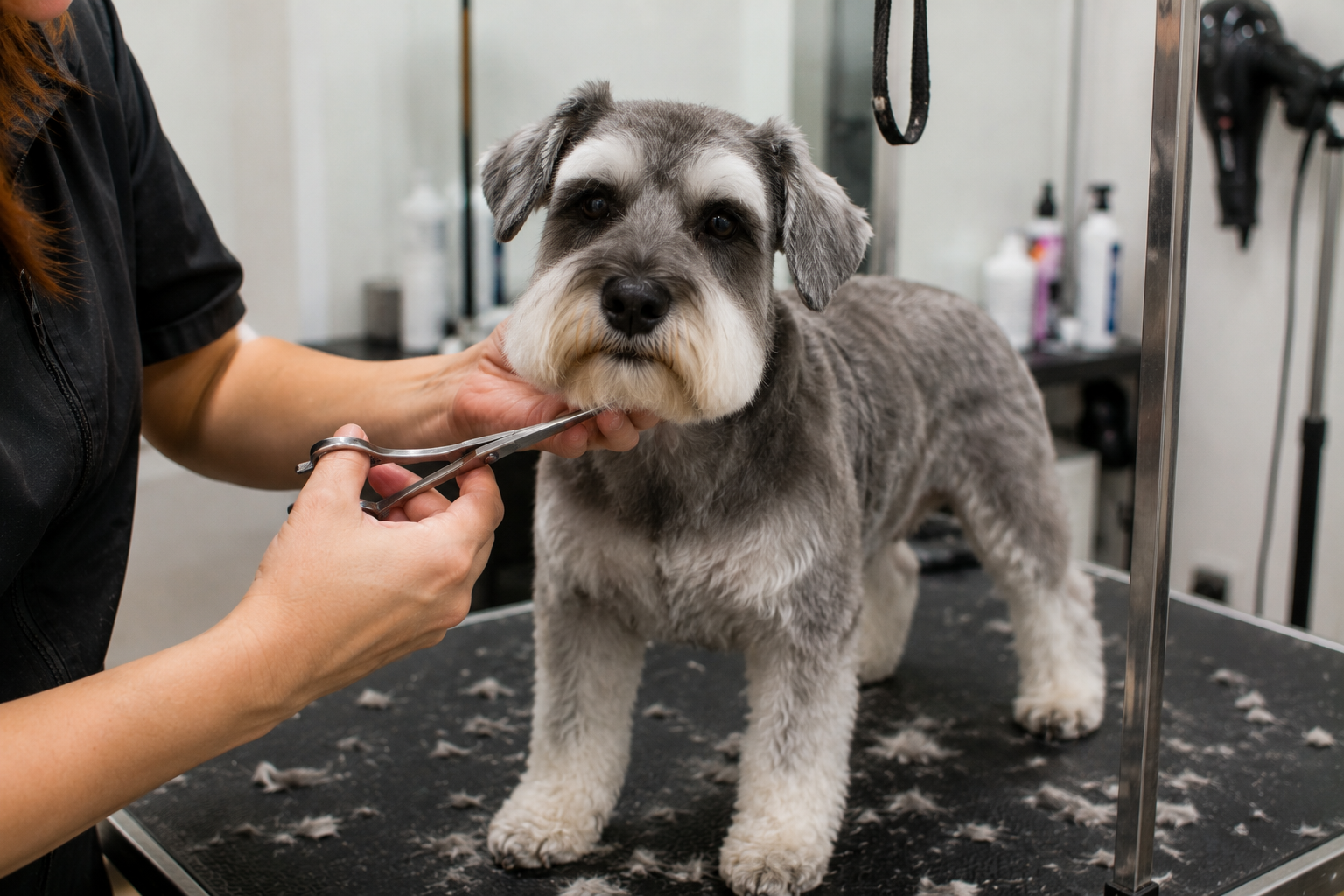
The best grooming tools for senior dogs are not the same tools that worked well when your dog was younger. Skin that is thinner and drier, joints that are stiff and sensitive, and a coat that has changed in texture all require a different set of tools than a younger dog with resilient skin and full mobility. Using the wrong tools does not just produce poor results. It causes discomfort and over time makes grooming something the dog increasingly resists.
This guide covers the tools that are genuinely suited to older dogs, what to look for in each category, and which options are worth the investment.
Table of Contents
Why Senior Dogs Need Different Grooming Tools
The physical changes that come with age affect how every grooming tool interacts with the dog’s body.
Skin becomes thinner and more fragile. The sebaceous glands produce less natural oil, which leads to a drier coat and a skin surface that is more easily irritated by tools with stiff bristles or hard edges. A slicker brush used with normal pressure on a senior dog can cause brush burn on areas where the skin is thinnest, usually over the spine and hindquarters, without the owner realising anything is wrong until the dog starts reacting.
Coat texture changes. Many older dogs develop a coarser, drier coat as natural oil production decreases. Double-coated breeds often carry more dead undercoat than they shed naturally, which means the right de-shedding tool matters more than it did when the coat was healthier and shed more efficiently on its own.
Joint sensitivity affects how the dog tolerates being handled. A tool that requires the dog to hold a position for an extended period, or that creates vibration or pressure near a sensitive joint, will be resisted in ways a younger dog would not resist. Lighter, more precise tools that get the job done quickly reduce the time the dog needs to remain in any one position.
What to Look for in Grooming Tools for Senior Dogs
Soft or coated tips on any tool that contacts the skin. Pins with rubber or plastic tips, soft bristles rather than hard nylon, and rounded edges on any implement that comes close to the skin surface all reduce the risk of irritation on fragile senior skin.
Lightweight construction. A heavy brush requires more effort to control and creates more fatigue in both the dog and the owner during a session. Lightweight tools are easier to use with the light pressure appropriate for older skin.
Ergonomic handles. A handle that fits comfortably in the hand reduces the tendency to grip too hard, which translates directly into lighter pressure on the dog. This matters more than most owners consider when choosing tools.
Precision for sensitive areas. Smaller tools that allow you to work carefully around joints, skin folds and sensitive patches are more useful for a senior dog than large tools designed for efficiency on a young dog with no problem areas.
Quick Picks
Best overall: Swihauk Self-Cleaning Slicker Brush, skin-friendly rounded pin tips, one-button self-cleaning, lightweight and suitable for all coat types. Bestseller on Amazon for good reason.
Best for sensitive skin: Safari Soft Pin Slicker Brush, softer, more flexible pins than a standard slicker, the right choice for dogs with notably thin or fragile skin.
Best for double-coated breeds: FURminator Undercoat Deshedding Tool, removes dead undercoat efficiently without cutting the guard coat, used sparingly produces a significant reduction in shedding.
Best for long coats: Chris Christensen Wooden Pin Brush, polished wooden pins glide through fine and long coats without the skin drag that metal pins cause on fragile senior skin.
Best for brush-averse dogs: NVNAN Pet Hair Eraser Grooming Glove, feels like normal stroking, removes loose surface hair and reintroduces coat handling for dogs that resist rigid tools.
Best for mat removal: Docrok Pet Grooming Combo, 2-in-1 rake plus metal comb, soft protective edges, ranked number one in Dog Grooming Rakes on Amazon.
Best finishing tool: Andis Steel Greyhound Comb dual-sided, rounded teeth, works on all coat types as a follow-up to brushing to check for remaining tangles.
Best Grooming Tools for Senior Dogs
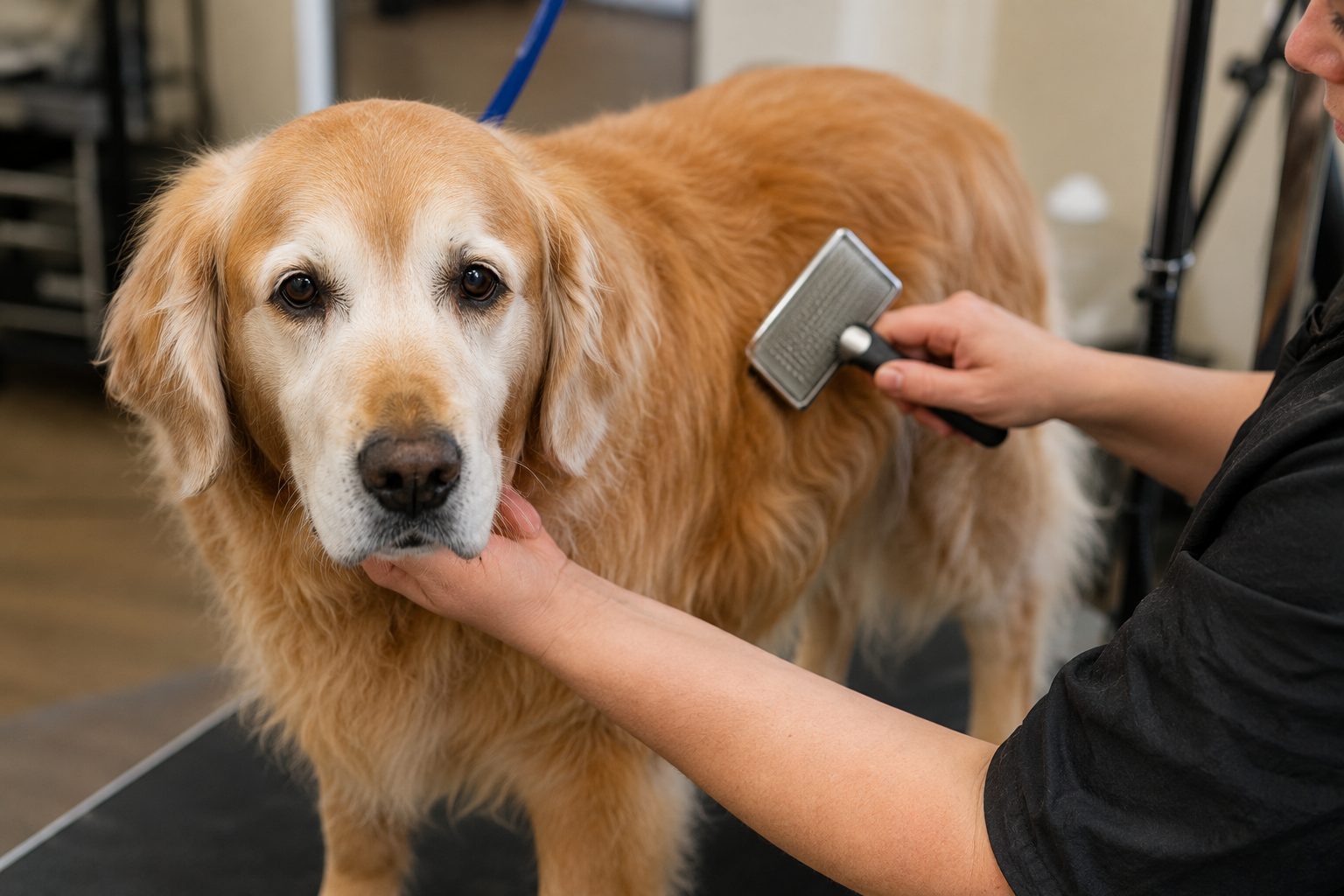
Swihauk Self-Cleaning Slicker Brush
Verdict: The best overall everyday brush for most senior dogs and the bestselling option on Amazon for good reason. The soft, rounded plastic-tipped pins are genuinely skin-friendly on fragile senior skin, and the one-button self-cleaning mechanism means you are not repeatedly pulling hair from the bristles mid-session, which keeps handling time short for the dog.
Pros:
- Soft rounded plastic tip pins reduce skin contact pressure on fragile senior skin
- One-button self-cleaning mechanism speeds up sessions significantly
- Lightweight TPR ergonomic handle reduces grip fatigue and pressure transfer
- Suitable for all coat types including short, medium and long
- Very low price point for the quality delivered
- 4.6 stars from thousands of Amazon reviews
Cons:
- Not suitable as a primary undercoat removal tool for heavy double-coated breeds
- Stainless steel pins, while tipped, still require light pressure on very thin skin
- Not designed for heavy mat removal
Who should not buy this: Dogs with severely matted coats or heavy double-coated breeds that need dedicated undercoat management. For those dogs this brush works as a finishing tool alongside a dedicated deshedding tool, not as the primary option.
Safari Soft Pin Slicker Brush
Verdict: The gentler alternative to standard slicker brushes and the better choice for senior dogs with notably thin or sensitive skin. The pins are softer and more flexible than a standard slicker, which means they move through the coat without the same level of skin contact pressure.
Pros:
- Softer, more flexible pins than standard slicker brushes
- Suitable for sensitive and thin senior skin
- Lightweight
- Works well on medium to long coats
- Low cost
Cons:
- Less effective on thick or heavy undercoat
- Requires more strokes to achieve the same result as a firmer brush
- Not suitable as a primary de-shedding tool for double-coated breeds
Who should not buy this: Owners of double-coated breeds that carry significant undercoat. A dedicated undercoat tool is needed alongside this brush for those dogs.
FURminator Undercoat Deshedding Tool
Verdict: The most effective tool for removing dead undercoat from double-coated senior dogs. Used correctly and sparingly, it reduces the shedding load on the coat and improves airflow to the skin, which matters more in summer for a dog that already struggles with heat regulation.
Pros:
- Removes dead undercoat efficiently without cutting the guard coat
- Reduces shedding significantly after use
- Available in multiple sizes for different breeds
- Built-in FURejector button clears collected hair quickly
- Durable construction
Cons:
- Must be used with very light pressure on senior skin
- Over-use damages the coat and irritates the skin
- Not appropriate for single-coated breeds
- Higher price point than basic brushes
Who should not buy this: Owners of single-coated breeds. The FURminator is designed specifically for double-coated dogs and causes coat damage when used on single-coated breeds. Also not appropriate for dogs with active skin conditions or open wounds.
Chris Christensen Wooden Pin Brush
Verdict: The best brush for senior dogs with long or fine coats that need detangling without skin irritation. The wooden pins with polished tips glide through the coat rather than dragging across the skin surface, which is the key difference from metal-pin alternatives on fragile senior skin.
Pros:
- Polished wooden pins reduce skin drag significantly
- Suitable for long, fine and silky coats
- Lightweight wooden construction
- Gentle enough for daily use on sensitive skin
- Professional quality that lasts
Cons:
- Higher price point than most brushes
- Less effective on thick or coarse coats
- Not a de-shedding tool
Who should not buy this: Owners of short-coated or double-coated breeds that need undercoat management. This brush is suited to long and fine coat types specifically.
Andis Steel Greyhound Comb
Verdict: The most useful finishing tool for any coat type and an essential item for working through the areas where mats form most readily on senior dogs. The dual-sided design gives a coarser side for initial detangling and a finer side for finishing, and the rounded teeth move through the coat without catching on thin skin.
Pros:
- Dual-sided for coarse and fine work
- Rounded teeth reduce skin irritation
- Durable stainless steel construction
- Works on all coat types
- Low cost
Cons:
- Not a primary brushing tool, best used after the main brush
- Requires careful technique around sensitive areas
- Some resistance in heavily matted coats
Who should not buy this: Anyone expecting a comb to replace a brush as the primary grooming tool. The comb works best as a follow-up to brushing to check for remaining tangles and finish the coat.
NVNAN Pet Hair Removal Glove 2-Pack
Verdict: The most practical grooming glove for senior dogs that resist rigid tools. The 260 silicone nodules mimic natural touch and remove loose surface hair while providing a light massage, which means the dog experiences grooming as an extension of normal handling rather than a separate, tool-based process. The 2-pack gives you one for each hand or a spare when one needs washing.
Pros:
- 260 silicone nodules gentle enough for sensitive senior skin
- Feels like normal stroking, reduces resistance in brush-averse dogs
- Works during bath time as well as dry grooming
- Adjustable wristband fits most hand sizes
- Machine washable and reusable
- Very low price for a 2-pack
Cons:
- Not effective for deep undercoat removal or detangling
- Less precise than a brush for working through specific problem areas
- Not appropriate as the sole grooming tool for medium or long-coated breeds
Who should not buy this: Owners expecting full grooming capability from a glove alone. The NVNAN works best as a supplementary tool for sensitive areas, for dogs that resist brushes, or during bath time alongside a proper brush for the main coat work.
Docrok Pet Grooming Combo
Verdict: The most practical dematting and deshedding combination for senior dogs with medium to long or double coats. The 2-in-1 design gives you an undercoat rake on one side for dematting and a denser side for deshedding, plus a separate metal comb for finishing and reaching areas the rake cannot. Ranked number one in Dog Grooming Rakes and Dog Grooming Combs on Amazon with over 10,000 reviews and a 4.6 star rating.
Pros:
- 2-in-1 rake with wide side for dematting and dense side for deshedding
- Separate metal comb included for legs, head and tail where the rake cannot reach
- Soft protective edges on both tools reduce skin contact pressure on fragile senior skin
- 100% rust-resistant stainless steel construction
- Lightweight anti-slip TPR handle reduces grip fatigue
- Very low price point for a two-tool combo
Cons:
- The rake requires a light hand on senior skin. The stainless steel teeth are effective but need controlled pressure to avoid discomfort on thin skin
- Not suitable for short-coated breeds where an undercoat rake is not appropriate
- For severely matted coats, professional grooming is safer than home dematting regardless of the tool used
Who should not buy this: Owners of short-coated senior dogs that do not carry undercoat. This combo is designed for medium, long and double-coated breeds specifically.
Comparison Table
| Product | Type | Best For | Coat Type | Price Tier |
|---|---|---|---|---|
| Swihauk Self-Cleaning Slicker Brush | Slicker brush | Everyday brushing | Most coat types | Low |
| Safari Soft Pin Brush | Pin brush | Sensitive/thin skin | Medium to long | Low |
| FURminator Deshedding Tool | Deshedding tool | Undercoat removal | Double-coated only | Mid |
| Chris Christensen Pin Brush | Pin brush | Long/fine coats | Long, fine, silky | High |
| Andis Steel Greyhound Comb | Comb | Finishing and detangling | All coat types | Low |
| NVNAN Pet Hair Removal Glove 2-Pack | Grooming glove | Brush-averse dogs | Short to medium | Low |
| Docrok Pet Grooming Combo | Rake and comb combo | Dematting and deshedding | Medium, long, double-coated | Low |
Building a Grooming Kit for Your Senior Dog
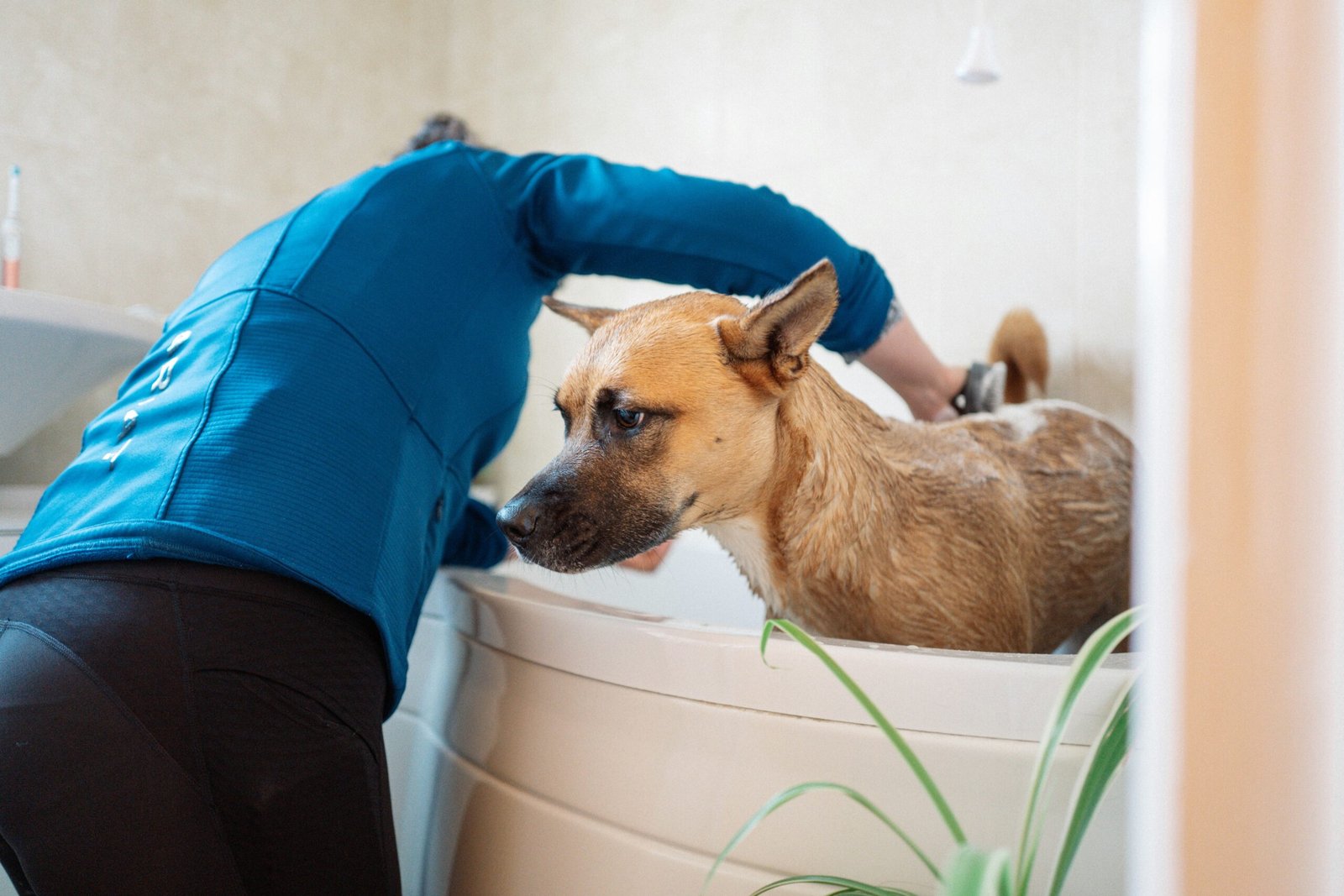
You do not need every tool on this list. The right combination depends on your dog’s coat type and specific needs.
For a short-coated senior dog, the Hertzko slicker brush or the grooming glove and the Andis comb cover the full grooming routine.
For a medium to long-coated senior dog with sensitive skin, the Safari soft pin brush, the Andis comb and the dematting comb if mats are present cover the essentials.
For a double-coated senior dog, the Hertzko slicker brush for everyday coat maintenance, the FURminator used sparingly for undercoat removal and the Andis comb for finishing is a complete kit.
For any senior dog with areas that resist normal brushing because of joint sensitivity or skin fragility, the grooming glove fills the gap for those specific areas without requiring the dog to tolerate a rigid tool.
For the full guide on how to use these tools correctly on an older dog, including technique for sensitive areas and how to adapt the routine to the dog’s physical limitations, this guide to how to groom a senior dog at home covers the complete approach. For nail care specifically, this guide to the best nail clippers for senior dogs covers the tools suited to older dogs with thicker or more brittle nails.
For the broader context on what changes about grooming as dogs age and why the right tools matter, the senior dog grooming guide covers everything from coat and skin changes to dental and ear care.
FAQ
Can I use the same brush I have always used on my senior dog?
Only if it is still appropriate for the dog’s current skin and coat condition. If the coat has become drier or coarser, or if the dog has started reacting to areas it previously tolerated, the brush you have always used may no longer be the right tool. Assess the dog’s skin and coat condition now rather than assuming the same tools remain appropriate.
How often should I replace grooming tools?
Pins and bristles that are bent, splayed or missing create uneven pressure that is more likely to irritate senior skin. Blades on dematting combs and deshedding tools that are no longer sharp drag rather than cut, which causes more pulling and discomfort. Replace tools when they show visible wear rather than on a fixed schedule.
My senior dog has skin lumps that make brushing difficult. How do I manage this?
Work around any lump or growth rather than over it. Do not apply pressure to or drag a tool across a skin growth. If a growth is in an area where matting is likely, keep the coat shorter around it to reduce the frequency of contact. Any new lump on a senior dog warrants a veterinary check regardless of whether it affects grooming.
Is it worth investing in professional-quality grooming tools for home use?
For senior dogs, yes. Professional tools are designed for repeated use with consistent results and are built to a standard that consumer tools often do not match. A well-made brush with the right pin type for your dog’s coat produces a better result with less effort and lasts significantly longer than a cheaper alternative.
Final Thoughts
The best grooming tools for senior dogs are the ones that get the job done with the least amount of pressure, drag and handling time required. A tool that works efficiently and gently on an older dog’s skin and coat makes every grooming session shorter, more comfortable and less likely to be resisted.
Choosing the right tools is not complicated. Match the tool to the coat type, prioritise softness and precision over speed and coverage, and replace anything that is worn or no longer producing consistent results. That is the foundation of a grooming kit that serves your senior dog well throughout its later years.
Pingback: Senior Dog Grooming: The Complete Guide - seniordog-care
Pingback: How to Groom a Senior Dog at Home - seniordog-care
Pingback: Best Dog Toothbrush for Senior Dogs - seniordog-care
Pingback: Best Nail Clippers for Senior Dogs - seniordog-care