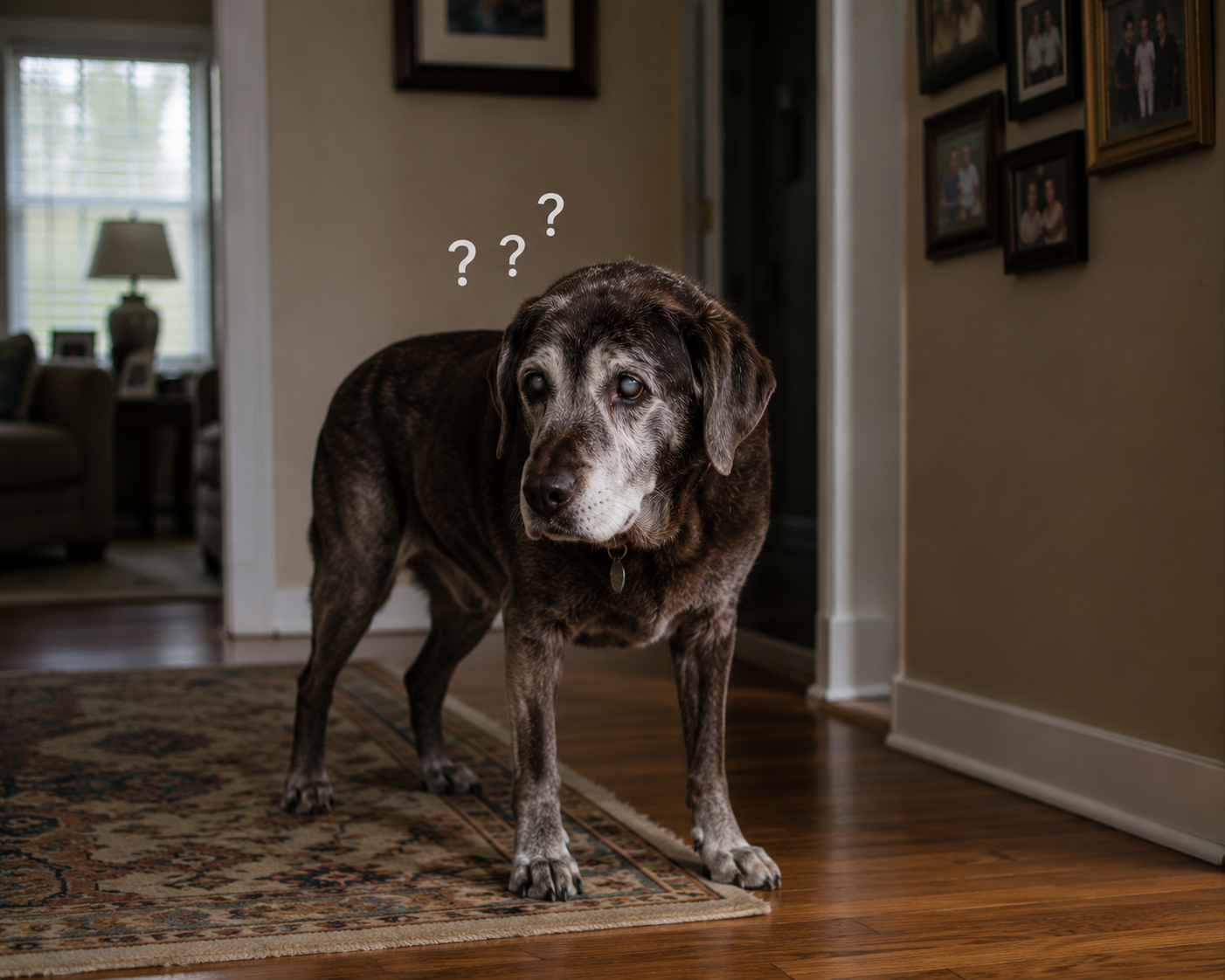
The signs of dementia in senior dogs are some of the most misunderstood symptoms in older dog care. When my dog stopped responding to basic commands near the end of his life, I assumed he was just being stubborn. Looking back, that was almost certainly something more. And that is exactly the problem with canine dementia: it hides in plain sight because owners explain it away as normal aging, a new quirk, or just stubbornness.
Canine Cognitive Dysfunction Syndrome (CDS) affects a significant portion of senior dogs, yet most cases go undiagnosed until the condition has already progressed. That is not because owners do not care. It is because the early signs are subtle, easy to rationalise, and often look identical to things that really are just part of getting older.
This article covers what the actual signs look like, why they happen, how to tell the difference between normal aging and cognitive decline, and what you can do once you suspect something is wrong.
Table of Contents
What Is Dementia in Senior Dogs
Dementia in dogs is formally called Canine Cognitive Dysfunction Syndrome, or CDS. It is a neurodegenerative condition that affects the brain as a dog ages, causing a gradual breakdown in memory, learning, spatial awareness, and social behaviour.
The mechanism is similar to Alzheimer’s disease in humans. Beta-amyloid plaques build up on the brain, neurons become damaged, and blood flow to the brain decreases over time. The result is a brain that processes information more slowly and less accurately than it used to.
CDS is progressive. It does not reverse. But it can be slowed, and quality of life can be maintained significantly better with early identification and the right approach.
The condition is more common than most owners realise. Studies suggest that around 28% of dogs aged 11 to 12 show signs of cognitive dysfunction, and that figure rises to above 60% in dogs aged 15 and older. Given that many owners do not recognise the signs, the actual prevalence is likely higher.
Why Owners Miss the Signs of Dementia in Senior Dogs
The most common reason dementia in senior dogs goes undetected is that owners assume they are just watching their dog get older. A dog that sleeps more, moves slower, and seems less engaged fits the mental picture most people have of an aging dog. There is no single dramatic moment that flags something is wrong.
The second reason is that the early signs actually do overlap with normal aging. A dog that is slightly less responsive to its name might just have reduced hearing. A dog that sleeps more might simply be less active due to joint pain. Without knowing what to look for specifically, it is almost impossible to separate normal from abnormal.
The third reason is that owners tend to explain new behaviours charitably. A dog that starts circling the room or standing in corners becomes “funny” or “has a new habit.” A dog that barks at nothing becomes “a bit grumpy now it is older.” These rationalisations are natural but they delay diagnosis and delay support.
Understanding the specific signs of dementia in senior dogs breaks that pattern. Once you know what you are actually looking at, the picture becomes much clearer.
The DISHAA Signs: What Canine Dementia Actually Looks Like
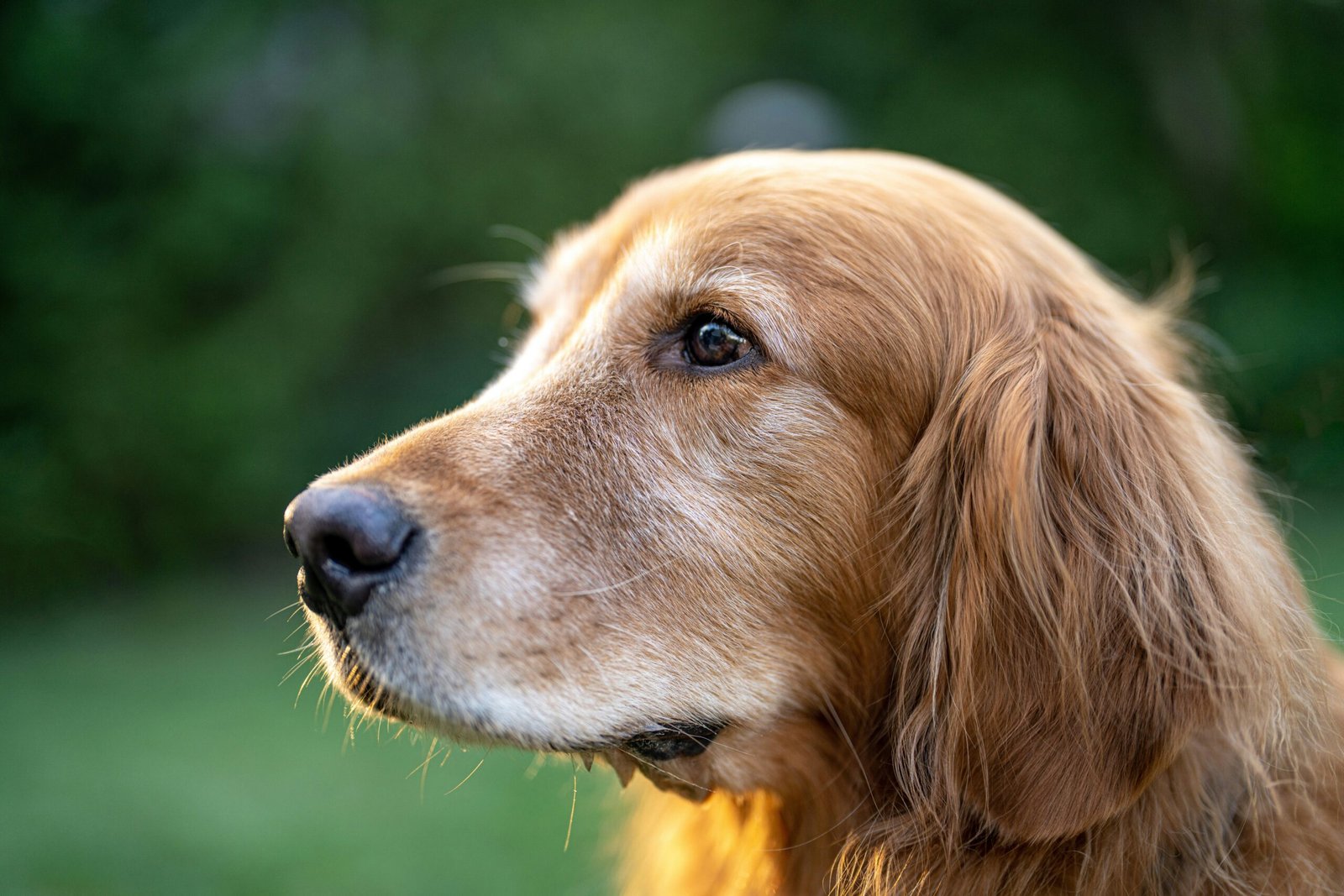
Veterinary researchers use the acronym DISHAA to describe the behavioural domains affected by CDS. It stands for Disorientation, Interactions, Sleep, House soiling, Activity, Anxiety. Each domain covers a specific set of changes that signal cognitive decline rather than normal aging.
Disorientation
This is often the most visible sign once you know to look for it. A dog with dementia may get stuck in corners and not know how to back out. It may walk to the wrong side of a door and wait to be let out. It may stare at walls with no apparent reason. It may fail to recognise familiar places it has been hundreds of times before.
Disorientation is different from bad hearing or reduced vision because the dog is not responding to a missing sensory signal. It is responding incorrectly to a situation it should understand perfectly. Getting lost in its own house is the clearest example of this.
Changes in Social Interaction
A dog with cognitive decline may become less interested in greeting its owner, less responsive to affection, or seem to look through people rather than at them. Some dogs go the other way and become unusually clingy or anxious when left alone.
The change that stands out most to owners is when a dog stops recognising commands it has known for years. Not because it cannot hear them. Because the connection between the word and the action has degraded. This is one of the more heartbreaking signs of dementia in senior dogs because it looks like the dog has simply stopped caring.
Sleep and Activity Disruption
Sleep disruption is one of the earliest signs in many dogs. A dog with this condition may sleep heavily during the day and then pace, whine, or seem restless at night. This reversal of the normal sleep pattern is a strong indicator that something neurological is happening rather than a behavioural issue.
Activity changes go in both directions. Some dogs become less active and more withdrawn. Others become repetitively active, pacing in circles or performing the same motion over and over without apparent purpose.
House Soiling
A dog that was reliably toilet trained for years and begins having accidents indoors is not necessarily being lazy or defiant. The syndrome can cause dogs to forget the signals they used to associate with needing to go outside, or to lose track of where they are in the house well enough to reach the door in time.
This sign is particularly easy to misread as a physical issue, and it is worth ruling out urinary tract infections or other medical causes. But when house soiling appears alongside other DISHAA signs, the condition becomes a much stronger possibility.
Anxiety
Increased anxiety, particularly in situations the dog previously handled calmly, is a recognised sign of cognitive decline. A dog that becomes distressed by normal sounds, shows separation anxiety for the first time, or seems generally more unsettled may be experiencing the disorientation and confusion that comes with cognitive decline.
Early Signs Versus Late Signs
Identifying dementia early makes a significant difference to how well it can be managed. Early signs are subtle enough that many owners miss them entirely. Late signs are harder to ignore but by that point the condition has already progressed significantly.
Early signs to watch for:
A slight increase in daytime sleeping that was not there six months ago. Occasional hesitation at familiar doors or locations. Responding slightly slower to its name than it used to. Minor changes in greeting behaviour, such as not coming to the door when it normally would. Occasional nighttime restlessness that seems unconnected to needing to go outside.
None of these signs alone confirm the condition. But a cluster of two or three of them in a dog over the age of 9 or 10 is worth taking seriously.
Later signs that are harder to miss:
Consistent disorientation in familiar places. Failure to recognise family members or longstanding commands. Significant reversal of sleep and wake cycles. Repetitive behaviours such as pacing or circling. House soiling in a dog with no history of accidents. Prolonged staring at walls or into space.
By the time these signs are prominent, the condition has usually been developing for months or longer.
How Dementia in Senior Dogs Differs from Other Conditions
Several other health conditions can produce symptoms that look similar to cognitive dysfunction. Before assuming cognitive decline, a vet will typically rule out the following.
Hearing and vision loss can mimic disorientation and reduced responsiveness. A dog that does not react to its name may simply not hear it clearly anymore. Testing hearing and vision separately from cognitive function is an important step.
Arthritis and joint pain can cause a dog to move less, seem withdrawn, and sleep more. Pain-related behaviour changes are common in senior dogs and can mask or coexist with cognitive decline. It is possible for a dog to have both.
Hypothyroidism causes lethargy, reduced responsiveness, and behavioural changes that can resemble cognitive decline. Blood tests can confirm or rule this out quickly.
Urinary tract infections explain sudden house soiling without any cognitive component. A urine test is a basic first step when accidents start appearing.
The reason proper diagnosis matters is not just academic. The management approach for cognitive decline is different from the management approach for pain or a thyroid issue. Getting the diagnosis right means the support you provide is actually targeted at the right problem.
What to Do If You Suspect Dementia in Your Senior Dog
If you are seeing multiple DISHAA signs in your dog, the next step is a vet visit. Describe the specific changes you have noticed, when they started, and how frequently they occur. The more specific you are, the more useful the appointment will be. A vet assessing for cognitive dysfunction needs a behavioural history, not just a list of current symptoms.
There is no cure for canine cognitive dysfunction. But there are several approaches that can slow its progression and meaningfully improve daily quality of life.
Diet and supplements are the most accessible starting point. Diets and supplements rich in antioxidants, omega-3 fatty acids, and medium-chain triglycerides have shown some evidence of supporting cognitive function in aging dogs. This is an area where what your dog eats every day really matters. If you are not already feeding a quality senior-specific diet, that is worth addressing alongside anything else you do. You can find the options I have assessed for senior dogs in my article on the best senior dog food.
Cognitive enrichment helps keep neural pathways active. Short, low-impact training sessions with familiar commands, puzzle feeders, and new smells on walks all provide mild cognitive stimulation without the physical demands of intense exercise. Even five minutes of gentle engagement each day is measurably better than none.
Environmental adjustments reduce disorientation in dogs that are already showing spatial confusion. Consistent furniture placement, night lights in areas the dog uses after dark, and keeping food and water in predictable locations all reduce the cognitive load on a dog that is struggling to move through its own space.
Medication is an option in more advanced cases. Selegiline is the primary pharmaceutical option for cognitive dysfunction in dogs and works by increasing dopamine activity in the brain. It is not a solution but can reduce some of the behavioural symptoms associated with the condition. This is a conversation to have with a vet once diagnosis is confirmed.
For dogs also dealing with joint stiffness or mobility issues alongside cognitive changes, addressing physical comfort is equally important. A dog in pain sleeps worse, exercises less, and has less cognitive reserve to work with. You can find my assessed options for mobility aids for senior dogs if that is relevant to your situation.
Supplements specifically targeting cognitive support are also worth considering. I cover the most relevant options in my guide to the best supplements for senior dogs.
FAQ
At what age do dogs typically show signs of dementia?
CDS can technically begin developing from around age 7, though visible signs typically appear later. Most owners begin noticing changes between ages 9 and 12. Large breeds tend to show signs earlier than small breeds, which generally age more slowly.
Can dementia in dogs be reversed?
No. CDS is a progressive neurodegenerative condition and cannot be reversed. The goal of management is to slow progression and maintain quality of life, not to cure the underlying condition.
Is my dog suffering if it has dementia?
Not necessarily. Dogs with CDS can still have good days, enjoy familiar activities, and bond with their owners. The confusion and anxiety that come with later stages can cause distress, which is why early identification and management matter. Regular vet monitoring helps ensure the dog is comfortable and supported appropriately.
How is dementia in senior dogs diagnosed?
There is no single definitive test. Diagnosis is typically based on a detailed behavioural history using the DISHAA framework, a physical exam to rule out other conditions, and sometimes blood work to eliminate thyroid issues or infection. An MRI can support diagnosis in more advanced cases.
Can supplements help a dog with dementia?
Some evidence supports the use of antioxidants, omega-3s, and medium-chain triglycerides for cognitive support in aging dogs. These are not treatments for the condition but may help slow progression and support brain function. They are generally considered safe and are a reasonable addition to a management plan.
Should I keep training a dog with dementia?
Yes, within reason. Very short, gentle sessions with familiar commands provide cognitive stimulation and help maintain the neural connections that are most at risk. Avoid frustrating the dog with complex or new tasks. The goal is gentle activation, not performance.
How do I know when it is time to consider quality of life in a dog with advanced dementia?
When a dog is no longer able to recognise its owners, is consistently distressed, is not sleeping, and has lost most daily function, the conversation about quality of life becomes necessary. This is one of the hardest decisions an owner faces, and a vet who knows the dog well is the right person to have that conversation with.
Final Thoughts
The signs of dementia in senior dogs are easy to explain away, and that is precisely why so many cases go unnoticed until the condition is already well advanced. A dog that seems confused, forgets its commands, or starts pacing at night is not just “getting old.” It may be experiencing real neurological decline that can be meaningfully managed if it is caught early enough.
The most useful thing you can do is take the DISHAA framework seriously once your dog passes age 9 or 10. You do not need a diagnosis to start paying attention. If you notice a cluster of changes, document them and bring them to a vet. Early action gives you more options.
Nutrition, supplementation, cognitive enrichment, and environmental adjustments are all within reach. None of them reverse the condition, but all of them contribute to a better daily experience for a dog that is still very much present, even if its brain is working differently than it used to.
Sources
- https://www.avma.org/news/new-diagnostic-tools-identifying-early-stages-canine-dementia
- https://www.vet.cornell.edu/departments-centers-and-institutes/riney-canine-health-center/canine-health-topics/senior-dog-dementia
- https://news.ncsu.edu/2026/01/researchers-develop-guidelines-for-diagnosing-monitoring-canine-cognitive-decline
- https://www.petmd.com/dog/conditions/neurological/signs-of-dog-dementia
- https://www.akc.org/expert-advice/health/dog-dementia

Pingback: Best Supplements for Senior Dogs: What Actually Works