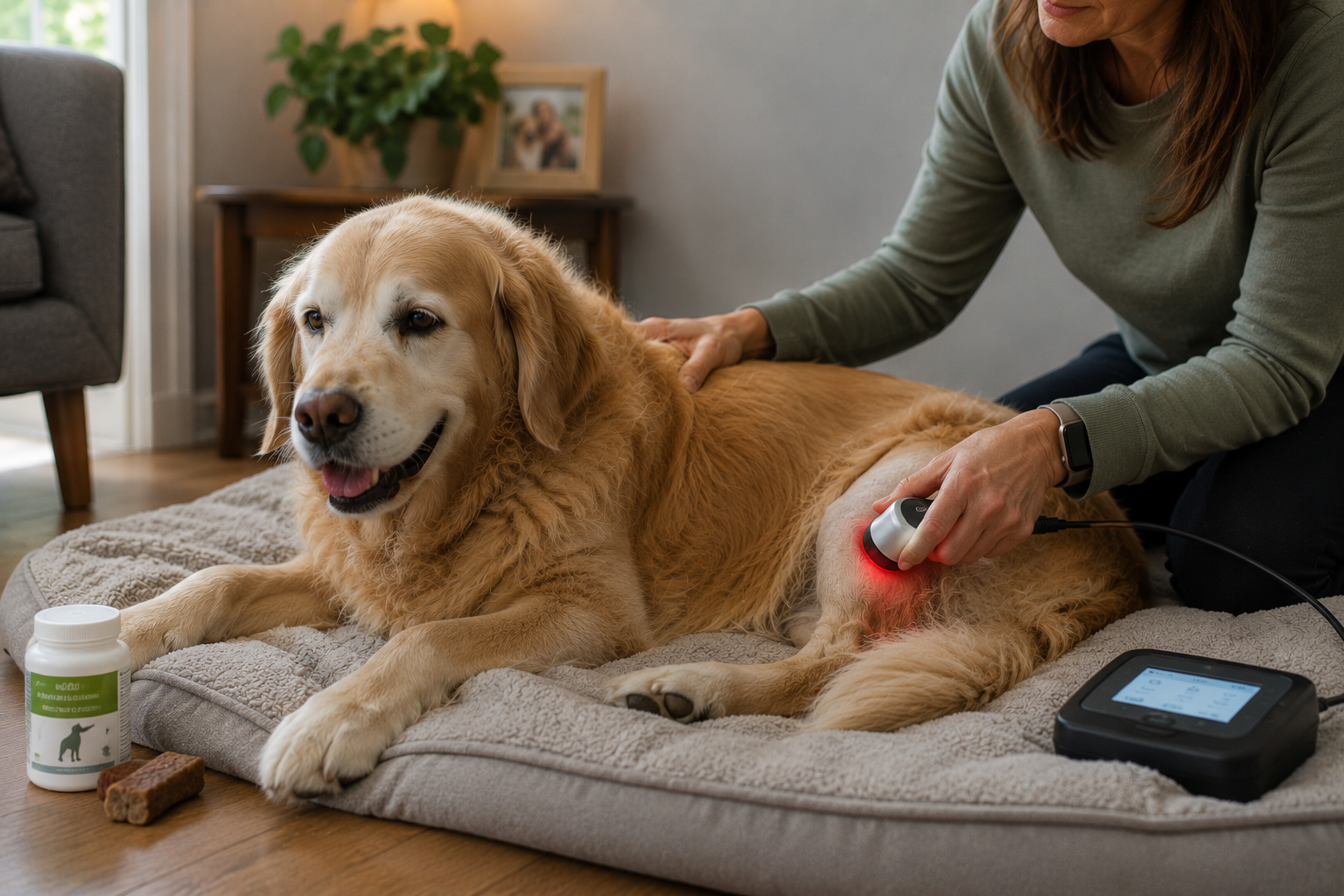
Soothing tips for senior dogs in pain go further than most owners expect. Rest alone is rarely enough. When a person is in significant pain, we do not just tell them to lie down and wait it out. We give them support, adjust their environment, address the pain directly, and make daily life easier while the body does its work. Your senior dog deserves the same approach, and at this stage of life, they need it more than a younger dog would.
This article covers what you can actually do at home to help a senior dog in pain. Not as a replacement for veterinary care, that always comes first. But alongside it, or while you are arranging it, there is a lot you can do that makes a real, measurable difference.
The most effective combination is simple. Make the environment easier to navigate, get the sleep situation right, and support the body from the inside with the right supplements. Those three things together do more than any single change on its own, and once you know that, there is no reason to settle for just one.
By Seniordogcare.
This post may contain affiliate links. If you buy through these links, I may earn a small commission at no extra cost to you. As an Amazon Associate, I earn from qualifying purchases.
Table of Contents
Why Rest Alone Is Not Enough for a Senior Dog
The instinct when a dog is in pain is to restrict everything and wait. Keep them still. Let them rest. See how they are in a few days.
Rest matters. But a senior dog lying on a flat, unsupportive surface for days on end is not recovering well. Their joints are under pressure. Their muscles are stiffening, and a body that already has less muscle mass and less cartilage cushioning than it did five years ago has far less room to absorb that additional strain. If the pain is joint-related, inactivity without support makes stiffness worse, not better.
Think of it this way. If a person had significant back pain, you would not just put them on a hard floor and tell them to sleep it off. You would give them a supportive mattress, heat therapy, appropriate medication, and help them move carefully when needed.
Your senior dog needs the same level of thought, and needs it more precisely because their body has less capacity to bounce back on its own. Rest is one part of the picture, not the whole picture.
Make the Environment Easier to Navigate
This is the first and most practical thing most owners of a senior dog can do. A dog in pain should not have to work hard to get through their day. Every unnecessary jump, every slippery floor, every flight of stairs they have to manage alone adds physical stress to a body that is already struggling, and a senior dog has less reserve to spend on that struggle than it used to.
Remove the need to jump. If your dog sleeps on furniture or needs to get in the car, a ramp removes the impact of jumping entirely. Every jump sends force through joints that are already carrying years of wear. For a senior dog in pain, this is not just uncomfortable. It is additional strain on an already compromised area. A simple ramp to the car and steps to the bed or sofa removes this completely.
For recommendations, see best dog ramps for senior dogs.
Add non-slip surfaces. Slippery floors are a hidden stressor for a senior dog in pain, since a dog with joint pain or an injury has far less ability to recover from a slip than it did a few years ago. The muscle tension from anticipating and recovering from slips on smooth surfaces adds fatigue and discomfort on top of the original pain.
Non-slip rugs on key pathways, especially from the bed to the door and around the food bowls, make movement significantly easier and less stressful. Non-slip dog socks are a good addition for a senior dog that slips frequently on all surfaces.
Keep essentials close. Food, water, and the resting spot should all be within easy reach without requiring your senior dog to navigate stairs or long distances. The less unnecessary movement they have to do to meet their basic needs, the more energy is conserved for actual recovery.
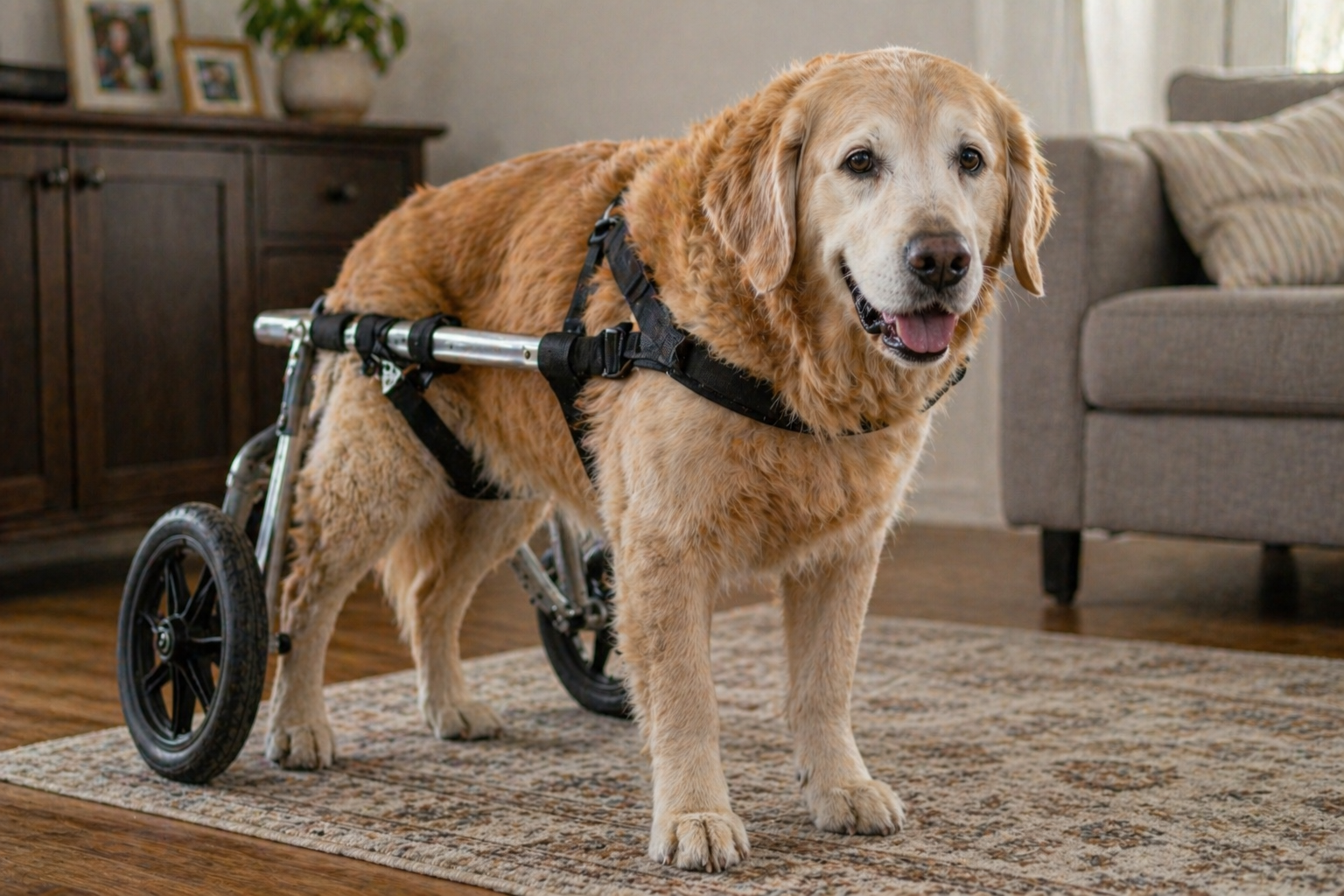
Use a support harness for walks. A rear support harness or full-body harness gives you a safe, ergonomic way to help your senior dog move without putting strain on painful areas. It also prevents falls and gives your dog more confidence moving around while they are in discomfort.
For recommendations, see best senior dog harness. Beyond ramps and harnesses individually, our guide to best mobility aids for senior dogs covers the full range together, so you can match the right combination to your dog’s specific situation.
Get the Sleep Situation Right
Sleep is where the body repairs itself, and for a senior dog this matters more than at any earlier life stage, since recovery capacity has already declined with age. A senior dog in pain that is sleeping on a flat, unsupportive surface is not recovering the way they should. They are waking up stiffer, more uncomfortable, and less able to manage the day ahead, and that deficit compounds night after night.
An orthopedic memory foam bed is not a luxury for a senior dog in pain. It is one of the most practical investments you can make. High-density memory foam distributes the body’s weight evenly, reduces pressure on painful joints, and allows the muscles around those joints to genuinely relax during sleep rather than working all night to compensate for an unsupportive surface.
The entry height matters too. A senior dog in pain should not have to climb or step up to get into their bed. Low-profile beds with minimal raised edges make getting in and out significantly less painful, twice a day, every day.
For recommendations, see best orthopedic dog beds for senior dogs.
Add heat therapy. Heat therapy is one of the most underused tools for a senior dog in pain at home. Gentle warmth applied to stiff or painful joints increases blood flow, relaxes surrounding muscles, and reduces the stiffness that makes every movement harder, particularly first thing in the morning.
A heating pad designed for dogs, placed beside or under the bed, provides ongoing warmth throughout the night. The difference in how a senior dog gets up and moves after sleeping on a heated surface compared to a cold one is often immediately visible, sometimes from the very first morning.
Look for a pad with an auto shut-off safety feature, a chew-resistant cord, and multiple heat settings. For recommendations, see best heating pad for dogs with arthritis, and for a broader range of pain relief products beyond heat specifically, see top 7 best pain relief products for senior dogs.
Support the Body from the Inside
The third part of the approach is internal. What your senior dog eats and what supplements they take directly affects how their body handles pain, inflammation, and recovery, and a body that is already ageing has less margin to manage inflammation on its own.
Omega-3 fatty acids. Fish oil is one of the most evidence-backed supplements for a senior dog in pain, particularly joint pain. Omega-3 fatty acids reduce systemic inflammation at the source rather than just masking symptoms. This matters because inflammation amplifies pain signals, and reducing inflammation reduces how much that pain actually affects your dog day to day.
Glucosamine and chondroitin. For joint-related pain specifically, glucosamine and chondroitin support cartilage health and reduce inflammation in the joint space. They work best used consistently over months rather than as a quick fix, but starting them while your dog is in pain is still worthwhile for the long-term benefit they build toward.
A quality multivitamin. A good senior multivitamin covers multiple systems at once, supporting joints, immunity, and energy together. For a senior dog recovering from pain or injury, having all the nutritional bases covered helps the body function at its best while it does that recovery work.
For a full guide, see what supplements do senior dogs need.
Gentle Therapies That Help
Beyond the three main pillars above, these additional approaches can provide meaningful comfort for a senior dog in pain.
Gentle massage. A slow, light massage improves circulation, loosens tight muscles, and provides real emotional comfort. Focus on areas away from the painful spot itself. Tight muscles around a painful joint compensate for the instability there, and releasing that tension reduces the overall discomfort your dog is carrying.
Avoid any area that causes flinching, pulling away, or vocalising. Work gently and follow your dog’s response rather than a fixed routine.
Warm compresses. For stiff, achy joints, a warm compress applied for 10 to 15 minutes increases local blood flow and reduces stiffness. Wrap a warm, damp towel in a dry towel before applying it, to avoid direct heat on the skin. Check the temperature on your own skin first. It should feel warm, not hot.
Cold compresses for acute injuries. For fresh injuries with swelling, a cold pack wrapped in a towel, applied for 10 to 15 minutes, reduces swelling and numbs acute pain. Never apply ice directly to skin. Cold therapy is for the first 24 to 48 hours after an acute injury. After that, warmth is generally more beneficial for an ageing body.
Calm music and a quiet environment. Research has shown that calm music reduces stress behaviours in dogs. A senior dog in pain is often also anxious and tense, and a quiet, calm environment with minimal disruption reduces the emotional stress that compounds physical pain. This is a small change that requires no effort and still makes a real difference.
What Not to Do
Do not give human pain medication. Never give your dog ibuprofen, aspirin, paracetamol, or any other human pain medication. These are toxic to dogs and can cause serious organ damage. Only use medication prescribed or approved specifically for dogs by your vet.
Do not force exercise. A senior dog in pain that is pushed to exercise beyond what they can comfortably manage will compensate, and that compensation creates new problems alongside the original one, faster than it would in a younger, more resilient body. Gentle movement is good. Forced or excessive movement is not. Our guide on exercise for senior dogs covers how much is genuinely enough.
Do not use essential oils casually. Many essential oils are toxic to dogs. Do not apply them to your dog’s skin or use diffusers in enclosed spaces where your senior dog spends time. The risk is not worth it when safe, effective alternatives already exist.
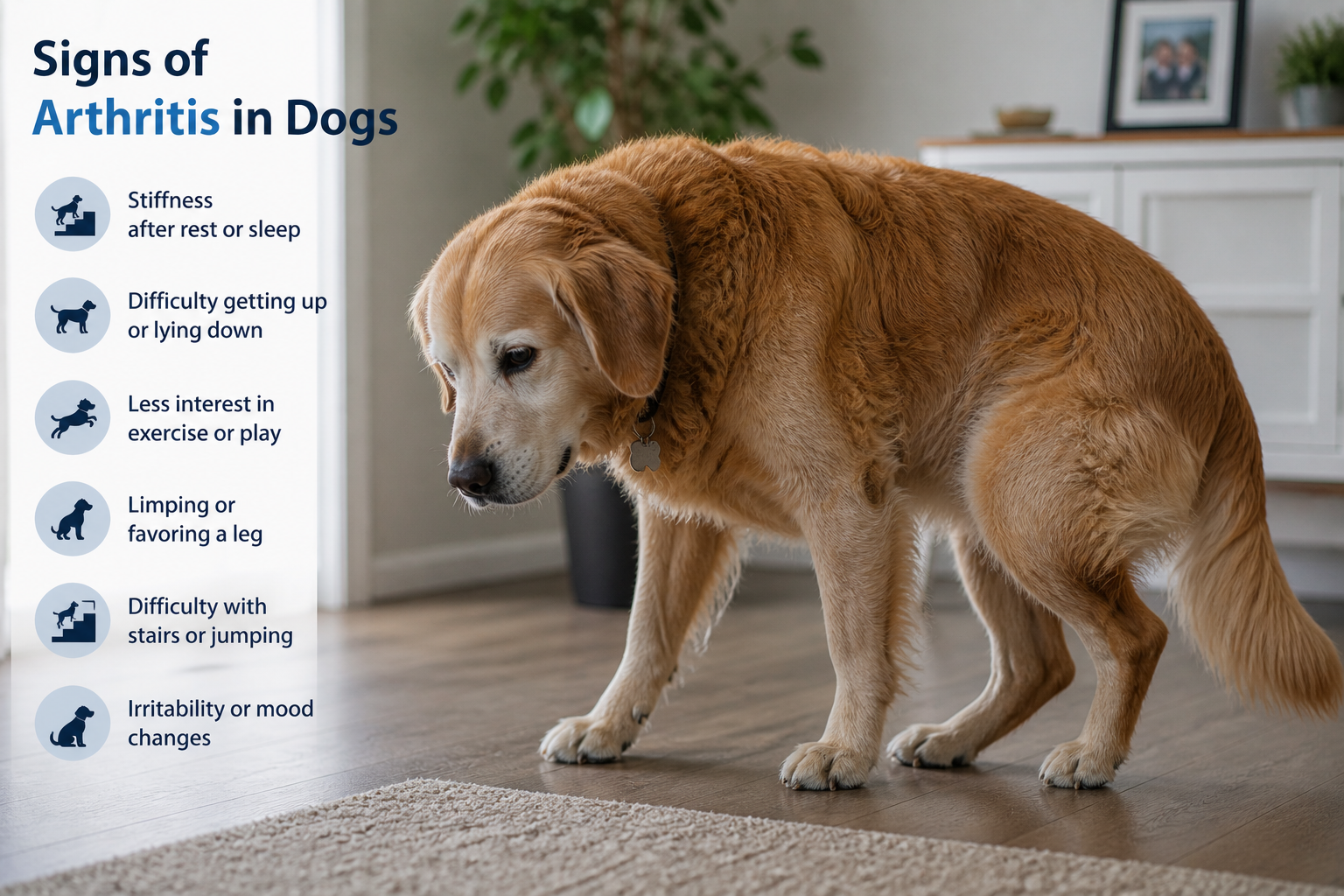
Do not ignore the signs. Home management is supportive care, not a substitute for diagnosis and treatment. If your senior dog is in significant pain, showing multiple signs of distress, or not improving, a vet visit is the right next step. For recognising those signs before they escalate, our guide on how to recognise pain in senior dogs covers what to watch for. The earlier a problem is identified and treated, the better the outcome, and that gap matters more in an older dog than a younger one.
FAQ
How do I know if what I am doing at home is helping my senior dog?
Watch for gradual improvements over days rather than hours. A dog that gets up a little more easily, is slightly more willing to move, or seems less restless at night is responding positively. Small, consistent improvements matter more than dramatic overnight change, especially in an older body.
Can I use essential oils to soothe my senior dog’s pain?
No. Many essential oils are toxic to dogs. Do not apply them to your dog’s skin or use diffusers in enclosed spaces where your dog spends time. The risk is not worth it when there are safe, effective alternatives available.
How long should I try home management before going to the vet?
For mild signs that appeared after unusual activity and improve significantly within 24 to 48 hours, monitoring at home is reasonable. For significant pain, pain that is not improving, or any signs of serious distress, do not wait. Earlier veterinary assessment always produces better outcomes, particularly for a senior dog with less margin to absorb a delay.
Is massage safe for all types of pain in a senior dog?
Massage is generally safe for muscle stiffness and joint-related pain when done gently and away from the painful area directly. It is not appropriate for acute injuries, open wounds, suspected fractures, or areas of significant inflammation. When in doubt, ask your vet before starting.
Should I restrict my senior dog’s movement completely when they are in pain?
Not completely. Total inactivity causes muscle loss and joint stiffness that makes recovery harder, and a senior dog has less muscle to spare than a younger one to begin with. The goal is reduced, gentle, controlled movement rather than complete rest. Short, slow walks on flat surfaces are better than no movement at all for most types of pain.
How does sleep quality affect pain recovery in a senior dog?
Significantly. Poor sleep quality means the body does not repair efficiently overnight, and a senior dog’s overnight repair capacity is already reduced compared to a younger dog’s. A dog sleeping badly because of an unsupportive surface, or because pain is disrupting sleep, recovers more slowly than one sleeping well on proper orthopedic support. Getting the sleep environment right is one of the highest-impact changes you can make.
Final Thoughts
Soothing tips for senior dogs in pain work best when you combine them. A dog with a good orthopedic bed, a heat pad, a navigable environment, and the right supplements is in a significantly better position than one with just one of those things in place.
A lot of owners reach for just one change and stop there, and there is no shame in that, most people simply do not know how much these pieces reinforce each other. But now that you do, rest alone is not enough. Support the environment, support the sleep, and support the body from the inside. Those three things together give your senior dog the best possible foundation for comfort and recovery.
And always involve your vet. Home management supports veterinary care. It does not replace it.
Sources
https://www.akc.org/expert-advice/health/signs-of-pain-in-dogs/
https://www.avma.org/resources-tools/pet-owners/petcare/pain-management-dogs


Pingback: 10 Signs Your dog Might Be in pain (And What To Do) - seniordog-care
Pingback: Joint Problems in Senior Dogs: Causes and Solutions
Pingback: Exercise for Senior Dogs: How Much Is Enough
Pingback: Top 7 Best Pain Relief Products for Senior Dogs - seniordog-care
Pingback: How to Recognize Pain in Senior Dogs - seniordog-care