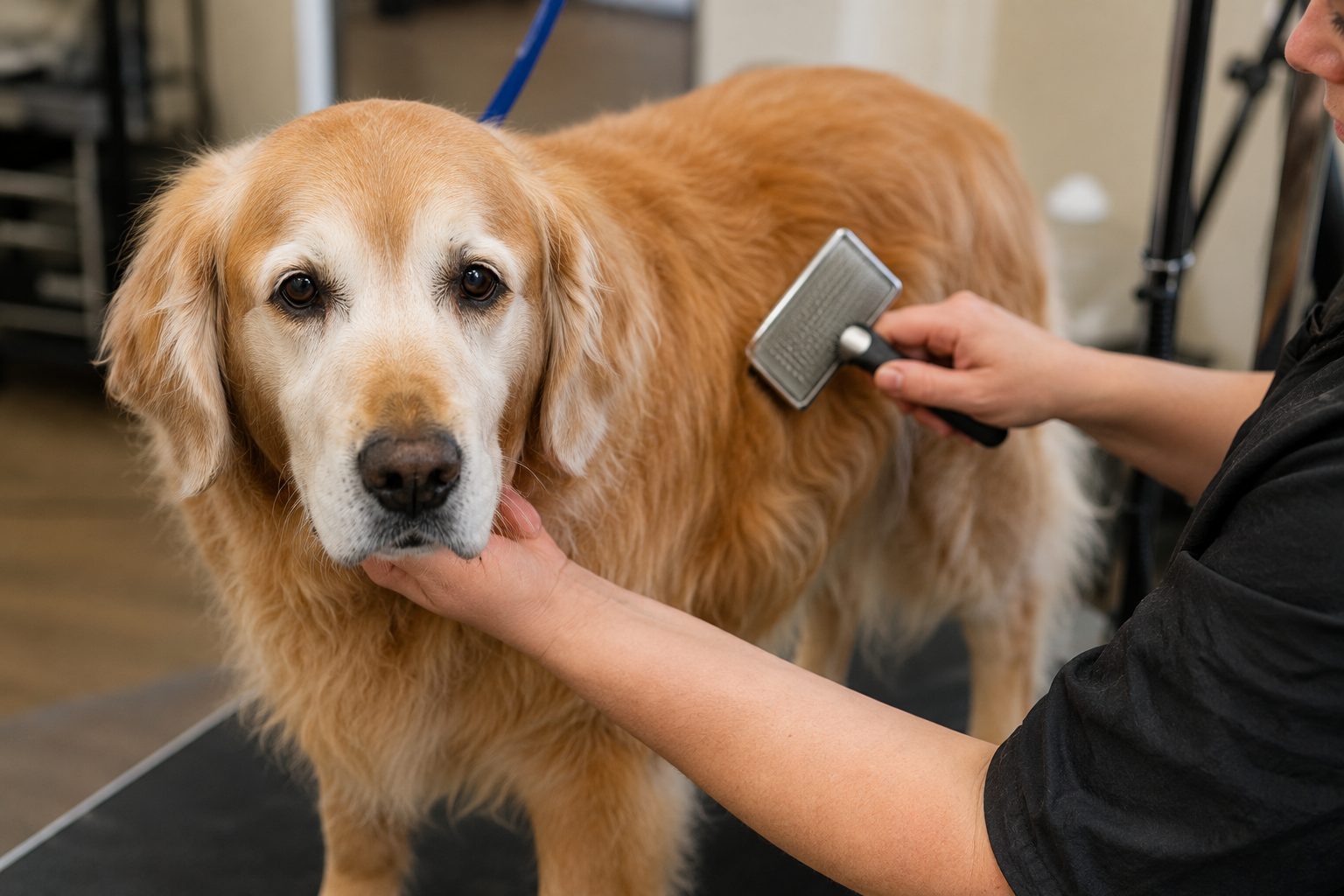
How to groom a senior dog at home is something most owners approach the same way they always have, with the same tools, the same pressure and the same routine they built when the dog was young. The problem is that the dog they are grooming has changed significantly, and a routine that worked without issue at three years old can cause discomfort, skin irritation or genuine pain at ten.
This guide walks through every part of home grooming for an older dog, with the physical changes that come with age built into the approach from the start.
Table of Contents
What Changes About Grooming as a Dog Gets Older
Before picking up a brush or clipper, it helps to understand what has actually changed in the dog you are grooming.
Skin becomes thinner and more fragile. The sebaceous glands produce less natural oil, which leads to drier skin and a coarser coat texture in many older dogs. Tools and pressure that were appropriate on younger, more resilient skin can cause brush burn, redness and irritation on senior skin without the owner realising anything is wrong until the dog starts reacting.
Sensitivity increases around joints. A dog with stiff hips, sore elbows or arthritic knees reacts differently to being handled in those areas than it did when it was pain-free. The flinch when you brush the hindquarters, the pulling away when you lift a paw, the shifting of weight when you work near a particular leg. These are not behavioural problems. They are pain responses, and they need to be treated as such.
Stamina for grooming decreases. An older dog tires more quickly and has less tolerance for long sessions. A dog that once stood on a grooming table for forty minutes without difficulty may now need to lie down after fifteen. Working with that reality rather than against it is the foundation of successful home grooming for a senior dog.
Setting Up for Home Grooming
The setup before you begin makes a bigger difference with an older dog than it does with a younger one.
Choose a surface that gives the dog secure footing and is comfortable to lie on. A non-slip mat on the floor is often the best option for senior dogs because it removes the demand of standing on a raised surface and eliminates the risk of a fall. Many older dogs are more relaxed at floor level than on a table precisely because they feel more stable there.
Gather everything you need before you begin. Getting up mid-session to find a tool leaves the dog waiting in a position it may find uncomfortable. Have your brush, comb, nail clippers, ear cleaning solution, toothbrush and any other tools ready and within reach before the dog settles.
Keep sessions shorter than you think is necessary. It is better to complete half the grooming tasks calmly and come back the next day than to push through a full session with a dog that is increasingly uncomfortable. Two calm twenty-minute sessions produce a better result and a better relationship with grooming than one forty-minute session that ends with the dog stressed.
Find the best grooming tools in our article Best Grooming Tools for Senior Dogs – seniordog-care
How to Brush a Senior Dog at Home
Brushing is the grooming task that happens most frequently and has the most direct impact on coat and skin health. Done well, it prevents matting, stimulates circulation in the skin and gives you a regular opportunity to check for lumps, skin changes and areas of sensitivity you might otherwise miss.
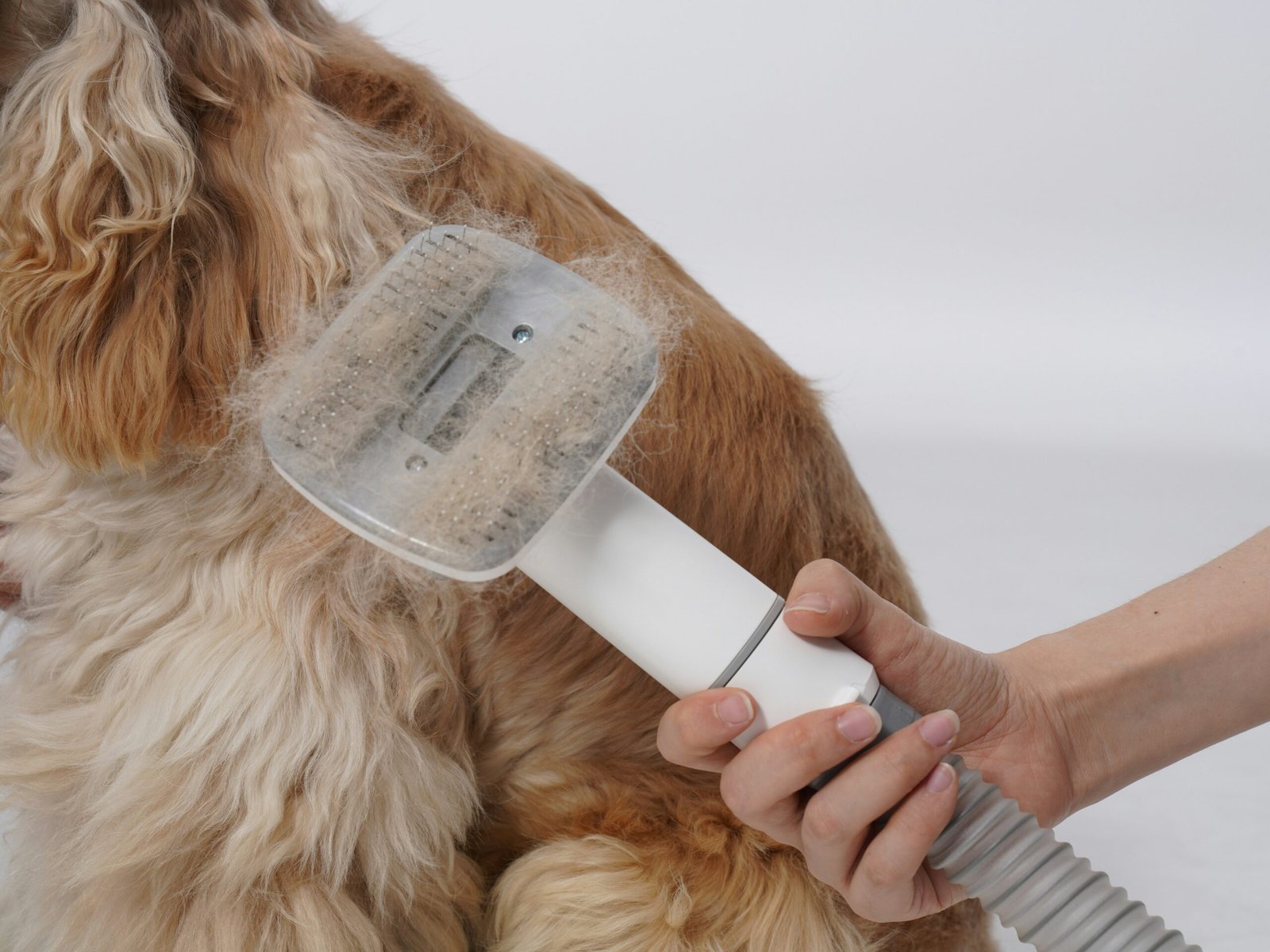
Start with a tool appropriate for the dog’s current coat condition rather than the one you have always used. For most senior dogs, a softer bristle brush or a pin brush with coated tips is more appropriate than a stiff slicker brush used with pressure. For double-coated breeds carrying undercoat, an undercoat rake used lightly is effective without the need to drag repeatedly across the same area of skin.
Work in sections and with the direction of coat growth. Use lighter pressure than you think is necessary, particularly over the spine, hindquarters and any area where the coat is thinner than it used to be. These areas often indicate underlying skin changes or reduced fat padding that makes pressure more noticeable.
When you reach a sensitive area, do not push through. Slow down, reduce pressure and work around it. If the dog consistently reacts to a specific area, check whether there is a physical reason underneath. A patch of skin that is red, thickened, warm or hairless warrants veterinary attention before the next grooming session.
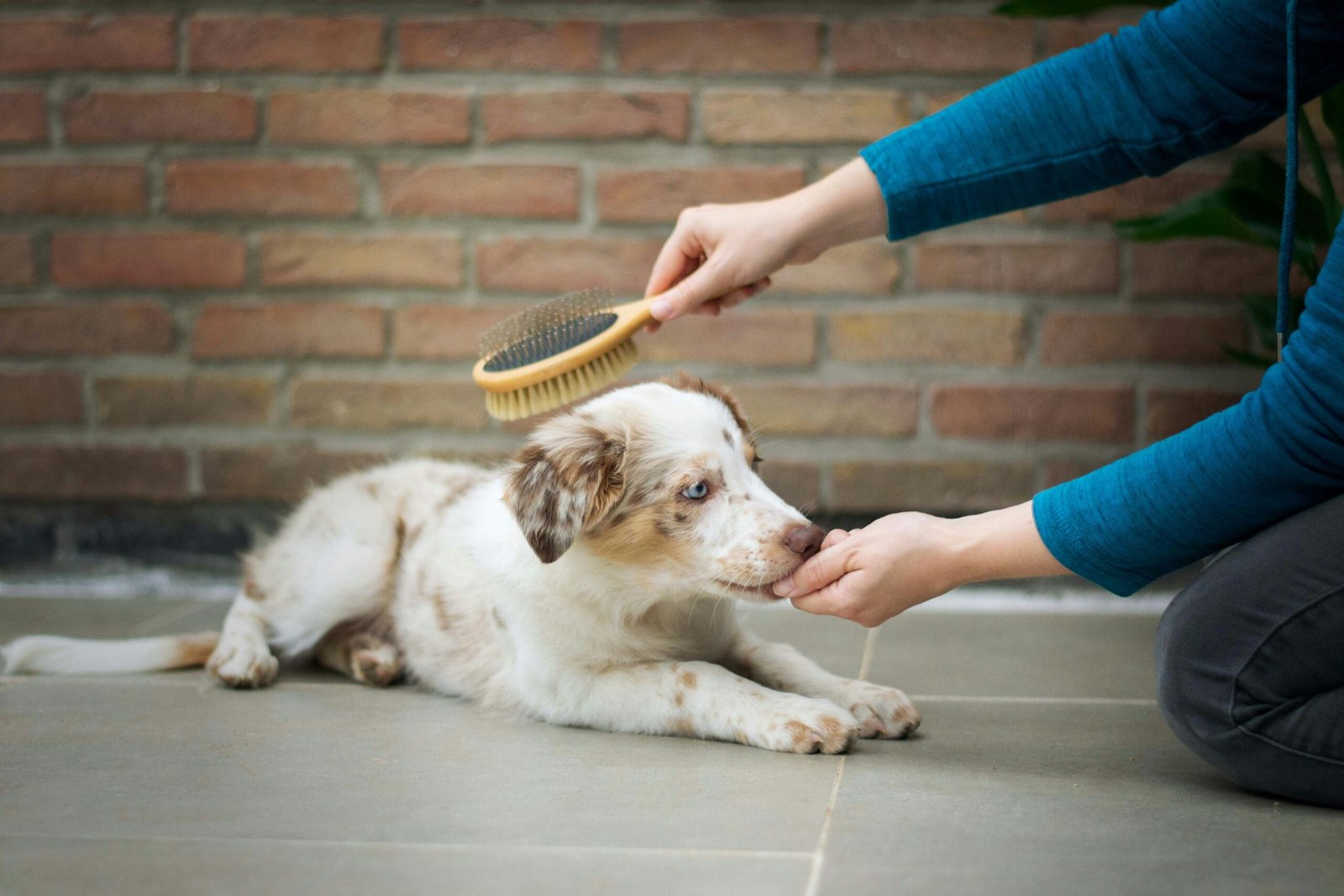
For dogs that resist brushing because of past uncomfortable sessions, reintroduce it gradually. Short sessions, light pressure, immediate reward. The goal is to rebuild a neutral or positive association with the brush before attempting a full coat brushing.
How to Bathe a Senior Dog at Home
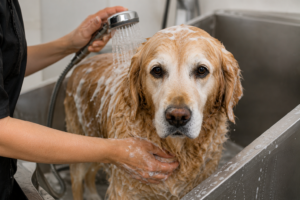
Most senior dogs need bathing every four to six weeks. Bathing more frequently than this strips natural oils from already dry skin and makes dryness worse. Between baths, grooming wipes or a damp cloth over the coat address surface dirt without the full disruption of a bath.
Prepare the bathing area before bringing the dog in. A non-slip mat in the bath or shower is essential for a dog with reduced balance and joint stiffness. Fill the bath to a shallow level rather than using a running shower head if the sound or sensation causes anxiety.
Use a shampoo formulated for dogs with sensitive or mature skin. Oatmeal-based formulations are well suited to older dogs because they soothe and moisturise rather than strip. Avoid shampoos containing alcohol, artificial fragrance or sulphates, which are unnecessarily harsh on senior skin.
Water temperature should be warm but not hot. Test it on the inside of your wrist before the dog enters. Hot water raises the body temperature faster than a young dog would experience, which is a relevant concern for a senior dog with reduced thermoregulation.
Support the dog physically throughout the bath. For larger dogs or those with significant joint issues, a second person makes the process substantially easier and safer. Rinse thoroughly, because shampoo residue on senior skin causes irritation and itching that can persist for days after bathing.
Dry the coat completely after the bath. A damp coat in a cool room contributes to joint stiffness in an older dog. Towel dry first, then use a low-heat hairdryer at a distance if the dog tolerates it. Never hold direct heat close to senior skin.
How to Trim a Senior Dog’s Nails at Home
Nail length has a direct impact on how comfortably a senior dog moves. Nails that are too long prevent the paw from sitting flat on the ground, which changes the load on every joint from the paw upward. In a dog already managing arthritis or hip problems, this is a compounding source of discomfort that is entirely preventable with regular trimming.
Check the nails every two to three weeks. The simple test is to listen for clicking on a hard floor surface. If you can hear the nails making contact when the dog walks, they are too long.
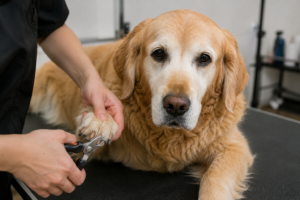
Set the dog up in a position that minimises joint stress. For most senior dogs, lying on their side is the most comfortable position for nail trimming because it removes the demand of weight bearing on the leg being handled. Work slowly and support the leg from underneath rather than pulling it into a position.
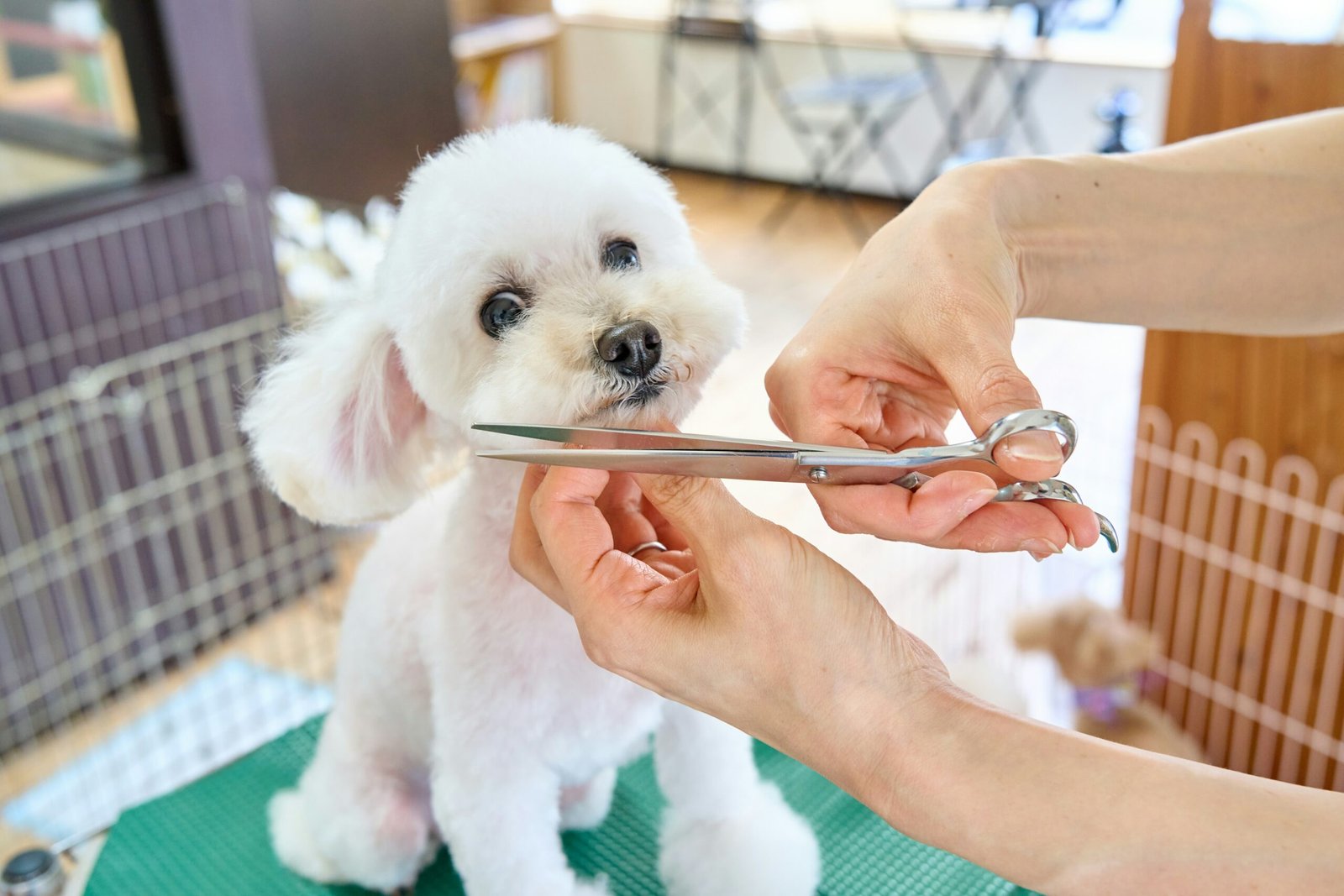
Trim small amounts at a time. The quick, the blood vessel inside the nail, grows longer in nails that have been left too long without trimming. Taking small amounts regularly is safer than attempting to cut back to the correct length in a single session. In light-coloured nails the quick is visible as a pink line and can be avoided easily. In dark nails, trim in small increments and stop when you see a grey or pink dot appear in the centre of the cut surface, which indicates you are approaching the quick.
If trimming causes significant distress regardless of how gradually you introduce it, a veterinary nurse or groomer can take over this task specifically while you continue with the rest of home grooming.
For tool recommendations that suit senior dogs including those with thicker nails, this guide to the best nail clippers for senior dogs covers the options worth considering.
How to Clean a Senior Dog’s Ears at Home
Ear checks should be part of every grooming session. Healthy ears smell neutral and have a light coating of pale wax. Any dark discharge, strong odour, redness in the visible canal, or frequent scratching at the ears is a signal to stop and seek veterinary advice before cleaning, because cleaning an infected ear at home drives debris deeper into the canal.
For healthy ears that are accumulating normal wax, apply a small amount of veterinary-approved ear cleaning solution to a cotton pad. Clean only what is visible from the outside, working gently from the outer edge inward. Never insert cotton buds or any implement into the ear canal itself.
Dogs with floppy ears that restrict airflow need more frequent checks than upright-eared breeds because the warm, enclosed environment inside the ear favours the growth of bacteria and yeast. Senior dogs of these breeds, Spaniels, Retrievers and Basset Hounds in particular, should have their ears checked at every grooming session without exception.
For a full guide to ear cleaning technique and the signs that distinguish normal wax from the early stages of infection, this spoke on how to clean a senior dog’s ears covers the detail this section does not.
How to Brush a Senior Dog’s Teeth at Home
Dental disease is present in the majority of dogs over seven years of age and is directly linked to heart, kidney and liver health through the bacteria that enter the bloodstream from infected gum tissue. Daily toothbrushing is the single most effective thing you can do at home to slow this process.
Use a toothbrush designed for dogs and a dog-formulated toothpaste. Human toothpaste is toxic to dogs and must never be used. Dog toothpastes come in flavours that most dogs accept without difficulty, which makes daily brushing a realistic habit rather than a daily battle.
If the dog has never had its teeth brushed, introduce it in stages. Let the dog taste the toothpaste from your finger first. Then run a finger along the gum line over several sessions. Then introduce the brush. Senior dogs adapt to new routines. They simply need the introduction to happen at a pace that does not overwhelm them.
Focus on the outer surfaces of the upper back teeth, where tartar accumulates fastest. A full brushing session takes less than two minutes once the dog is accustomed to it. The consistency matters far more than the duration.
Reading Your Dog During a Grooming Session
This is the skill that determines whether home grooming stays manageable as your dog ages.
The signals that a dog is uncomfortable during grooming are usually subtle and appear well before a snap or a growl. Lip licking, yawning, turning the head away, shifting weight, standing up from a lying position, a stiffening of the body or a change in breathing rate. These are all communications. They precede the more obvious signals and responding to them early keeps both dog and owner safe.
When you notice a signal, pause. Give the dog a moment. If it settles, continue with lighter pressure or from a different angle. If it does not settle, end the session and come back later. A dog that learns grooming stops when it communicates discomfort is a dog that communicates rather than escalates to biting.
This approach requires more patience than simply holding the dog still and finishing the task. It also produces a dog that remains groomable throughout its senior years rather than one that requires sedation for a basic nail trim.
For dogs with significant mobility limitations that make certain grooming tasks genuinely difficult at home, this overview of senior dog mobility aids covers the support options that make handling easier. For the full picture on what changes about grooming as dogs age and how to adapt across every area, the senior dog grooming guide covers the complete breakdown.
FAQ
How do I stop my senior dog from moving around during grooming?
The most effective approach is to work with the dog in a position it finds comfortable rather than one that suits you. Most senior dogs groom more calmly when lying on their side on a non-slip surface than when standing. Short sessions with immediate rewards build tolerance over time. A dog that moves constantly during grooming is usually communicating discomfort, not defiance.
My senior dog has mats that I cannot brush out. What should I do?
Do not attempt to pull mats out with a brush. This causes pain and damages the skin underneath, particularly on a senior dog with fragile skin. Use a detangling spray to soften the mat, then work through it with your fingers before introducing a wide-toothed comb. For severe mats, particularly those close to the skin, clipping them out with blunt-ended scissors or asking a groomer to remove them is safer than prolonged brushing.
Can I use human grooming products on my senior dog?
No. Human shampoos, conditioners and toothpastes are formulated for human skin pH, which is different from dog skin pH. Using human products on a dog disrupts the skin barrier and causes irritation. Human toothpaste contains fluoride and other compounds that are toxic when swallowed. Use products formulated specifically for dogs throughout.
How do I know if I am brushing too hard?
Redness of the skin after brushing, the dog flinching or moving away repeatedly, or small scratches visible on the skin surface after a session all indicate too much pressure. Senior dog skin requires considerably lighter pressure than younger dog skin. If you are in any doubt, reduce pressure until the dog shows no reaction and the skin shows no redness after the session.
Should I groom my senior dog more or less often than when it was younger?
More often, but in shorter sessions. The frequency of brushing, nail checks and ear checks should increase as the dog ages because coat and skin changes happen faster and health issues can develop more quickly. The duration of each session should decrease to account for reduced stamina and increased joint sensitivity.
Final Thoughts
Grooming a senior dog at home is not more complicated than grooming a younger dog. It requires more attentiveness and a willingness to adapt the routine to the dog in front of you rather than the dog you remember.
The dog that lies on its side while you work through its coat, that lets you lift each paw with patience rather than speed, that accepts a short session today and another tomorrow. That dog is telling you what it needs. Following that lead is what keeps home grooming a manageable, positive part of your dog’s care throughout its senior years.
Pingback: Bathing a Senior Dog: What You Need to Know - seniordog-care
Pingback: Senior Dog Grooming: The Complete Guide - seniordog-care
Pingback: Best Grooming Tools for Senior Dogs - seniordog-care
Pingback: Best Dog Toothbrush for Senior Dogs - seniordog-care
Pingback: Best Nail Clippers for Senior Dogs - seniordog-care