Dog strollers vs dog carriers is a genuine choice for owners of senior dogs who want to keep including their dog in outings that walking alone no longer comfortably allows. Both let a dog get outside, get fresh air, and stay part of the daily routine, but they solve different problems and suit different situations.
Choosing the right one depends on your dog’s size, mobility, and how far you typically go, not simply which one looks more convenient in a shop. This guide compares the two directly for a senior dog’s specific needs. For specific stroller recommendations by size, our guide to the best senior dog strollers covers small, medium, and large breed options in depth.
This post may contain affiliate links. If you buy through these links, I may earn a small commission at no extra cost to you. As an Amazon Associate, I earn from qualifying purchases.
Table of Contents
What Are Dog Strollers and Dog Carriers?
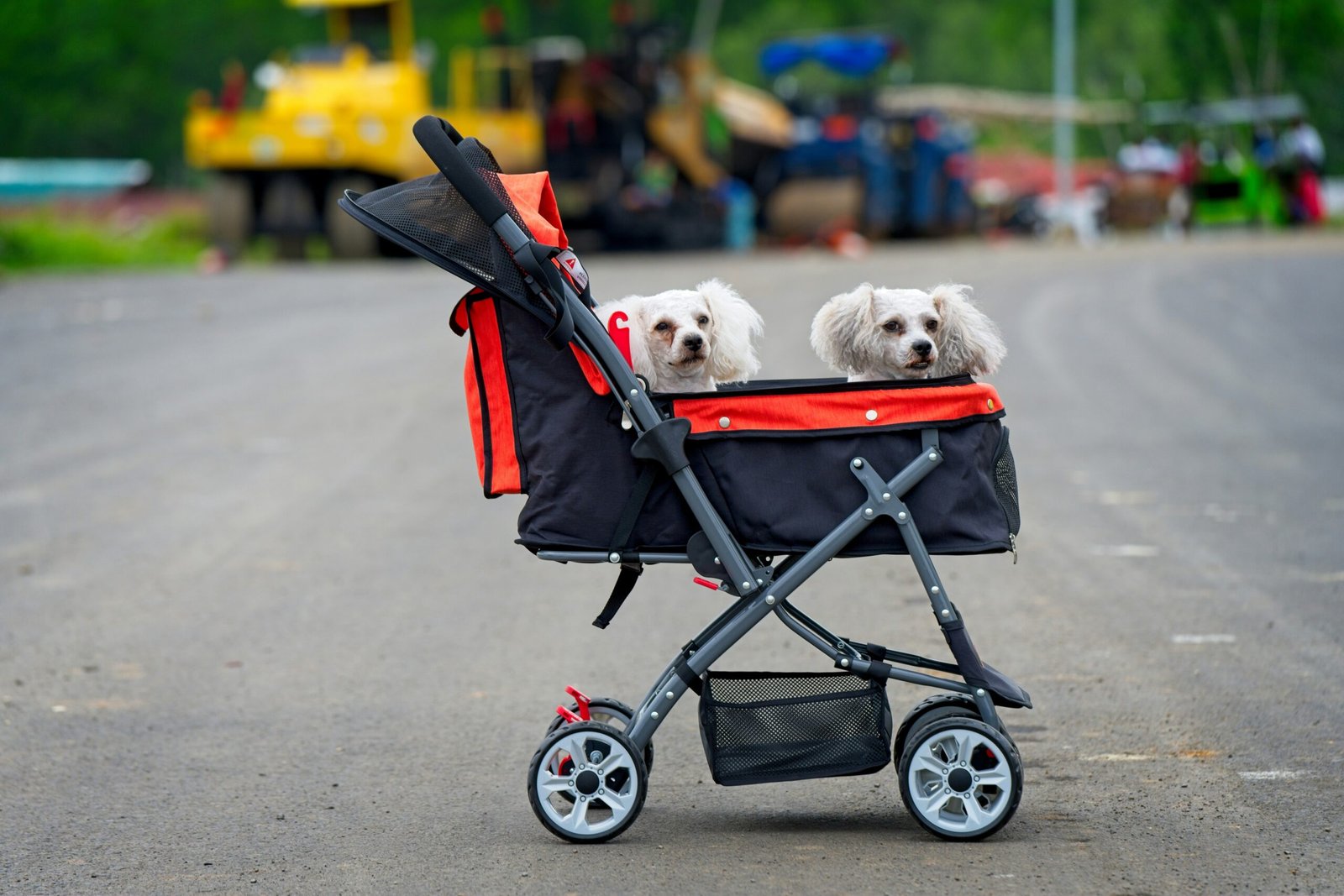
Dog strollers are small, wheeled carriages designed to transport a dog while you push them along, ranging from compact models for small breeds to sturdier designs built for bigger dogs. Most feature padded interiors, mesh windows for ventilation, and storage space for essentials, and they suit long walks, outdoor outings, or a senior dog that tires before the walk is actually over.
Dog carriers are portable enclosures you carry on your lap, over your shoulder, or in a backpack, ranging from soft-sided bags to structured, airline-approved models. They suit short trips, vet visits, or travel on public transport, keeping a dog secure and close rather than providing room to move.
Both extend a senior dog’s ability to get out and stay engaged with daily life, but they solve genuinely different problems, and understanding which one your dog actually needs matters more than picking whichever looks more popular.
Comparing the Two Directly
| Factor | Dog Stroller | Dog Carrier |
|---|---|---|
| Portability | Bulkier, larger footprint | Highly portable, easy to carry |
| Comfort and space | Spacious, padded, room to move | Limited space, cozy for short durations |
| Weight and size limit | Supports small to large dogs depending on model | Best for small to medium dogs |
| Outdoor use | Smooth wheels, suited to parks and rough terrain | Not ideal for long outdoor stretches |
| Senior or mobility-limited dogs | Excellent, dog rests comfortably while moving | Limited, mainly containment rather than comfort |
| Storage | Often includes baskets for water, treats, essentials | Minimal or no storage |
| Airline or public transport | Generally not suitable | Many models are airline-approved |

Why Strollers Tend to Suit Senior Dogs Better for Longer Outings
For a senior dog with reduced mobility, arthritis, or one recovering from surgery, a stroller lets them enjoy walks without straining already compromised joints or muscles. The dog gets fresh air, new smells, and time with you, without the physical cost of walking the entire distance.
Pros:
- Genuinely well suited to senior or injured dogs needing to rest mid-outing
- Comfortable, padded interiors with room to reposition
- Storage for water, leash, and essentials
- Smooth wheels handle varied terrain reasonably well
Cons:
- Larger footprint, less convenient in crowded spaces or on public transport
- Heavier and less portable than a carrier
- Higher cost for a quality model with good suspension
Best for: senior dogs, dogs recovering from surgery, or any dog that tires partway through a walk it once managed easily.
Why Carriers Suit Short Trips and Travel Better
A carrier keeps a small or lightweight senior dog close and secure, which matters for short, specific trips rather than extended time outdoors.
Pros:
- Highly portable, easy for errands, vet visits, or public transport
- Close contact can reduce anxiety in a small or nervous senior dog
- Many models are airline-approved
- Lightweight and easy to store
Cons:
- Limited comfort for a longer outing, since space to move is minimal
- Weight restrictions rule out most medium and large dogs
- Little to no storage for extras
Best for: small senior dogs on short trips, vet visits, or travel, rather than an extended walk.
Factors to Consider When Choosing Between Them
Your dog’s size and weight. Small dogs manage well in either a carrier or a compact stroller. Medium to large dogs generally need a sturdier stroller with room to sit, stand, or lie comfortably. Always check the manufacturer’s weight limit before buying.
Mobility and health. A senior dog with joint pain, arthritis, or recovery needs benefits more from a stroller that lets them rest without strain. A generally healthy, smaller dog can manage a carrier for shorter outings without issue.
Trip length and purpose. Short errands or vet visits suit a carrier. Longer walks or outdoor time suit a stroller, since the extra space and ventilation matter more the longer the outing runs.
Portability versus comfort. A carrier wins on convenience and storage. A stroller wins on comfort and room to move. Neither is universally better, the right choice depends on what a specific outing actually calls for.
What Happens If You Choose the Wrong Option
Picking the wrong format between a stroller and a carrier rarely causes serious harm, but it does quietly undermine the reason you got one in the first place, and the gap between “technically works” and “actually helps” is bigger than it looks.
A senior dog placed in a carrier for what turns out to be a genuinely long outing spends most of that time cramped into a space too small to reposition in comfortably. For a dog with any degree of joint stiffness, that confinement can leave them stiffer afterward than if they had simply stayed home, which defeats the entire purpose of bringing them along. The carrier was never built for that duration, and no amount of padding changes the fact that the interior space simply is not designed for a dog to shift position freely over an hour or more.
The reverse mistake also happens. An owner buys a stroller for a small dog that was really only ever going on short errands, vet visits, or trips on public transport, and ends up managing a bulky, wheeled carriage through doorways, elevators, and crowded spaces where a simple backpack carrier would have done the job with far less hassle. The stroller is not wrong in principle, it is wrong for that specific use case, and the daily friction of managing something oversized for the actual need tends to mean it gets used less often than it should, sitting folded in a closet more than it sits in use.
The practical lesson is to match the tool to the outing you actually take most often, not the outing you imagine you might take occasionally. A dog that mostly goes on short errands does not need a premium all-terrain stroller sitting mostly unused. A dog that goes on long daily walks and tires partway through genuinely needs the stroller, and a carrier bought instead will get abandoned the first time it proves too small for the trip it was actually needed for.
Introducing Either Option Without Creating Stress
A senior dog encountering a stroller or carrier for the first time can be understandably wary, particularly if the reason for introducing it is a recent, visible decline in stamina or mobility that has already made the dog more sensitive to changes in its routine.
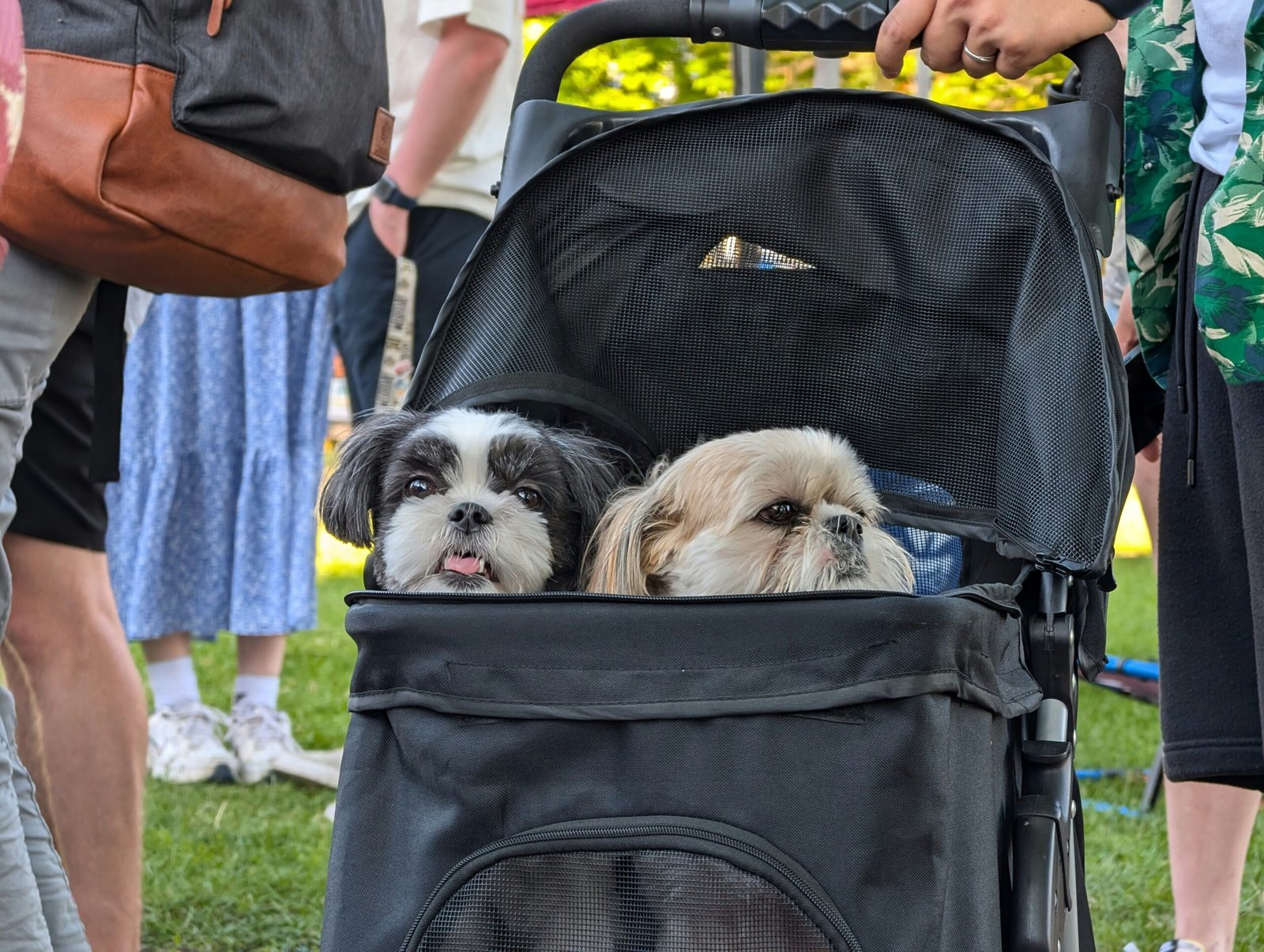
For a stroller, let your dog sniff and investigate it fully while it stays stationary, ideally with a familiar blanket or piece of clothing already inside so the space smells reassuring rather than foreign. Use calm encouragement and treats for the first few minutes of simply sitting inside without moving, before attempting even a short, slow push around a quiet, familiar space. Rushing this step, lifting a reluctant dog straight into a moving stroller, tends to create lasting resistance that takes far longer to undo than the patience saved by skipping the introduction.
For a carrier, the same principle applies but the enclosed, zipped nature of most carriers makes gradual introduction even more important. Start with the carrier open and accessible, treats scattered inside, so your dog associates it with something positive before the door is ever closed. Practice brief, calm closures of a few seconds at a time before attempting an actual short trip, and always pair the first few real outings with a genuinely short, low-stakes errand rather than a longer trip where you cannot easily stop and reassure your dog if the experience proves more stressful than expected.
Either option works considerably better long-term when the first experience is calm and unhurried, since a senior dog’s response to that first outing tends to shape how readily it accepts the tool going forward, for better or for worse.
FAQ
Which is safer for a senior dog?
Strollers are generally the better choice for a senior or injured dog, since they allow rest without straining joints or muscles. Carriers suit short trips or smaller, generally healthy dogs better than extended outings.
Can I use a stroller and a carrier for the same dog?
Yes, and many owners do exactly this, a stroller for longer walks and outdoor time, a carrier for short errands or travel where portability matters more than space.
Are carriers allowed on planes or public transport?
Many soft-sided carriers are airline-approved and suitable for buses, trains, or subways. Always check the specific transport provider’s rules before travelling.
How do I introduce my senior dog to a stroller?
Start with short, calm sessions while the stroller is stationary, letting your dog investigate and rewarding calm acceptance. Gradually add short, slow pushes before relying on it for a full walk.
Can strollers handle rough terrain?
Not all of them. All-terrain models with larger wheels suit parks, gravel, and uneven paths well, while smaller-wheeled strollers are better suited to smooth pavement.
Final Thoughts
Choosing between a dog stroller and a dog carrier for a senior dog comes down to what a specific outing actually requires. A stroller suits longer walks, outdoor time, and a dog that tires or has joint pain, letting them stay part of the outing without the physical cost of walking the whole way. A carrier suits short trips, travel, and a smaller dog where portability matters more than room to move.
For specific stroller options by size and budget, our guide to the best senior dog strollers covers what is worth considering. If mobility support during actual walks is what you need rather than transport, our guide to best senior dog harness and our full guide to best mobility aids for senior dogs cover the broader range of options.



Pingback: Best Senior Dog Strollers for Small, Medium, and Large Breeds
Pingback: Top 8 Harnesses for Older Dogs with Arthritis or Mobility Issues - seniordog-care
Pingback: Best Mobility Aids for Senior Dogs – 2026 Guide