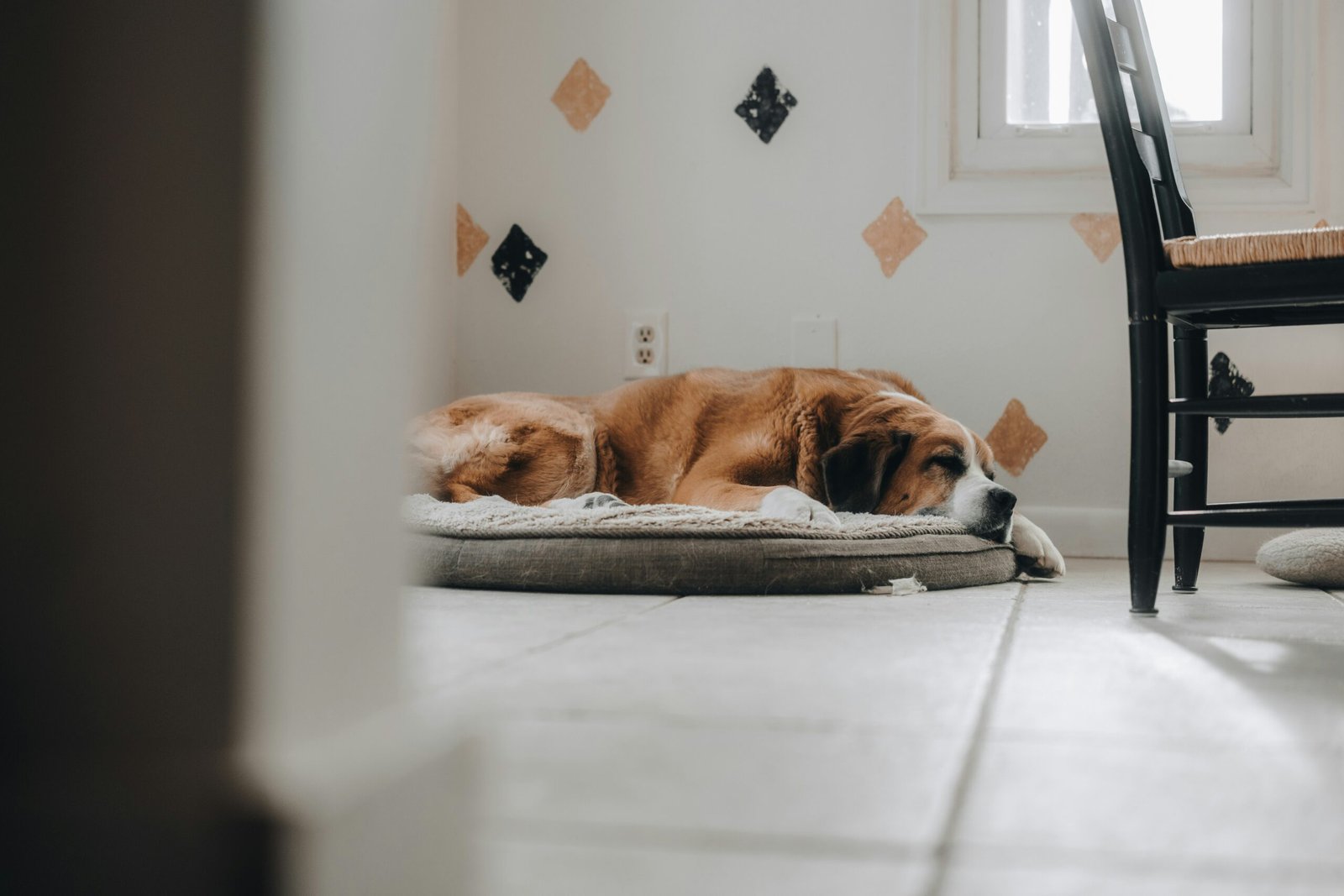
The best orthopedic dog bed for a senior dog is not just about comfort. Sleep is the foundation of everything else for an ageing dog. You can feed the best food and give the right supplements, but if your dog sleeps on a flat, unsupportive surface every night, none of that works the way it should. The body repairs itself during sleep, and joints recover during sleep. For a senior dog already dealing with stiffness and pain, getting the sleep surface right is one of the most impactful changes you can make.
The problem is that a lot of so-called orthopedic beds are just cheap egg crate foam with a fancy label. They feel soft when pressed with a hand but compress completely under a dog’s actual weight, leaving the dog essentially on the floor with a thin soft layer on top. That is not real orthopedic support. For the full comparison of what separates genuine support from marketing, our guide on memory foam versus egg crate dog beds covers that distinction directly.
This guide only includes beds that provide real support, hold their shape over time, and actually relieve pressure on joints. If your dog struggles to get up after sleeping, avoids hard floors, or seems stiff in the mornings, this is one of the most practical upgrades available. For the fuller case on whether your specific dog actually needs one, our guide on do senior dogs need an orthopedic bed covers that question directly.
This post may contain affiliate links. If you buy through these links, I may earn a small commission at no extra cost to you. As an Amazon Associate, I earn from qualifying purchases.
Table of Contents
Why Senior Dogs Need Orthopedic Support
As dogs age, their joints go through significant change. Cartilage breaks down, muscles weaken, and conditions such as arthritis and hip dysplasia become increasingly common. This usually happens gradually, showing up first as more sleep, slower movement getting up, or avoiding hard floors.
A regular dog bed offers no real solution here. Most standard beds use cheap polyester fill or thin foam that compresses under a dog’s weight within weeks, which means the dog is essentially sleeping on the floor with direct pressure on already sensitive joints. A genuinely orthopedic bed works differently. High-density memory foam distributes weight evenly across the surface, reducing pressure points on hips, shoulders, and elbows. This means less stiffness after sleep, easier movement when getting up, and better quality rest overall.
The difference is especially noticeable in dogs over seven years old, large breeds, and any dog already showing signs of joint pain. For these dogs, an orthopedic bed is not a luxury. It is one of the most practical things an owner can do to improve daily comfort.
Quick Picks
Best overall: Big Barker 7″ Orthopedic Dog Bed — thick, high-density foam that does not flatten, built specifically for dogs with real joint issues rather than mild stiffness.
Best budget: EHEYCIGA Orthopedic Dog Bed — genuine memory foam rather than cheap padding, with a waterproof layer and bolsters at an accessible price.
Best for large senior dogs: Big Barker 7″ Orthopedic Dog Bed — built around the thicker foam large dogs actually need, keeping its shape over years rather than months.
Best for nervous or cuddling dogs: FurHaven Orthopedic Bolster Bed — raised bolster edges for dogs that like to curl up, alongside basic pressure relief.
Best premium: PetFusion Ultimate Orthopedic Dog Bed — solid memory foam with strong durability, a reliable middle ground between comfort and long-term support.
Best for active massage therapy: Dog Cloud Massage Therapy Bed — a bed built around Cycloid Vibration Therapy, delivering active massage rather than passive support, for owners willing to invest considerably more for a dog with significant mobility loss.
If your dog has serious joint pain or struggles to get up, go with the Big Barker. If you want the best value without sacrificing genuine support, the EHEYCIGA is the smarter pick.
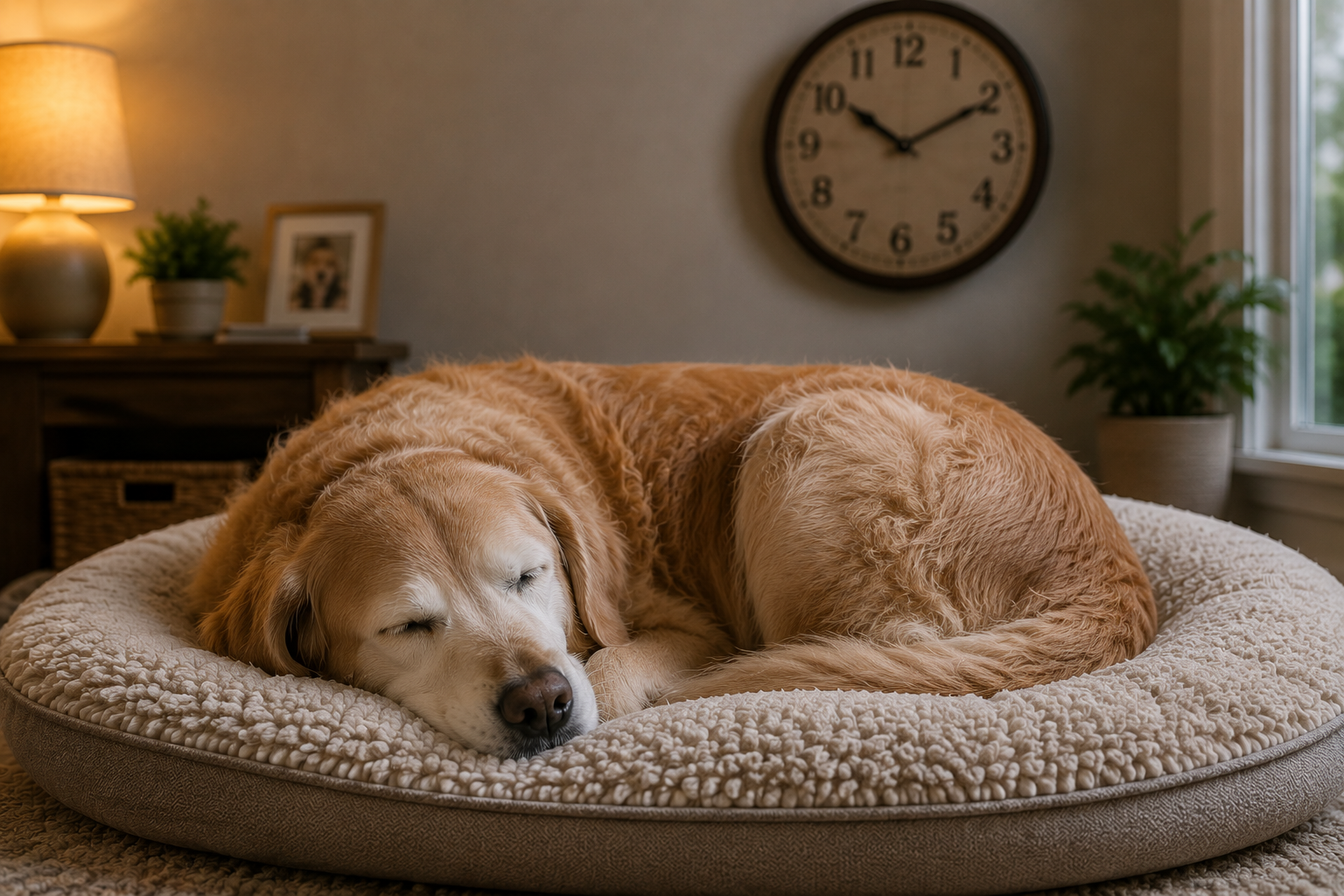
Orthopedic Beds for Senior Dogs Top Picks
1. Big Barker 7″ Orthopedic Dog Bed
Built specifically for large and senior dogs, this bed uses seven inches of high-density foam that keeps its shape even under heavy, sustained weight, which matters more than anything else since support disappears the moment foam flattens. It does not just feel soft. It actively supports the spine and relieves pressure points, and many owners report their dogs getting up more easily after switching to this bed.
Pros:
- Extremely thick, genuinely supportive foam
- Does not flatten over time
- Designed specifically for large and senior dogs
- Helps visibly with mobility and joint relief
Cons:
- Expensive relative to most competitors
- Too large for small spaces
- Overkill for small dogs under 10 kilograms
Who should NOT buy this: owners of small dogs, where the foam density is calibrated for a much heavier body and provides no additional benefit.
Best for: large senior dogs with arthritis, hip issues, or serious ongoing stiffness.
2. EHEYCIGA Orthopedic Dog Bed
This is one of the few genuinely affordable beds that actually uses memory foam rather than cheap padding, combining memory foam with a firmer support layer for decent pressure relief across most dogs. Unlike cheaper beds, it does not collapse immediately under weight, and the waterproof layer is a real advantage for a senior dog that has more accidents or drools more with age.
Pros:
- Affordable with genuine memory foam
- Waterproof layer protects the foam itself
- Bolsters add comfort and a sense of security
- Solid choice for most senior dogs
Cons:
- Not as thick as premium beds
- Wears down faster over time than higher-end options
- Less support for very heavy dogs
Who should NOT buy this: very large or heavy dogs needing maximum foam thickness, where Big Barker is the stronger choice.
Best for: budget-conscious owners with mild to moderate joint issues.
3. PetFusion Ultimate Orthopedic Dog Bed
A balanced option sitting between Big Barker’s extreme support and typical mid-range beds. Solid memory foam holds its shape well over time and provides consistent support, with build quality noticeably higher than budget alternatives, meaning it lasts longer and keeps its shape better.
Pros:
- High-quality, durable memory foam
- Comfortable without sacrificing support
- Durable, easy-to-clean cover
- Works well for both medium and large senior dogs
Cons:
- Not thick enough for very large dogs with severe joint issues
- More expensive than budget options
- No bolster edges for dogs that prefer containment
Who should NOT buy this: dogs needing bolster-style containment, where FurHaven is the better fit.
Best for: owners wanting reliability and durability without going to the premium extreme.
4. FurHaven Orthopedic Bolster Bed
This bed prioritises comfort and containment over maximum orthopedic performance, using egg crate foam for airflow and light pressure relief rather than dense memory foam. The bolster design gives head and neck support and makes dogs feel secure, which many senior dogs, particularly anxious ones, genuinely prefer.
Pros:
- Affordable
- Comfortable bolster edges for dogs that like to curl up
- Good for light support needs
- Soft, cosy feel
Cons:
- Not true memory foam
- Flattens faster than denser options
- Not suitable for heavy dogs or serious joint pain
Who should NOT buy this: dogs with significant, diagnosed joint pain, where the egg crate foam is not dense enough to provide real relief.
Best for: small or anxious senior dogs that prefer to curl up rather than lie flat.
5. Bedsure Orthopedic Dog Bed
A simple, no-frills option sitting between budget and mid-range, using high-density foam that provides decent support without the advanced construction of a full memory foam bed. The main advantage is simplicity, a flat design that is easy to clean and works for most dogs without specific joint needs.
Pros:
- Affordable and practical
- Easy to clean
- Decent support for the price
- Simple, no-fuss design
Cons:
- Not true memory foam
- Less durable long-term than premium options
- Limited support for dogs with real joint problems
Who should NOT buy this: senior dogs with confirmed arthritis or significant joint pain, where a denser memory foam bed is worth the extra cost.
Best for: general comfort and light use rather than a dog with a real, ongoing joint issue.
6. Dog Cloud Massage Therapy Bed
This is a genuinely different category from the rest of this list. Rather than passive foam support, Dog Cloud uses Cycloid Vibration Therapy, a technology with an existing track record in human rehabilitation and veterinary use, delivered through scheduled or on-demand massage sessions via a connected app. It is not a replacement for a standard orthopedic bed’s support function. It is a separate, active therapy layered on top of that need.
Pros:
- Active massage therapy rather than passive support alone
- Technology with an existing research base in circulation and mobility support
- App-controlled scheduling, alongside a manual button for on-demand use
- Washable cover
Cons:
- Considerably more expensive than every other option on this list
- Requires WiFi connectivity and app setup, an extra step compared with a standard bed
- Not a substitute for the joint-support foam a dog also needs for everyday rest
Who should NOT buy this: owners on a moderate budget where a well-chosen foam bed already addresses the core need, or dogs with only mild, early stiffness where this level of investment is not yet proportionate.
Best for: senior dogs with significant, ongoing mobility loss, where an owner is looking for an active therapy option beyond passive support alone.
Comparison Table
| Product | Foam Type | Support Level | Best For | Price |
|---|---|---|---|---|
| Big Barker 7″ Orthopedic Dog Bed | High-density memory foam (7″) | Very high | Large seniors, arthritis | $$$$ |
| EHEYCIGA Orthopedic Dog Bed | Memory foam + support foam | High | Budget, mild to moderate issues | $$ |
| PetFusion Ultimate Orthopedic Dog Bed | Solid memory foam (4″) | High | Balanced comfort and support | $$$ |
| FurHaven Orthopedic Bolster Bed | Egg crate foam | Medium | Nervous or cuddling dogs | $ |
| Bedsure Orthopedic Dog Bed | High-density foam | Medium to high | Simple, general comfort | $$ |
| Dog Cloud Massage Therapy Bed | Active vibration massage | Very high (active therapy) | Significant, ongoing mobility loss | $$$$$ |
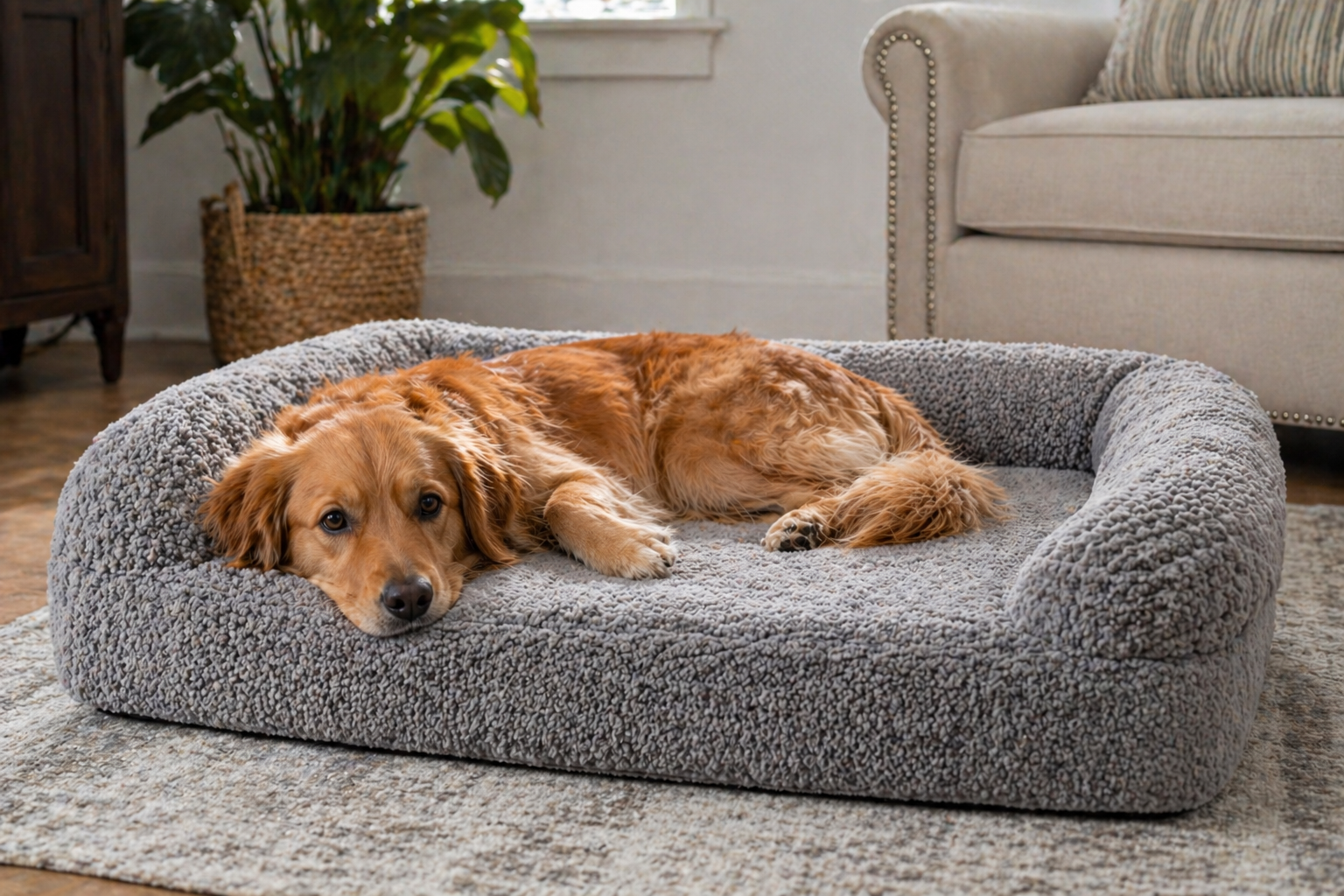
What Makes a Dog Bed Truly Orthopedic?
The word orthopedic gets used on plenty of beds that do not actually deserve it. A thin layer of egg crate foam over polyester fill feels soft under a hand but compresses immediately under a dog’s actual weight, offering no real support at all.
A genuinely orthopedic bed needs three things. High-density memory foam as the main support layer, dense enough to support weight without bottoming out, generally at least four inches for most senior dogs. A base layer that does not collapse, since a dual-layer system only works when both layers are quality foam rather than cheap polyester underneath a soft top. Durability over time, since a bed that flattens within three months was never truly orthopedic in the first place, regardless of what the label claimed.
Everything else, cover material, bolsters, waterproofing, matters for comfort and practicality, but the foam itself determines whether a bed genuinely deserves the orthopedic label.
Signs Your Senior Dog Needs an Orthopedic Bed
Most owners wait too long, often not noticing until their dog has already been sleeping poorly for months. Watch for stiffness after sleeping, the most common and most overlooked sign, where a dog gets up slowly or stumbles on first standing. Watch for avoiding hard floors in favour of soft surfaces, reluctance to lie down or excessive circling beforehand, sleeping in unusual, bunched-up positions rather than fully stretched out, and generally restless nights with frequent repositioning. Age alone is also a reason to consider it. Any dog over seven benefits from orthopedic support even before obvious symptoms appear, since prevention is considerably easier than recovery.
How to Choose the Right Size and Thickness
Measure your dog from nose to tail in their natural sleeping position and add fifteen to twenty centimetres for comfortable movement. For thickness, small dogs under ten kilograms need two to three inches of quality foam, medium dogs between ten and twenty-five kilograms need three to four inches, and large dogs over twenty-five kilograms need at least four to seven inches. More thickness is not automatically better for a small dog, since a small dog cannot compress dense, thick foam enough to actually benefit from the support layer underneath.
Entry height also matters for a senior dog with arthritis or hip issues. A low-profile bed that does not require stepping up or climbing makes daily use considerably easier, and if bolster edges are present, at least one side should offer a genuinely low entry point.
Mistakes to Avoid
Buying based on softness alone. A plush feel under a hand is not the same as genuine support, and a bed that feels soft but has no real density will compress fully under a dog’s weight regardless of how comfortable it felt in the shop or on the product photos.
Ignoring foam quality. Egg crate foam looks orthopedic and is not. It flattens quickly and provides minimal pressure relief. If a product description does not specify high-density memory foam explicitly, assume the foam quality is low.
Buying too big or thick for a small dog. A small dog on a large, dense bed built for a much heavier animal sits on top of a firm surface rather than being genuinely cushioned by it.
Skipping the waterproof liner. A bed without one absorbs accidents directly into the foam, which cannot be properly cleaned out and becomes both unhygienic and difficult to deodorise.
Choosing based on price alone. The cheapest orthopedic beds are almost always cheap foam with orthopedic marketing attached. A genuinely supportive bed lasting three to four years is a better investment than two cheap beds that flatten within six months each.

Safety, Maintenance, and Durability
Look for CertiPUR-US certified foam or an equivalent non-toxic standard, particularly relevant given how many hours a senior dog spends resting on the bed. Washable, removable covers matter for a senior dog with incontinence or drooling. Waterproof liners protect the foam itself from spills and extend the bed’s usable life. Reinforced stitching and quality zippers hold up under daily use, particularly for large or still-active dogs. A non-slip base prevents sliding, which matters for a dog with mobility issues getting on and off. Good high-density memory foam maintains its shape for years, while low-density foam flattens quickly and stops providing real joint support well before it visibly wears out.
Orthopedic Beds Alongside Other Comfort Measures
An orthopedic bed addresses pressure and support during rest, but it is one part of a broader comfort routine rather than the only intervention worth considering. For dogs that also benefit from warmth, particularly during colder months or for dogs with more advanced arthritis, our comparison of orthopedic dog beds versus heated blankets covers when each option, or a combination of both, makes the most sense.
FAQ
Are orthopedic dog beds actually worth it?
Yes, for senior dogs with joint issues the difference is noticeable. A dog sleeping on genuine high-density foam wakes up less stiff and moves more freely over time. The key is buying a bed with real density rather than a cheap alternative marketed as orthopedic.
How do I know if the foam is good quality?
Good foam springs back slowly after being pressed. Cheap foam either springs back instantly or stays compressed. If a bed arrives and the foam flattens completely under hand pressure, the density is low.
How often should I replace my dog’s orthopedic bed?
A quality bed should last two to four years with daily use. If the foam no longer springs back after your dog gets up, it has stopped providing real orthopedic support and needs replacing.
Can a young dog use an orthopedic bed?
Yes. There is no downside, and for large breeds prone to joint issues later in life, starting with orthopedic support early can help protect joint health over the long term.
Does an orthopedic bed help with arthritis?
It helps manage the daily impact rather than treating the underlying condition. Reduced pressure on inflamed joints during sleep lowers morning stiffness and improves overall comfort, and combined with joint supplements and heat therapy, the difference compounds meaningfully.
Final Thoughts
The best orthopedic dog beds for senior dogs are built around what a dog actually needs: real high-density foam that holds its shape, the right size and thickness for their weight, and a low entry point that does not make getting in and out painful.
Sleep is the foundation of everything else for a senior dog. Good food and the right supplements only go so far if the sleeping surface is not doing its part overnight. For most senior dogs, Big Barker remains the strongest choice for genuine orthopedic support. For a tighter budget, EHEYCIGA delivers real foam quality at a lower price. And for a dog that likes to curl up, FurHaven’s bolster design gives the containment they prefer without abandoning support entirely.
An orthopedic bed is one part of a bigger picture. If your dog also struggles with stairs, car rides, or daily comfort around the house, see the complete guide to senior dog care essentials for the full approach.
Sources
https://www.petmd.com/dog/general-health/best-dog-beds-arthritis
https://www.thesprucepets.com/best-orthopedic-dog-beds-4165365
https://vcahospitals.com/know-your-pet/arthritis-in-dogs
https://www.akc.org/expert-advice/health/arthritis-in-dogs/

Pingback: 10 Best Mobility Aids for Senior Dogs: Support Joint Health & Independence
Pingback: Top 10 Best Orthopedic Dog Beds for 2025 (Comfort & Joint Support Guide)
Pingback: Orthopedic Dog Bed vs Heated Blanket: Which Is Better for Senior Dogs?
Pingback: Why an Good Orthopedic Dog Bed is Vital for Senior Dogs
Pingback: Best Orthopedic Dog Bed for Large Dogs - seniordog-care
Pingback: Best Orthopedic Dog Bed for Small Dogs (Top-Rated) - seniordog-care
Pingback: Best Orthopedic Dog Beds for Dogs with Arthritis - seniordog-care
Pingback: Best Cheap Orthopedic Dog Beds That Actually Work (2026 Guide) - seniordog-care
Pingback: Signs of Arthritis in Dogs – How to Recognize It Early
Pingback: How Much Sleep Does a Senior Dog Need? The Truth - seniordog-care
Pingback: How Much Sleep Does a Senior Dog Need? The Truth
Pingback: Do Senior Dogs Need an Orthopedic Bed? Yes, Here Is Why
Pingback: Joint Problems in Senior Dogs: Causes and Solutions
Pingback: How to Recognize Pain in Senior Dogs - seniordog-care
Pingback: Why Is My Senior Dog Restless at Night: Causes and Solutions
Pingback: Best Gadgets for Senior Dogs: The Complete Guide
Pingback: Joint Supplements for Senior Dogs: What Works & Why
Pingback: Soothing Tips for Dogs in Pain: What Actually Helps at Home
Pingback: Senior Dog Mobility Aids: What They Are and When Your Dog Needs Them
Pingback: Best Mobility Aids for Senior Dogs - seniordog-care
Pingback: How to Keep a Senior Dog Cool in Summer - seniordog-care
Pingback: Best Cooling Products for Senior Dogs - seniordog-care
Pingback: Senior Dog Grooming: The Complete Guide - seniordog-care
Pingback: Memory Foam vs Egg Crate Dog Bed: Which One Is Better? - seniordog-care
Pingback: Bladder Control in Senior Dogs: Why It Happens and What to Do