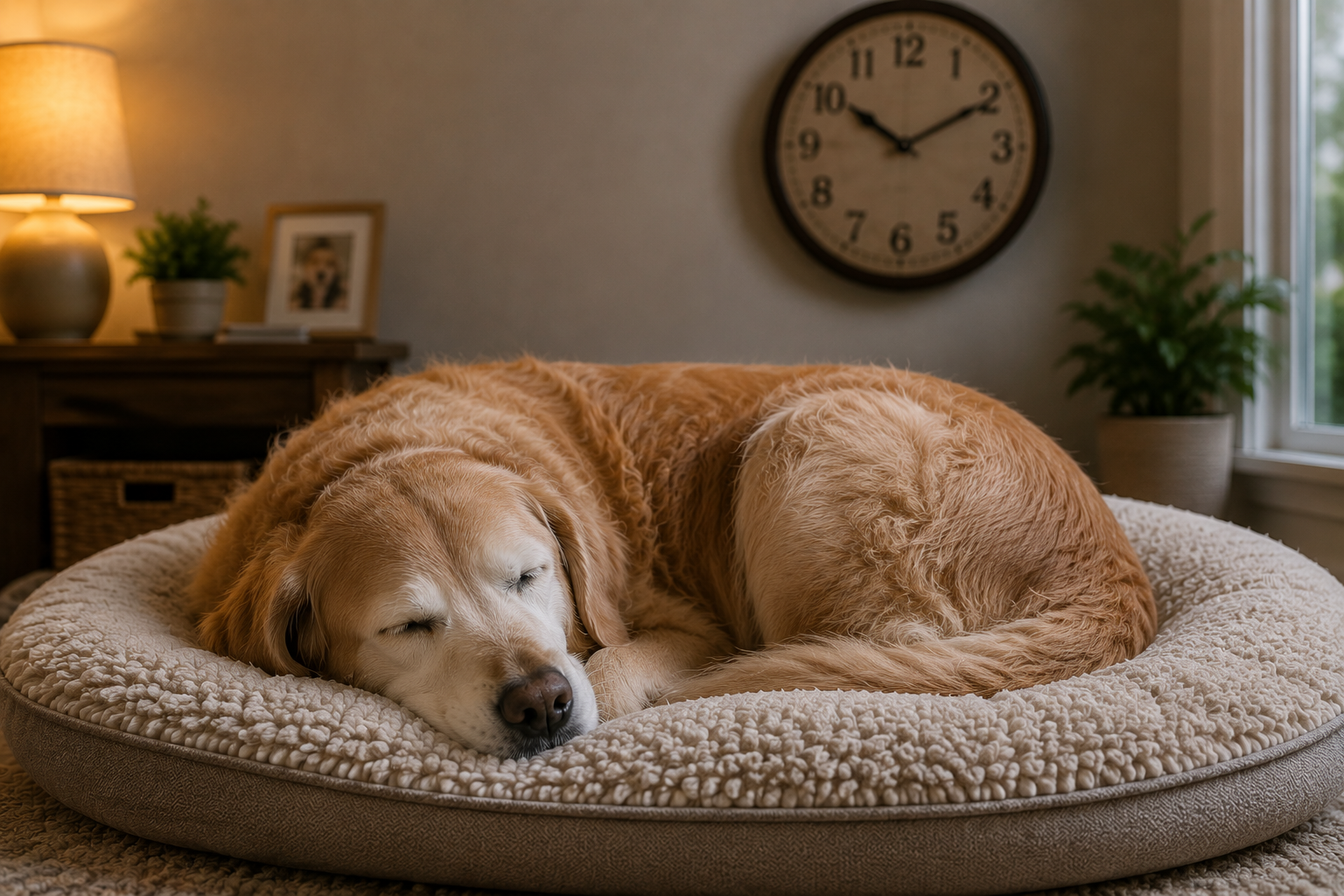
How much sleep does a senior dog need is one of those questions that seems simple but has a bigger answer than most owners expect.
Sleep is the foundation of a dog’s health. You can feed your senior dog the best food available, give them the right supplements, and take them on daily walks. But if they are sleeping badly, none of it will have the effect it should. Sleep is where the body repairs itself, where joints recover, where the immune system resets. For a senior dog, it is not just important. It is the core of everything else.
When a dog gets older, daily life simply costs more energy than it used to. That is not laziness. It is biology. Just like humans slow down with age, a senior dog’s body works harder to do the same things it once did effortlessly. More rest is not a sign of a problem. It is often a sign that the body is doing exactly what it needs to do.
This post contains affiliate links. If you buy through these links, I may earn a small commission at no extra cost to you. As an Amazon Associate, I earn from qualifying purchases.
Table of Contents
How Much Sleep Does a Senior Dog Need?
Most senior dogs sleep between 14 and 18 hours per day. That is significantly more than adult dogs, which typically sleep between 8 and 13 hours. Some senior dogs, particularly those dealing with health issues or recovering from illness, can sleep up to 20 hours.
This increase is normal and expected. As dogs age, their energy levels drop, their bodies take longer to recover from activity, and their sleep becomes more fragmented. They compensate by sleeping more frequently throughout the day.
The pattern usually shifts too. Senior dogs tend to take more naps during the day rather than sleeping in one long stretch at night. This is similar to what happens in elderly humans, and it is a natural part of the aging process.
Sleep by age:
- Adult dogs: 8 to 13 hours per day
- Senior dogs (age 7 and above): 14 to 18 hours per day
- Senior dogs with health issues: up to 20 hours per day
Large breeds age faster than small breeds. A Great Dane or Labrador may start needing more sleep from age 6, while a small breed like a Chihuahua may not show significant changes until age 10 or 11.
Why Senior Dogs Need More Sleep
Understanding why sleep increases with age helps owners recognise what is normal and what might be worth investigating.
Energy recovery takes longer
An aging body is less efficient at recovering from physical activity. A walk that would have left a younger dog energized and ready for more will genuinely exhaust a senior dog. The nap afterwards is not optional. It is necessary for the body to recover and prepare for the next period of activity.
Joint pain disrupts sleep quality
Arthritis affects the majority of dogs over age 8. Pain in joints makes it harder to find a comfortable position and harder to stay asleep. Dogs with poor sleep quality due to joint pain often compensate by sleeping longer and more frequently to try to get the rest their body needs. The sleep looks like more, but the quality is less.
The immune system needs more time
A senior dog’s immune system is less efficient than a younger dog’s. Sleep is when the immune system does most of its repair and maintenance work. Older dogs naturally sleep more to give their immune system the time it needs.
Cognitive changes
Canine Cognitive Dysfunction, the dog equivalent of dementia, affects a significant number of senior dogs and disrupts normal sleep patterns. Dogs with CCD often become restless at night and then sleep more during the day to compensate. If you notice your senior dog becoming confused, restless at night, or unusually disoriented, a vet conversation is worth having.
Medications and health conditions
Conditions like hypothyroidism, kidney disease, and heart disease all increase fatigue and sleep needs. If your dog is on medication for any chronic condition, increased sleep can be a side effect. Always check with your vet if you notice a sudden change rather than a gradual one.
Wondering why your dog has trouble sleeping? Why Is My Senior Dog Restless at Night: Causes and Solutions
How Much Sleep Is Too Much?
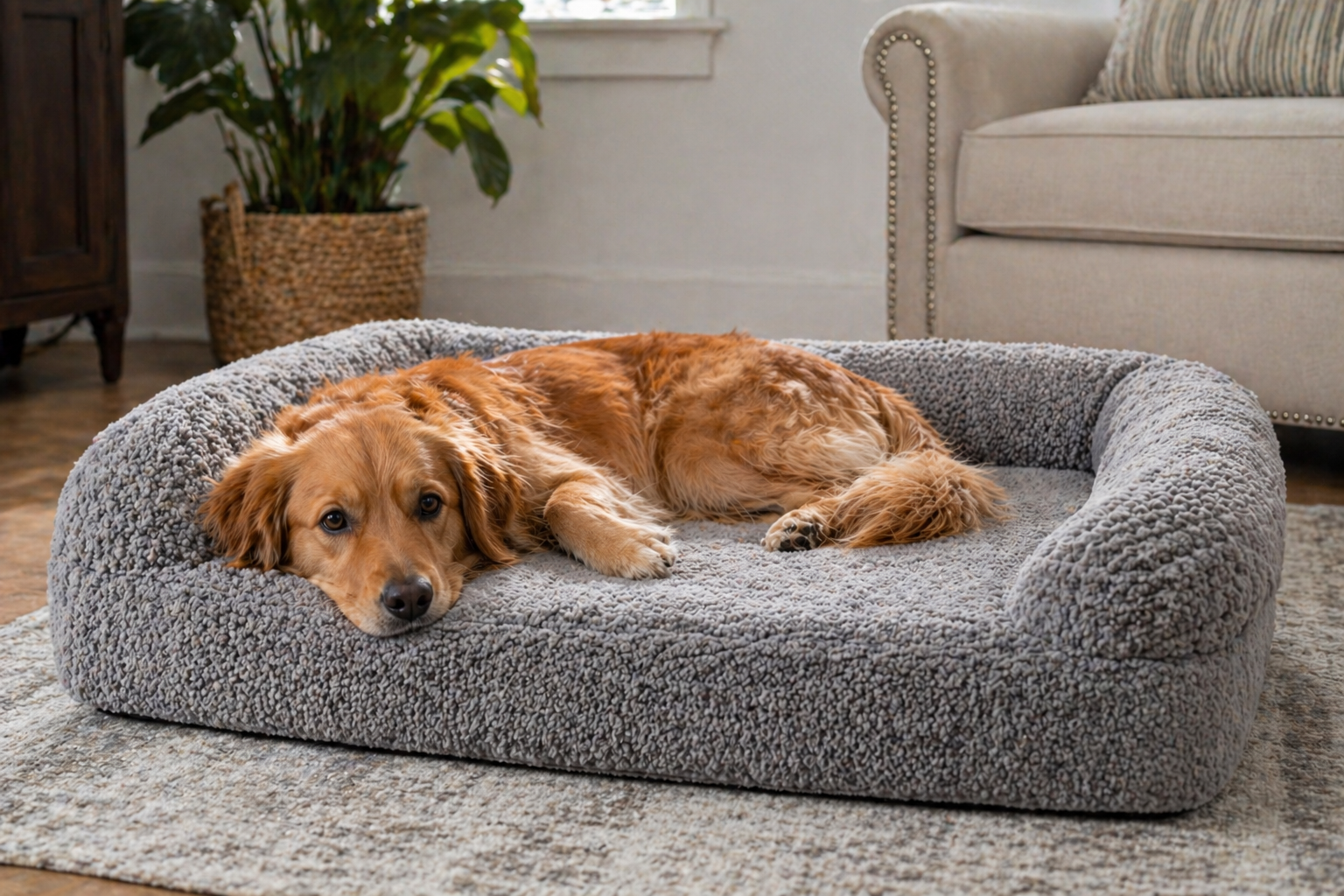
Normal increased sleep in a senior dog is gradual and consistent. A dog that has been sleeping 16 hours a day for months, moving comfortably, eating well, and engaging with their environment when awake is most likely fine.
The warning signs are in the change, not the number.
Talk to your vet if you notice:
- A sudden increase in sleep over days rather than weeks
- Sleeping more than 20 hours consistently
- Difficulty waking up or extreme lethargy when awake
- Changes in appetite alongside increased sleep
- Confusion, disorientation, or unusual behaviour when awake
- Limping, stiffness, or visible pain alongside increased rest
A dog that is sleeping more but is alert, engaged, and moving comfortably when awake is usually aging normally. A dog that is sleeping more and seems unwell when awake is telling you something is wrong.
How Sleep Quality Affects Everything Else
This is the part most owners underestimate. It is not just about how many hours your senior dog sleeps. It is about whether those hours are actually restorative.
A dog sleeping on a thin, flat bed that offers no support for stiff joints is not getting the same quality of sleep as a dog on a proper orthopedic surface. They might both be asleep for 16 hours, but one wakes up rested and the other wakes up stiff and uncomfortable.
Poor sleep quality in senior dogs shows up as:
- Stiffness and difficulty getting up after sleeping
- Reluctance to settle or frequent position changes during the night
- Restlessness and disturbed sleep
- Lower energy during the day despite plenty of sleep time
- Increased irritability or sensitivity to touch
Getting the sleep environment right is one of the most impactful things you can do for a senior dog’s overall health. The food, the supplements, the daily walks all work better when your dog is actually sleeping well.
How to Improve Your Senior Dog’s Sleep
1. Get the bed right
This is the most important change most owners can make. A high-density orthopedic memory foam bed distributes weight evenly, reduces pressure on stiff joints, and helps senior dogs stay comfortable throughout the night. The foam needs to be dense enough to actually support the dog’s weight, not so soft they sink to the bottom.
Low entry height matters too. A senior dog with arthritis should not have to step up or climb to get into their bed. The easier the access, the more likely they are to actually use it.
For a full breakdown of the best options, read our guide: Best Orthopedic Dog Beds for Senior Dogs
2. Use heat therapy for morning stiffness
Joints are stiffest after a long period of rest. A heating pad placed beside or under your dog’s bed provides gentle warmth that increases blood flow to stiff joints and makes waking up significantly less uncomfortable. Many senior dog owners describe this as one of the most impactful single changes they made.
Read more: Best Heated Pads for Dogs with Arthritis
3. Keep a consistent routine
Senior dogs do better with predictable schedules. Feeding, walks, and sleep times at the same time each day help regulate their internal clock, which makes nighttime sleep more consistent and less fragmented.
4. Address joint pain
If your dog is sleeping poorly because of joint pain, the sleep problem will not resolve until the pain is better managed. Glucosamine, chondroitin, and omega-3 fatty acids are the most evidence-backed supplements for joint health in senior dogs. A vet conversation about pain management is worth having if your dog seems uncomfortable.
Read more: What Supplements Do Senior Dogs Need?
5. Keep the sleep environment calm and comfortable
A quiet, draft-free sleeping spot away from high-traffic areas helps senior dogs settle and stay asleep. Dogs with cognitive decline are particularly sensitive to disruption and benefit from a consistent, calm sleep environment with minimal changes.
6. Make sure they are getting enough movement during the day
A dog that barely moves during the day often has poorer sleep quality at night, despite sleeping more overall. Short, consistent walks keep joints mobile and help regulate sleep patterns. The goal is gentle daily movement, not intense exercise.

FAQ
Is it normal for my senior dog to sleep all day?
Yes, in most cases. Senior dogs naturally sleep 14 to 18 hours per day. If your dog is eating well, engaging with you when awake, and moving without obvious pain, sleeping most of the day is usually normal. The concern is sudden changes, not gradual increases.
My senior dog sleeps a lot but seems fine. Should I worry?
Probably not. Monitor for changes in appetite, behaviour when awake, and mobility. If those remain normal alongside increased sleep, aging is the most likely explanation.
Why does my senior dog sleep more than they used to?
Aging reduces energy efficiency, increases recovery time after activity, and often brings health conditions that increase fatigue. More sleep is the body’s natural response to these changes.
Can poor sleep make my senior dog’s health worse?
Yes. Poor quality sleep affects joint recovery, immune function, cognitive health, and energy levels. Improving sleep quality often produces noticeable improvements in mobility, mood, and overall wellbeing.
Should I wake my senior dog up from long naps?
Generally no. Let them sleep. Interrupting rest in a senior dog that needs it does more harm than good. The exception is if you notice they are having trouble waking themselves up, which can be a sign of illness.
At what age do dogs start sleeping more?
Most dogs start showing increased sleep needs between age 7 and 9. Large breeds often start earlier, around age 6. The change is usually gradual rather than sudden.
Final Thoughts
How much sleep a senior dog needs is more than just a number. It is about understanding that sleep is not laziness. It is recovery. It is repair. It is the foundation that everything else in your senior dog’s health is built on.
When a senior dog sleeps more, their body is doing what it needs to do to stay functional and comfortable. Your job is to make sure that sleep is actually restorative, not just long. The right bed, a calm environment, managed joint pain, and a consistent routine make a bigger difference than most owners realise.
Get the sleep right and everything else works better.


Pingback: Why Is My Senior Dog Restless at Night: Causes and Solutions