
Orthopedic dog bed vs heated blanket is a genuine choice, not a clear either-or, because the two solve different problems. One provides structural support for joints under pressure. The other provides warmth that relaxes muscles and eases stiffness through a different mechanism entirely. Knowing which your dog actually needs depends on what is driving their discomfort, joint pressure, cold sensitivity, or both.
This guide compares the two directly, covers when each makes the most sense on its own, and when combining them is worth the extra cost. For the fuller case on why an orthopedic bed specifically matters for an ageing dog, our guide on do senior dogs need an orthopedic bed covers that in depth, and our guide to the best orthopedic dog beds for senior dogs covers specific product recommendations.
This post may contain affiliate links. If you buy through these links, I may earn a small commission at no extra cost to you. As an Amazon Associate, I earn from qualifying purchases.
Table of Contents
Understanding Senior Dog Comfort Needs
As dogs age, their bodies change in ways that directly affect how they sleep and rest, and these changes rarely arrive one at a time. Joints that once moved easily start to ache as cartilage thins and inflammation builds. Muscles that once held a dog steady through a full night of shifting positions lose flexibility and mass, leaving less natural cushioning around the joints they used to support. Senior dogs also tend to develop thinner coats as their coat cycle slows, and circulation becomes measurably less efficient at pushing warm blood to the extremities, both of which make an older dog noticeably more sensitive to cold than the same dog was even three or four years earlier.
These changes compound each other in ways that are easy to miss if you are only watching for one symptom at a time. A dog with both thinning muscle and slowing circulation is not simply cold, and not simply stiff. The two problems interact: cold muscles tense up more readily, and tense, cold muscles make an already uncomfortable joint feel worse than either factor would on its own. This is exactly why a senior dog’s comfort needs cannot be reduced to a single fix, and why owners who address only one side of the problem, warmth without support, or support without warmth, often see partial rather than complete improvement.
Comfort, in this context, is not just about softness. It is about two distinct things working together:
- Support, meaning a surface that actually keeps pressure off vulnerable joints throughout several consecutive hours of sleep, not just a surface that feels pleasant the moment a dog lies down
- Temperature control, meaning a genuinely warm environment that keeps muscles relaxed rather than tensed against the cold, particularly overnight when a house’s ambient temperature typically drops
Without either of these addressed properly, an older dog can wake up sore, restless, or simply unwilling to move for the first several minutes of the day, and this pattern often gets quietly written off as “just getting old” rather than recognised as something addressable through the sleeping setup itself.
This is exactly why finding the right combination matters as much as finding any single right product. An orthopedic bed that cradles the joints solves one half of the equation. A heated blanket that keeps the body warm and relaxed solves the other half. Whether a dog needs one, the other, or both depends on which specific problem, joint pressure, cold sensitivity, or both together, is actually driving the discomfort in front of you, which is exactly what the rest of this guide works through in detail.
Orthopedic Dog Beds Explained
An orthopedic dog bed provides full-body support, particularly relevant for a senior dog with joint pain, arthritis, or general muscle stiffness. Unlike a standard bed, a genuine orthopedic model uses high-density or memory foam that adapts to the dog’s shape, cushioning pressure points and keeping the spine reasonably aligned throughout the night.
This matters most for older dogs who struggle to stand after resting or limp after sleeping on a hard floor. Proper support reduces pain, improves circulation, and allows deeper, more restful sleep. The foam itself is what does the actual work here, not the marketing on the label, which is why checking density and construction matters more than checking the word “orthopedic” printed on the packaging.
What a genuinely supportive orthopedic bed typically includes:
- High-density memory foam that compresses partially rather than fully under weight
- A base layer that does not collapse under the dog’s actual body weight
- Removable, machine-washable covers for hygiene, particularly relevant for a senior dog prone to accidents
- A waterproof liner between the cover and the foam itself
- A non-slip base to prevent sliding on hard floors
- A low entry point that does not require stepping up or climbing
For a dog with confirmed arthritis or hip dysplasia, an orthopedic bed tends to be the higher-impact investment of the two options covered here, since it addresses the mechanical source of overnight discomfort directly rather than working around it.
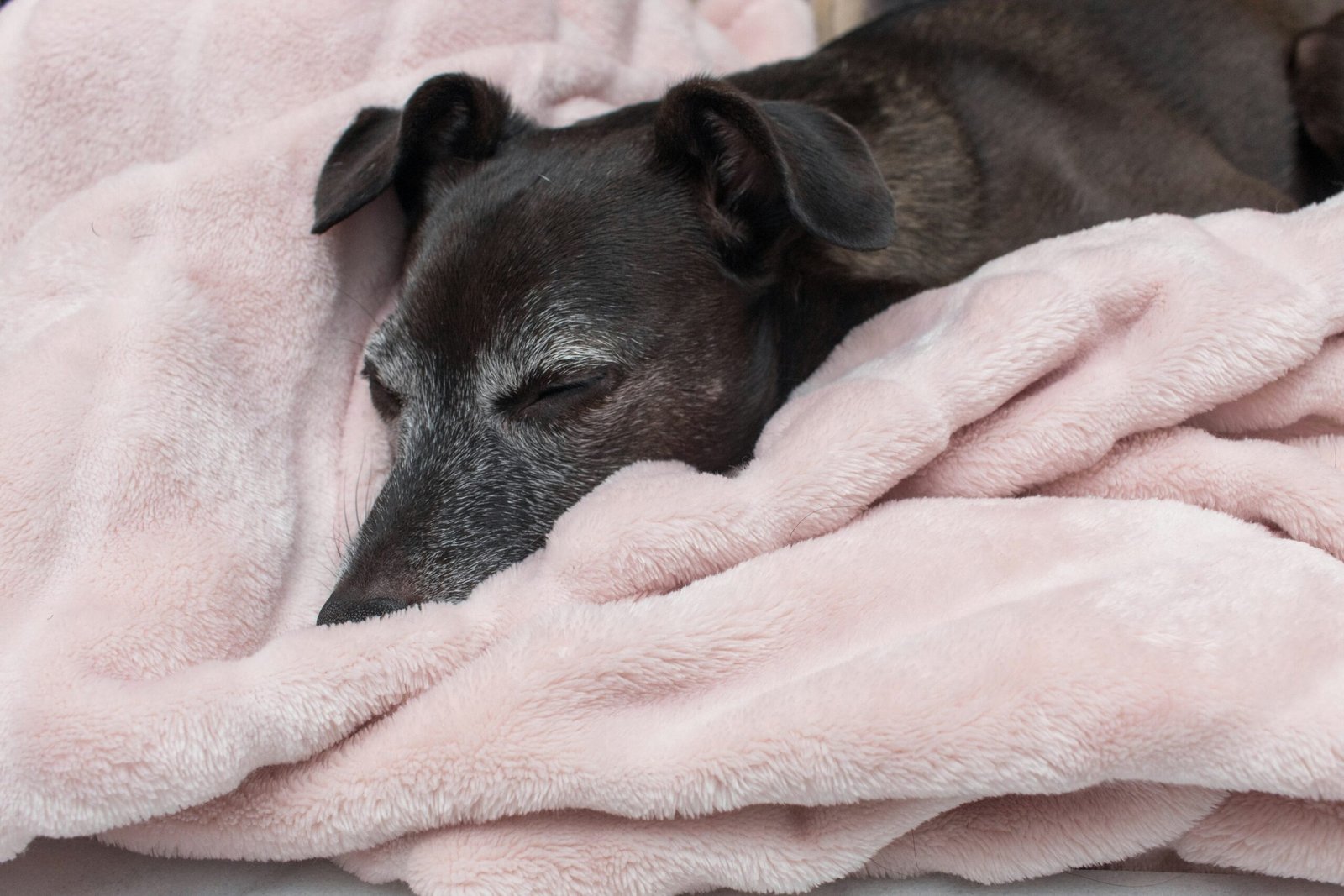
Heated Blankets for Dogs Explained
A heated blanket works by gently warming a dog’s body, easing stiffness and promoting relaxation, particularly relevant for a senior dog that struggles to stay warm due to slower circulation or a thinner coat. Steady warmth soothes muscles and makes rest more comfortable during colder weather, working through an entirely different mechanism than the structural support an orthopedic bed provides.
Heated blankets come in two main types, and the distinction matters for both safety and how the blanket is actually used:
- Electric blankets use low-voltage heating elements, typically with adjustable heat settings, and need monitoring for cord condition and chew damage over time
- Self-warming blankets reflect the dog’s own body heat back without any electricity involved, a safer default for a nervous or unsupervised dog, though they provide less consistent warmth on a very cold night than an electric option
The core benefit either type offers is comfort and warmth rather than structural support:
- Eases muscle tension built up during the day
- Helps a dog settle and fall asleep faster in cold weather
- Reduces some morning stiffness, though through warmth rather than pressure relief
- Requires no adjustment to the dog’s existing sleeping surface
A heated blanket does not provide the joint stability a genuine orthopedic bed does. A dog with arthritis or hip issues still needs that structural support underneath, regardless of how warm the blanket keeps them on top.
Comparison Table
| Feature | Orthopedic Dog Bed | Heated Blanket |
|---|---|---|
| Primary purpose | Full-body support for joints and spine | Warmth and muscle relaxation |
| Best for | Arthritis, hip dysplasia, joint stiffness | Cold sensitivity, muscle tension |
| Material | High-density or memory foam | Electric heating element or self-warming fabric |
| Health benefit | Reduces joint pressure, supports posture | Relieves muscle stiffness, encourages rest |
| Temperature control | Room temperature, can pair with a heating pad | Adjustable (electric) or self-regulating (non-electric) |
| Safety considerations | Minimal risk, safe unsupervised | Electric versions need monitoring for cord safety |
| Typical cost | Moderate to high | Low to moderate |
Which Option Is Right for Your Senior Dog?
If your dog has joint pain, arthritis, or hip issues, an orthopedic bed provides the structural support needed to reduce pressure on sore joints. If your dog gets cold easily or shows muscle stiffness without a diagnosed joint condition, a heated blanket provides warmth and relaxation, particularly useful during winter months.
For many senior dogs, combining both, an orthopedic bed with a heated blanket layered on top, gives full-body support alongside soothing warmth, and this combination tends to produce the most noticeable overall comfort improvement for a dog managing both joint pain and cold sensitivity at once. Watching how your dog actually rests and moves, rather than assuming one option covers everything, is the most reliable way to decide.

Using Heat Alongside an Orthopedic Bed
Heat therapy and orthopedic support work through different mechanisms, which is exactly why combining them tends to outperform either alone for a dog managing both stiffness and cold sensitivity. For specific heating pad recommendations designed safely for dogs with arthritis, our guide to the best heating pads for dogs with arthritis covers the strongest options and how to use them safely alongside a bed rather than as a replacement for one.
Cost and Long-Term Value Compared
Price is often the first practical question owners land on, and the two options differ meaningfully here, not just in upfront cost but in how that cost plays out over time.
A genuinely high-density orthopedic bed represents the larger upfront investment of the two, but a well-built one lasts two to four years with daily use before the foam loses its supportive properties. Spread across that lifespan, the daily cost is often lower than it first appears, particularly compared with replacing a cheap, non-orthopedic bed every few months as it flattens.
A heated blanket costs considerably less upfront, whether electric or self-warming, and electric versions add a small ongoing cost through electricity use, though this is minor for most low-voltage pet-safe models. The main long-term consideration is durability of the heating element itself for electric versions, which typically has a shorter functional lifespan than a quality foam bed, and cord condition should be checked periodically regardless of how well the blanket otherwise performs.
For an owner working with a limited budget, a heated blanket is the lower-cost way to add meaningful comfort in the short term, particularly for a dog whose main issue is cold sensitivity rather than joint pain. For a dog with a confirmed joint condition, the orthopedic bed is worth prioritising first, even at the higher upfront cost, since it addresses the mechanical problem a blanket cannot solve on its own. Combining both eventually, rather than choosing one permanently, is a reasonable way to spread the cost across two purchases rather than committing to the full setup at once.
FAQ
Can I use a heated blanket on top of an orthopedic bed?
Yes. Many owners combine both to get joint support and warmth together. Make sure any blanket used is specifically designed for dogs, particularly for electric models.
Are heated blankets safe for dogs?
Self-warming blankets are generally safe for unsupervised use. Electric blankets are safe when low-voltage, chew-resistant, and monitored, and manufacturer instructions should always be followed.
How do I know if my senior dog needs an orthopedic bed specifically?
Look for difficulty standing, stiffness after resting, or reluctance to jump. Dogs with arthritis, hip dysplasia, or muscle loss benefit most from genuine orthopedic support.
Can a heated blanket help with arthritis?
Warmth can relieve muscle stiffness and ease general discomfort, especially in cold weather, but it does not replace the structural joint support an orthopedic bed provides.
How often should I replace an orthopedic bed or heated blanket?
A quality orthopedic bed typically lasts two to four years with daily use, judged by whether the foam still springs back after use. Heated blankets can last several years, but check regularly for worn or frayed cords and reduced heating efficiency.
Can small dogs use heated blankets safely?
Yes, provided the blanket is appropriately sized, has adjustable heat if electric, and is supervised initially to see how the dog responds.
Final Thoughts
Orthopedic dog bed vs heated blanket comes down to which problem is actually driving your senior dog’s discomfort. An orthopedic bed provides full-body structural support and is the higher-impact choice for arthritis or hip issues. A heated blanket provides warmth and muscle relaxation, particularly useful for a dog sensitive to cold without a diagnosed joint condition.
Combining both often gives the most complete comfort for a dog managing stiffness and cold sensitivity together. Watching your dog’s actual behaviour, stiffness, reluctance to move, sensitivity to temperature, is the most reliable way to decide which one, or both, your dog genuinely needs.
Sources
https://www.thesprucepets.com/hypothermia-in-dogs-8746156
https://www.akc.org/expert-advice/home-living/heated-beds-safe-dog/
https://www.petmd.com/dog/general-health/blanket-safety-for-pets



Pingback: Best Orthopedic Dog Beds for Senior Dogs & Large Breeds (2025 Review)
Pingback: Best Orthopedic Dog Bed for Small Senior Dogs (Top Picks) - seniordog-care
Pingback: Best Cheap Orthopedic Dog Beds for Senior Dogs (2026 Guide) - seniordog-care