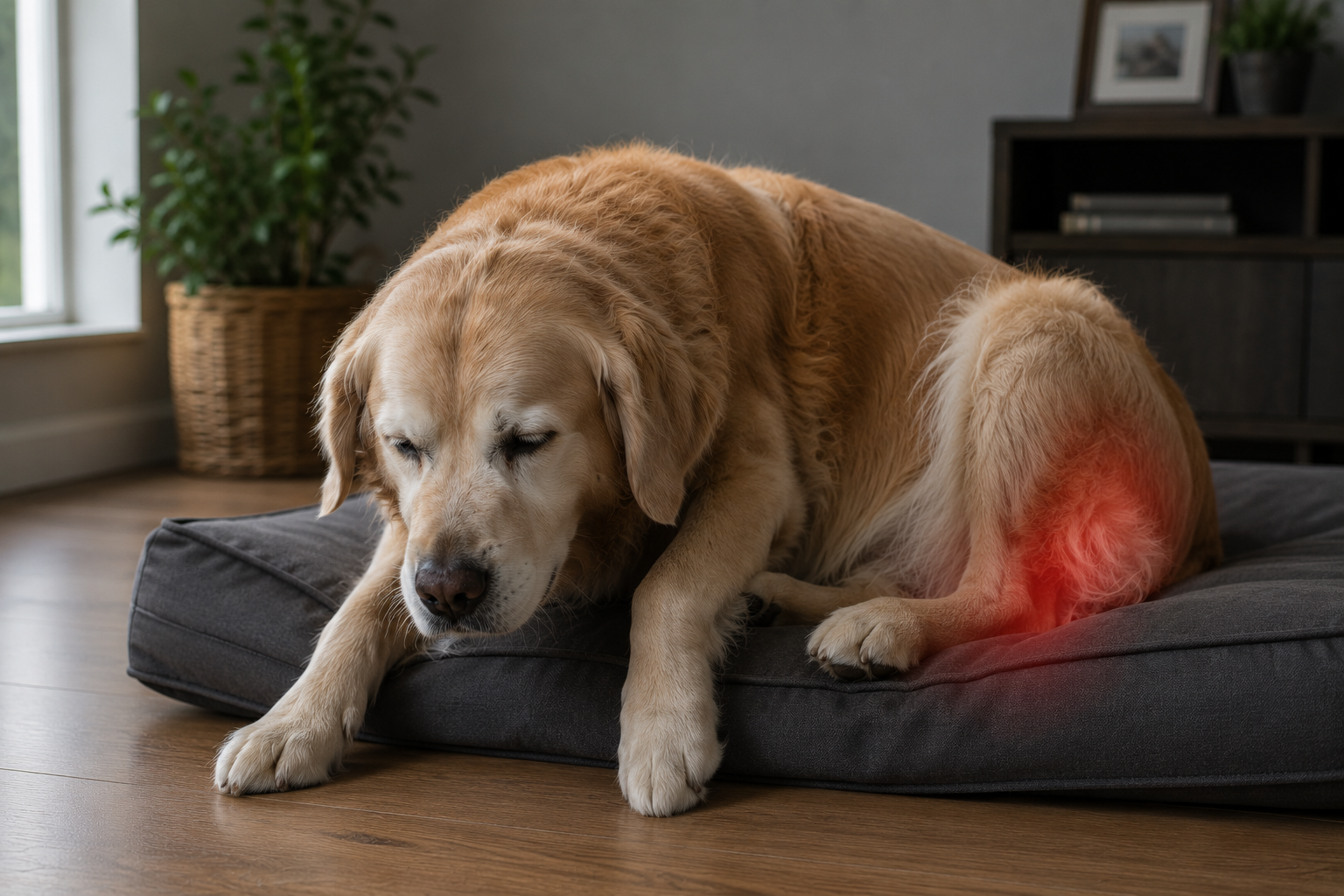
Do senior dogs need an orthopedic bed is a question most owners ask too late, usually after they have already noticed their dog struggling to get up, moving stiffly in the mornings, or sleeping restlessly through the night.
The answer is yes, but understanding why helps you act on it before the signs become obvious rather than after. Think of it the way a good mattress works for a person. It does not just make sleep more comfortable. It determines how well the body recovers overnight. A person sleeping on a bad mattress wakes up stiff, tired, and in more pain than when they went to bed. The same principle applies to a dog, and it applies more strongly the older that dog gets.
Senior dogs already deal with joint deterioration, muscle loss, and slower recovery from daily activity. A bed offering no real support means the body is not recovering properly during the hours it should be doing exactly that. Dogs wake up stiffer, move more slowly, and hurt more, and much of this gets attributed to ageing when a significant part of it is simply the surface the dog has been sleeping on.
By Seniordog-care.
This post contains affiliate links. If you buy through these links, I may earn a small commission at no extra cost to you. As an Amazon Associate, I earn from qualifying purchases.
Table of Contents
What Happens to a Dog’s Body During Sleep
Sleep is not passive. It is when the body does its most important repair work. During deep sleep, growth hormone is released, supporting muscle repair and tissue regeneration. The immune system becomes more active, addressing inflammation and cellular damage accumulated during the day. Joints that have been under load all day finally get relief from weight-bearing, allowing synovial fluid to redistribute and nourish cartilage.
For a senior dog with arthritis or joint disease, this overnight recovery period matters more than it did at a younger age. Cartilage is already compromised, muscles are already weaker, and the immune system is less efficient, which means sleep is when whatever recovery capacity remains gets to do its work. A dog sleeping on an inadequate surface cannot fully benefit from this. Pressure on joints throughout the night means they never fully decompress, and muscles that should be relaxing are instead working to compensate for an uncomfortable surface.
Why Regular Dog Beds Are Not Enough for Senior Dogs
Most standard dog beds use polyester fill, low-density foam, or a combination of both. These materials feel soft when pressed with a hand, but under a dog’s actual body weight over several hours, they compress fully and provide no meaningful support.
A dog sleeping on a bed that has fully compressed is, in practical terms, sleeping on the floor with a layer of fabric on top. This is not a significant problem for a young, healthy dog with good muscle mass and healthy joints, whose body absorbs and manages the pressure without issue. For a senior dog with thinning muscle, reduced cartilage, and inflammatory joint conditions, it becomes a meaningful daily source of additional physical stress. The difference between a standard bed and a genuine orthopedic bed is not comfort in the conventional sense. It is whether the surface actually supports the body or simply covers the floor.
What Makes a Bed Genuinely Orthopedic
This is where most owners get confused, since the word orthopedic is used on plenty of beds that do not actually deserve it.
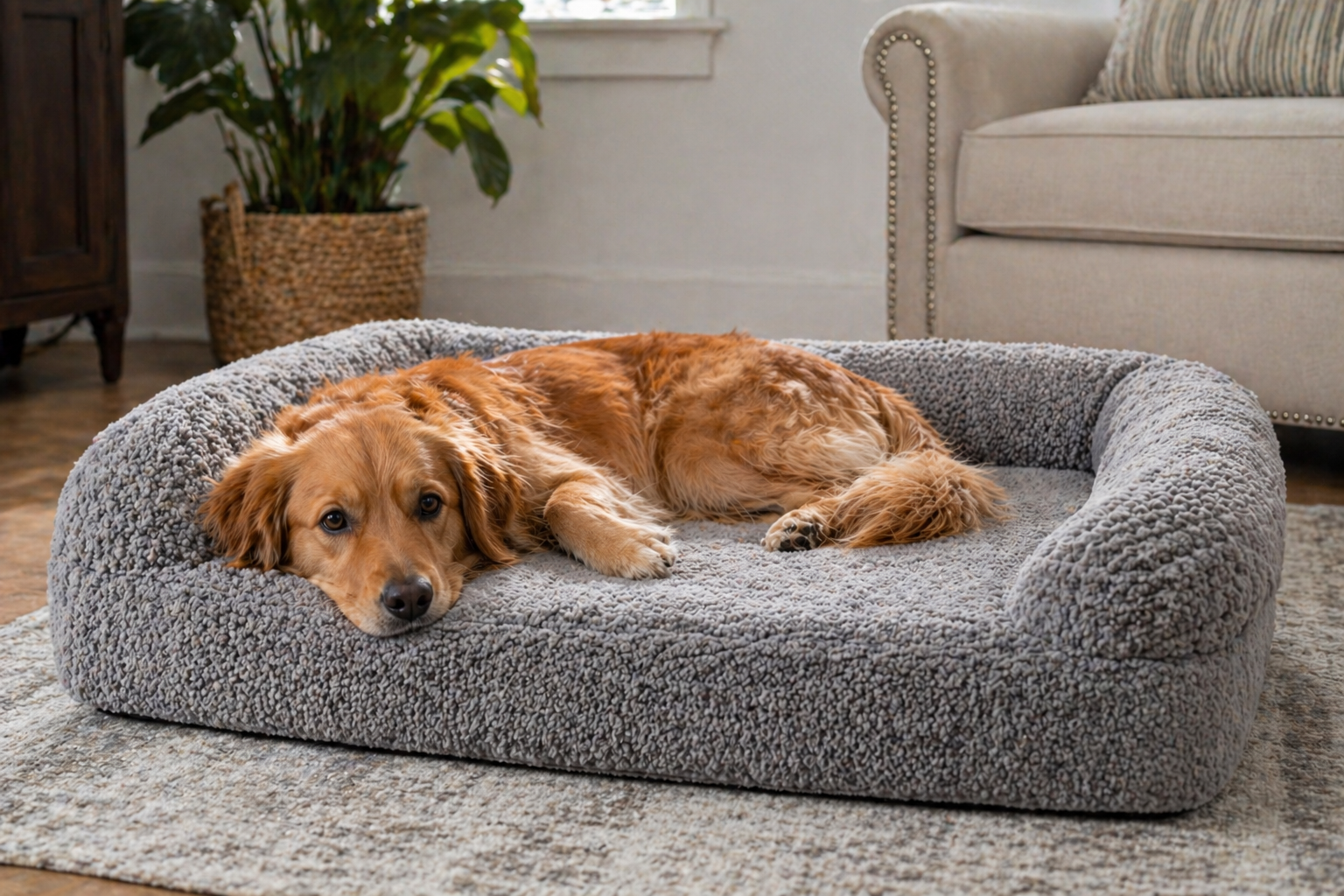
A genuinely orthopedic bed requires high-density memory foam as the primary support layer. High-density foam compresses partially under a dog’s weight rather than fully, distributing that weight across a larger surface area and reducing pressure on individual joints, and it returns to its original shape after the dog gets up, maintaining consistent support night after night.
Thickness matters, but thicker is not automatically better, one of the most common misunderstandings about orthopedic beds. A small dog weighing five kilograms cannot compress a six-inch high-density foam bed built for a forty-kilogram Labrador. The lighter body weight does not engage the support layer properly, and the dog ends up sitting on top of a resistant surface rather than being cradled by it. Matching foam density and thickness to a dog’s actual body weight, not a generic size chart, is what determines whether a bed is genuinely orthopedic for that specific dog. For the fuller comparison of foam types and what actually separates real support from marketing, our guide on memory foam versus egg crate dog beds covers that distinction directly.
The Real Impact of an Orthopedic Bed
The changes owners notice after switching to a quality orthopedic bed follow a consistent pattern. Morning stiffness reduces, since overnight pressure relief allows joints to decompress properly during sleep, and this is the most commonly reported change. Sleep duration and quality improves, with dogs settling more quickly, changing position less during the night, and spending more time in the restorative deep sleep stages where recovery actually happens. Energy and mood during the day often improve as well, since a dog that slept well is simply more capable and willing to engage, and owners frequently describe their senior dog seeming more like their younger self despite no other change to the routine.
These are not dramatic overnight transformations. They are gradual improvements that accumulate over days and weeks of consistently better sleep, and the direction of change consistently starts with the surface the dog is sleeping on.
Other Factors That Work Alongside an Orthopedic Bed
An orthopedic bed is the foundation, and a few additions build on it directly. Heat therapy, whether a heating pad placed beside or under the bed, provides gentle warmth that increases blood flow to stiff joints and reduces morning stiffness further. For dogs managing both cold-weather stiffness and general joint discomfort, our comparison of orthopedic dog beds versus heated blankets covers when each option, or a combination of both, makes the most sense.
Joint supplements, glucosamine, chondroitin, and omega-3 fatty acids, support joint health from the inside, while the bed reduces external pressure. Together they address the problem from both directions rather than relying on one alone. Our guide on what supplements senior dogs need covers this in depth.
Low entry height also matters. A bed requiring a senior dog to step up or climb adds unnecessary strain to painful joints at least twice daily, so a low-profile bed with minimal raised edges makes daily use considerably easier for a dog with mobility issues.
When to Switch to an Orthopedic Bed
Most senior dogs benefit from switching around age seven to nine, though earlier is not a problem. For large breeds that age faster, six to seven is a reasonable starting point. Waiting for obvious signs of joint pain is not necessary. Prevention is easier than recovery, and a dog that starts sleeping on proper orthopedic support before significant joint deterioration occurs tends to maintain better joint health for longer than one that switches only after problems become obvious.
Signs that switching is overdue include stiffness or difficulty getting up after sleeping, frequent position changes during the night, reluctance to lie down or slow, careful lowering to the ground, sleeping in unusual spots such as cold tile that some arthritic dogs prefer for temporary relief, and visible muscle loss in the hindquarters. If these signs are present, the bed is one of the first things worth addressing.
The Difference Between Comfort and Genuine Support
Owners often assume that if a dog looks comfortable on a bed, curled up, settled, seemingly content, the bed must be doing its job. This assumption misses the distinction that actually matters for a senior dog’s joints.
Comfort is subjective and immediate. A soft surface feels pleasant the moment a dog lies down, and most dogs will settle onto almost any soft material without obvious protest. Genuine orthopedic support is a different, measurable thing entirely: whether the surface actually distributes weight in a way that keeps pressure off joints throughout several consecutive hours of sleep. A dog can look perfectly comfortable on a bed that is providing no real support at all, simply because the discomfort of joint pressure builds gradually over the night rather than announcing itself the moment the dog lies down.
This is precisely why so many owners are surprised when switching to a genuinely supportive bed produces a visible change in their dog’s morning behaviour, even though the dog never seemed to dislike the old bed. The old bed was not uncomfortable in the way a dog would visibly resist. It simply was not doing the structural job an orthopedic bed is designed to do. The absence of obvious complaint is not the same as the presence of genuine support, and this gap is exactly what allows low-quality beds marketed as orthopedic to sell well despite providing little actual benefit.
A useful practical test is to watch not how a dog settles onto a bed, but how the dog rises from it after a full night’s sleep. A dog that stands smoothly, without the hesitation, stretching, or slow unfolding that often signals overnight stiffness, is getting genuine benefit from the surface. A dog that still needs a minute or two to loosen up each morning, despite seeming perfectly content on the bed the night before, is a sign that comfort and support have been quietly separated, and that the bed itself may be part of what needs addressing.

Why This Matters More for Dogs with Diagnosed Joint Conditions
Everything covered so far applies to senior dogs generally, but the stakes are meaningfully higher for a dog with a confirmed diagnosis, whether that is osteoarthritis, hip dysplasia, or a joint condition following injury or surgery.
A healthy senior dog with only mild, age-related stiffness has some natural capacity to compensate for an inadequate sleeping surface, shifting position through the night, redistributing weight instinctively, tolerating a degree of pressure without significant consequence. A dog with a diagnosed joint condition has considerably less of this compensatory capacity. Cartilage that is already measurably thinner cannot absorb the same repeated pressure without accelerating further wear, and inflamed joint tissue responds to sustained pressure with more pain and stiffness than healthy tissue would.
This means the practical cost of an inadequate bed is not evenly distributed across all senior dogs. For a diagnosed dog, an inadequate sleeping surface is not simply a missed opportunity for slightly better comfort. It is actively working against whatever else is being done to manage the condition, whether that is medication, supplements, physical therapy, or weight management. A dog on a proper joint-support regimen during the day that then spends eight or more hours each night on a surface providing no real pressure relief is only receiving half of a genuinely joint-supportive routine.
This is also why the bed upgrade tends to produce a more dramatic, more immediately visible change in dogs with an existing diagnosis compared with generally healthy seniors. The gap between what the dog was getting and what the dog actually needed was larger to begin with, which means correcting it closes a bigger difference. For an owner managing a dog through a confirmed joint condition already, addressing the sleeping surface is not a nice-to-have alongside the rest of the treatment plan. It is one of the more overlooked pieces of that plan, sitting quietly in the background every single night regardless of what else is being done during the day.
FAQ
Is an orthopedic bed really necessary or is it just marketing?
For a young, healthy dog with good muscle mass and healthy joints, a standard bed is probably adequate. For a senior dog with any degree of joint deterioration, muscle loss, or arthritis, a genuinely orthopedic bed with high-density foam makes a measurable difference to sleep quality and morning comfort. The key word is genuinely, since many beds marketed as orthopedic use cheap foam that provides no real support.
How do I know if the foam is actually good quality?
Press firmly into the foam. Good high-density memory foam compresses slowly and returns to shape slowly. Cheap low-density foam compresses immediately and springs back immediately. If pressing down reveals the bottom of the bed through the foam, it is too thin or too low-density for that dog’s weight.
My dog refuses to use the new bed. What should I do?
Place a worn item of clothing on the new bed and put it in the spot where the dog already sleeps. Feed treats on and around the bed for several days without pressure. Most dogs adjust within one to two weeks once the bed smells familiar. Forcing the issue usually makes resistance stronger.
How long does a quality orthopedic bed last?
A genuinely high-density memory foam bed should last two to four years with daily use. The test is whether the foam springs back after the dog gets up. A bed that stays compressed has lost its orthopedic properties and needs replacing regardless of how it looks from the outside.
Can an orthopedic bed help with pressure sores?
Yes. Pressure sores develop when constant pressure on bony prominences such as hips, elbows, and shoulders restricts blood flow to the skin over time. Proper orthopedic foam distributes weight evenly and reduces concentrated pressure on these points, meaningfully lowering the risk in senior dogs.
Does it matter where in the house the bed is placed?
Yes. The bed should sit in a quiet, draft-free location away from high-traffic areas and sudden noises. Senior dogs sleep more lightly and are more easily disturbed than younger dogs, and a calm, consistent sleep environment improves sleep quality alongside the bed itself.
Final Thoughts
An orthopedic dog bed works for a senior dog for the same reason a good mattress works for a person. Sleep is where the body recovers, and the surface that recovery happens on directly affects how well it happens.
Foam density and thickness need to match a dog’s actual body weight, not a generic size chart, since a bed too thick for a small dog provides no more support than a standard one, and a bed too thin for a large dog bottoms out completely. Getting that match right is what determines whether a bed is genuinely orthopedic for that specific dog.
For product recommendations across every size and budget, our guide to the best orthopedic dog beds for senior dogs covers the strongest options currently available.
Sources
https://www.ncbi.nlm.nih.gov/pmc/articles/PMC6063540/
https://www.sleepfoundation.org/mattress-information/what-is-memory-foam
https://www.akc.org/expert-advice/health/arthritis-in-dogs/
https://www.avma.org/resources-tools/pet-owners/petcare/osteoarthritis-dogs



Pingback: Joint Problems in Senior Dogs: Causes, Symptoms & Best Remedies
Pingback: 10 Best Mobility Aids for Senior Dogs: Support Joint Health & Independence
Pingback: Best Orthopedic Dog Beds for Senior Dogs (2026 Guide) - seniordog-care
Pingback: Orthopedic Dog Bed vs Heated Blanket for Senior Dogs - seniordog-care