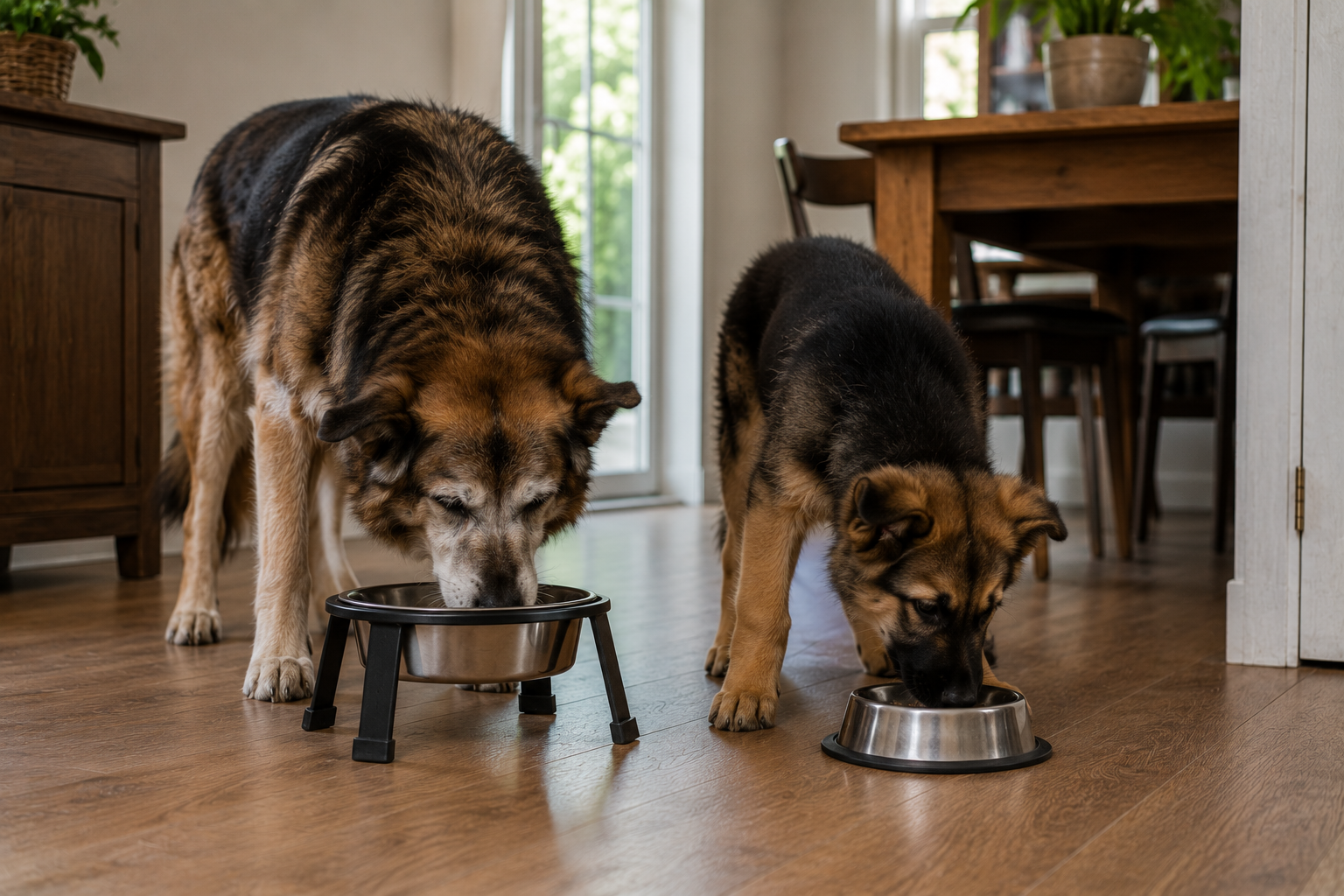
When to change dog food for senior dogs is a question most owners ask too late. Usually after the first problems have already started. The coat has lost its shine. The dog is gaining weight on the same portions. Digestion has become unpredictable. Stiffness in the mornings is getting worse.
By the time these signs appear, the body has often been struggling with inadequate nutrition for months. The physical damage that accumulates during that time does not simply reverse when the food is finally switched. Some of it stays.
This is why timing matters. Changing your dog’s food reactively, once problems have already developed, is harder and less effective than changing it proactively, before the body starts showing the strain of food that no longer meets its needs.
Your dog’s body changes as they age. Their food needs to change with it.
By seniordog-care.
This post may contain affiliate links. If you buy through these links, I may earn a small commission at no extra cost to you. As an Amazon Associate, I earn from qualifying purchases.
Table of Contents
Why Your Dog’s Nutritional Needs Change With Age
A dog that has eaten the same food for ten years without obvious problems is not proof that the food is still right for them. It is evidence that dogs adapt quietly to inadequate nutrition for a long time before the signs become visible.
Several things change in an aging dog’s body that directly affect what their food needs to deliver.
Metabolism slows down. A less active senior dog burns fewer calories than they did at three or four years old. The same food that maintained a healthy weight in a younger dog gradually causes weight gain in an older one. Extra body weight puts four to five kilograms of additional pressure on joints for every extra kilogram carried. For a dog already developing joint problems, this is not a minor issue.
Digestion becomes less efficient. Senior dogs produce fewer digestive enzymes, their gut microbiome becomes less balanced, and nutrient absorption declines. A food that delivered adequate nutrition to a younger dog may deliver significantly less usable nutrition to the same dog at age nine or ten, even if the ingredients have not changed.
Muscle loss accelerates. Dogs naturally lose muscle mass as they age. Without adequate high-quality protein, this loss happens faster. Many owners make the mistake of reducing protein in senior dogs, assuming they need less because they are less active. Research consistently shows the opposite. Senior dogs need more digestible protein than adult dogs to slow muscle loss, not less.
Joint health declines. Cartilage breaks down over time. Without nutritional support specifically targeting joint health, including glucosamine, chondroitin, and omega-3 fatty acids, the pace of that breakdown accelerates. Standard adult dog food does not include these nutrients at meaningful levels.
Immune function weakens. An aging immune system needs more antioxidant support, not less. Vitamins E and C, beta-carotene, and selenium all play roles in immune function and cognitive health that become more important as dogs age.
The Biggest Mistake: Choosing the Wrong Type of Food
Most owners know they should switch to a senior formula eventually. The mistake is not always waiting too long. Sometimes it is switching to the wrong formula for the wrong reasons.
A dog with a perfectly healthy stomach does not need a sensitive stomach formula. Buying sensitive stomach food for a dog without digestive issues means choosing a formula built around limiting certain ingredients, which often means fewer of the nutrients your dog actually needs. You are solving a problem that does not exist while creating a nutritional gap for problems that do.
The same logic applies in reverse. A dog with genuine digestive sensitivity needs a formula that addresses that, not a high-protein performance formula that stresses an already compromised gut.
The most common errors in this area:
Buying sensitive stomach food for a dog that does not need it. This often reduces protein quality and adds unnecessary fiber without addressing actual joint or immune needs.
Buying a weight management formula for a dog that needs more protein. Low-calorie formulas cut fat significantly, which can reduce overall palatability and energy alongside the calorie count. For a dog losing muscle mass, cutting protein to manage weight is counterproductive.
Assuming a senior label means the formula is right for your dog. Senior formulas vary enormously in what they prioritize. Some focus on joint health. Others on digestion. Others on calorie reduction. Knowing what your specific dog needs determines which type of senior formula is actually appropriate.
Not adjusting at all. Keeping a dog on adult maintenance food well into their senior years means missing years of targeted nutritional support during the period when their body needs it most.
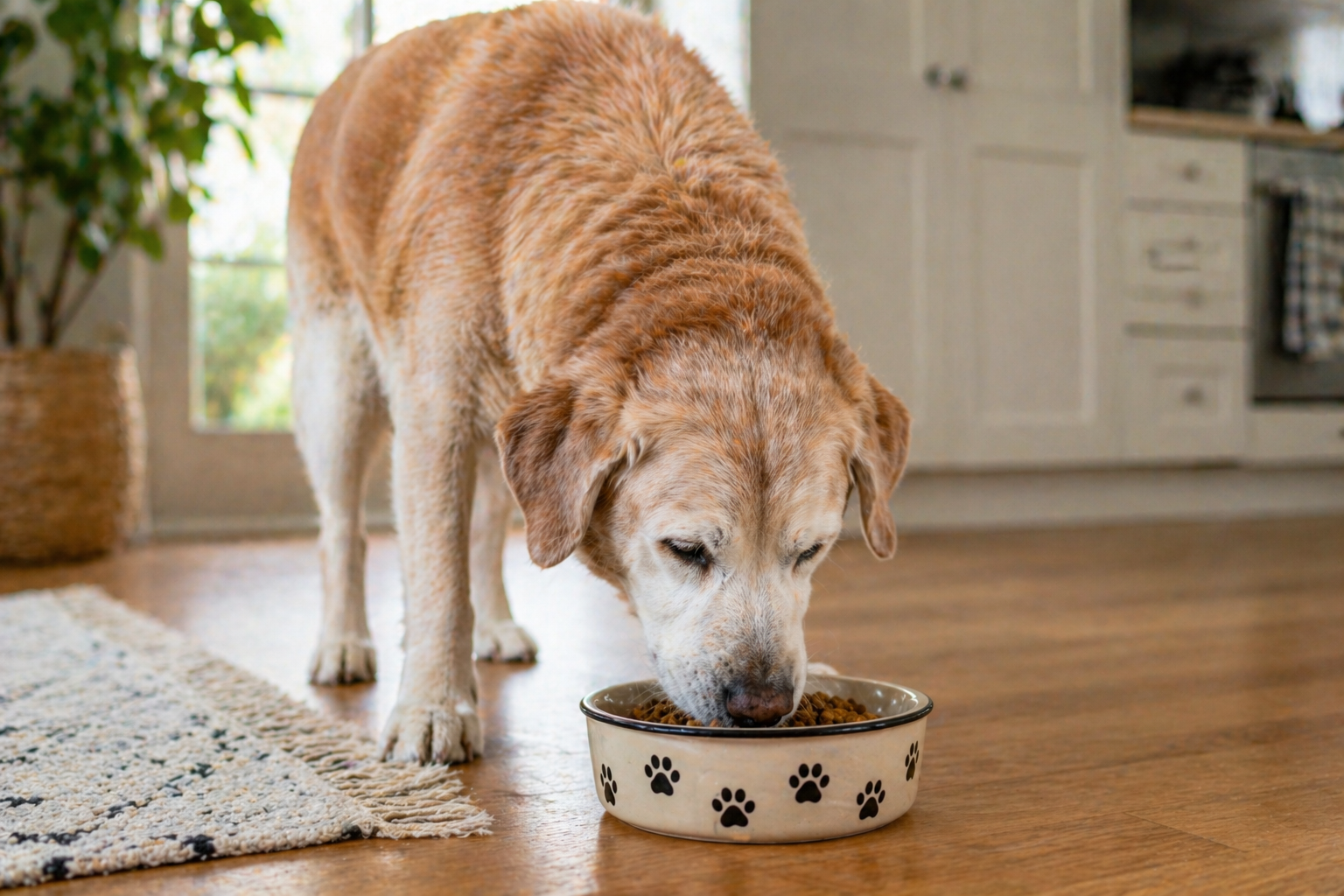
When to Change Dog Food for Senior Dogs
The answer is earlier than most owners think, and it depends on your dog’s size.
Large and giant breeds age faster than small breeds. Their joints carry more weight, their bodies work harder, and the aging process begins earlier. A Great Dane or Labrador benefits from transitioning to senior nutrition around age 6 to 7. Some large breed owners start at age 5 if early joint signs are present.
Medium breeds typically benefit from switching around age 7 to 8.
Small breeds age more slowly. A Chihuahua or Shih Tzu may not need a senior formula until age 9 to 10. But starting earlier is not harmful, and some small breed owners make the switch at age 8 to get ahead of the changes.
The key point is this: do not wait for problems to appear. By the time a dog is showing visible signs of nutritional inadequacy, stiffness that has worsened, muscle loss that is noticeable, a coat that has deteriorated, the body has been managing without adequate support for a significant period. Some of that damage is reversible with the right diet. Some is not.
Signs that a food change is overdue regardless of age:
Unexplained weight gain on the same portions. Visible muscle loss, particularly in the hindquarters. Stiffness that is getting worse rather than stable. Coat quality that has declined without a clear skin condition. Digestion that has become less consistent. Reduced energy that goes beyond normal aging.
Any of these signals means the current food is no longer meeting your dog’s needs. Do not wait for more signs. Change the food.
How to Change the Food Without Causing Problems
Senior dogs are less adaptable to sudden dietary changes than younger dogs. A sudden switch causes digestive upset on top of an already sensitive system. The right approach is a gradual transition over ten to fourteen days, extended further for dogs with existing digestive sensitivity.
For the full step-by-step schedule and what to watch for along the way, our guide on how to transition your senior dog to a new diet covers every stage in detail.
Days one to three: 75% old food, 25% new food. Days four to six: 50% old food, 50% new food. Days seven to nine: 25% old food, 75% new food. Day ten onwards: 100% new food.
For dogs with existing digestive sensitivity, extend this to three weeks. The slower the transition, the better the outcome for most senior dogs.
Monitor stool quality throughout the transition. Loose stools or vomiting that persists beyond the first few days means the transition is moving too fast. Go back a step and slow down.
What to Look for in a Senior Dog Food
Knowing when to change is one part. Knowing what to change to is the other.
A named animal protein as the first ingredient. Deboned chicken, turkey, salmon, or lamb. Not chicken meal or meat by-products as the primary source. Protein quality determines how much usable nutrition actually reaches your dog’s muscles. For a full breakdown of every part of the label and what it actually tells you, our guide on how to read dog food labels for senior dogs covers this in depth.
Guaranteed levels of glucosamine and chondroitin in the nutritional analysis. Not just mentioned in the product description. The guaranteed analysis section tells you what is actually in the food at meaningful levels.
Omega-3 fatty acids from fish oil or fish-based ingredients. Explicitly listed on the ingredient label. Omega-3s reduce joint inflammation, support cognitive function, and maintain coat and skin health.
Appropriate calorie density for your dog’s activity level. A less active senior dog needs fewer calories than they did as an adult. Calorie density should match your dog’s current lifestyle, not the lifestyle they had at age three.
No artificial preservatives, colors, or flavors. Senior dogs are more sensitive to additives than younger dogs. Cleaner ingredient lists matter more as dogs age.
AAFCO statement for adult maintenance or senior dogs. This confirms the food meets basic nutritional standards for your dog’s life stage.
Format matters here too, not just ingredients. If your dog has dental discomfort, drinks less water than before, or has become a pickier eater, the format itself, wet versus dry, can matter as much as what is in the bag. Our comparison of wet dog food versus dry dog food for senior dogs covers exactly when each has the advantage.
How Food Connects to Everything Else
Food is the foundation but it works best as part of a broader approach to senior dog health.
A dog eating the right food but sleeping on an unsupportive surface is still waking up stiff. A dog on excellent food but with no joint supplement support is still missing targeted nutritional help for cartilage that food alone rarely provides at therapeutic levels.
The most effective approach combines good food with the right supplements for your dog’s specific needs, proper sleep support, appropriate exercise, and regular vet check-ups.
For joint supplement guidance: What Supplements Do Senior Dogs Need?
For sleep support: Why a Good Orthopedic Dog Bed Is Vital for Senior Dogs
For a full nutrition guide: Senior Dog Nutrition 101
FAQ
At what age should I switch to senior dog food?
Large breeds around age 6 to 7. Medium breeds around age 7 to 8. Small breeds around age 9 to 10. Earlier is generally better than later. If your dog is already showing signs of nutritional inadequacy at a younger age, do not wait for an arbitrary age milestone.
Can I keep my senior dog on adult food?
Technically yes if the food meets their nutritional needs. But most standard adult maintenance foods do not include joint support nutrients at meaningful levels, are not calibrated for reduced senior metabolism, and do not address the specific nutritional gaps that develop with age. A senior-specific formula is usually a better fit.
My dog has eaten the same food for years without problems. Why change it?
Because your dog’s body has changed even if the food has not. What worked at age three is not necessarily delivering the same nutritional value at age nine. The absence of obvious problems does not mean the food is still optimal. It often means the dog has been adapting quietly to gradual nutritional inadequacy.
How do I know if the new food is working?
Look for gradual improvements over four to eight weeks. Better coat quality, more consistent digestion, improved energy, less morning stiffness, and stable body weight are all positive signs. Not all changes are immediate. Give a new food eight weeks before deciding if it is working.
Should I consult my vet before changing my senior dog’s food?
For healthy senior dogs without existing conditions, a switch to a quality senior formula does not require a vet visit. For dogs with kidney disease, diabetes, heart conditions, or other diagnoses, always consult your vet first. Some conditions require specific dietary management that a standard senior formula may not provide.
What if my senior dog refuses to eat the new food?
Mix the new food more gradually. Start with 90% old food and 10% new food for the first week. Try warming the new food slightly to increase palatability. Add a small amount of low-sodium broth. Most dogs adjust within two to three weeks when the transition is slow enough.
Final Thoughts
When to change dog food for senior dogs comes down to one principle. Do not wait for problems to appear. By the time visible signs of nutritional inadequacy develop, physical damage has already accumulated. Some of it is reversible. Some is not.
Your dog’s body changes with age. Their metabolism slows, their digestion becomes less efficient, their joints need more support, and their immune system becomes less resilient. The food needs to change with the body, not stay fixed while the body moves on without it.
Earlier is better. The right formula for your dog’s specific needs matters more than the senior label on the bag. And transitioning slowly protects a digestive system that is already working harder than it used to.
Get the food right before the problems start, and you give your dog the best possible foundation for their senior years.
For specific product recommendations, read our complete guide: Best Senior Dog Food 2026
Sources
- https://www.akc.org/expert-advice/nutrition/senior-dog-nutrition/
- https://www.avma.org/resources-tools/pet-owners/petcare/senior-pets
- https://www.ncbi.nlm.nih.gov/pmc/articles/PMC6366510/
- https://www.vet.cornell.edu/departments-centers-and-institutes/riney-canine-health-center/canine-health-information/nutrition-dogs


Pingback: Best Food For Senior Dogs: What Really Works In 2025
Pingback: How to Transition Your Senior Dog to a New Diet