
Signs that your senior dog is in pain are rarely obvious. Dogs do not show pain the way we do. They do not cry out, sit down, and refuse to move, or tell you something is wrong. What they do is adapt, and that adaptation is exactly what makes pain so easy to miss in an older dog specifically, since a senior dog has had years of practice compensating for physical changes without you ever noticing the process happening.
This article focuses on acute pain, pain that comes on suddenly and is tied to a specific moment or injury, rather than the slow, gradual pain of arthritis. Acute pain can ease with the right treatment. But if you miss it or act too late, the consequences reach further than the original problem. A senior dog compensating for a painful leg puts extra load on joints and muscles that already have less capacity to absorb it than they did five years ago. Over time, that compensation creates new damage on top of the original issue. What started as one problem becomes several.
A lot of owners miss this, and there is no shame in that. But now that you know what to look for, you are in a much better position to act before it happens.
By Seniordog-care.
This post may contain affiliate links. If you buy through these links, I may earn a small commission at no extra cost to you. As an Amazon Associate, I earn from qualifying purchases.
Table of Contents
Acute Pain vs Chronic Pain: What Is the Difference?
Before getting into the signs, it helps to understand the difference between the two types of pain a senior dog can experience.
Acute pain happens in the moment. It is usually tied to a specific cause, an injury, a sudden illness, a bee sting, a pulled muscle. It comes on quickly and, with the right care, it can ease and go away. This is the type of pain this article focuses on.
Chronic pain is different. It is long-lasting and does not fully go away. Arthritis is the most common example in senior dogs, and it develops gradually rather than announcing itself in a single moment. Chronic pain can be managed and reduced but rarely eliminated completely, and a senior dog with chronic pain learns to live around it over months and years.
The distinction matters because acute pain needs faster action. Chronic pain develops slowly and there is usually time to adjust the approach. Acute pain can escalate quickly, and if a senior dog starts compensating for it, new problems develop alongside the original one at a pace an older body is less able to absorb. For more on recognising the signs of chronic pain and arthritis specifically, our guide on how to recognise pain in senior dogs covers that ground.
Why Senior Dogs Hide Pain So Well
Understanding why dogs hide pain helps you recognise the subtle signs more reliably, and this matters more for a senior dog than a younger one.
Dogs descended from animals where showing weakness could mean becoming prey. That instinct to mask discomfort stays deeply ingrained regardless of how safe a domestic life is. A dog in significant pain will often continue to greet you at the door, wag its tail, and appear outwardly normal.
Senior dogs are particularly good at this. They have had years of practice adapting to physical changes, and they compensate automatically in ways a younger dog simply has not had the time to learn. By the time the behaviour becomes obvious to most owners, the pain has often been present for some time, sometimes for weeks.
This is why you cannot wait for dramatic signs in a senior dog specifically. The subtle behavioural changes are what matter most, and they are exactly what get dismissed as “just getting older” when they are actually pain.
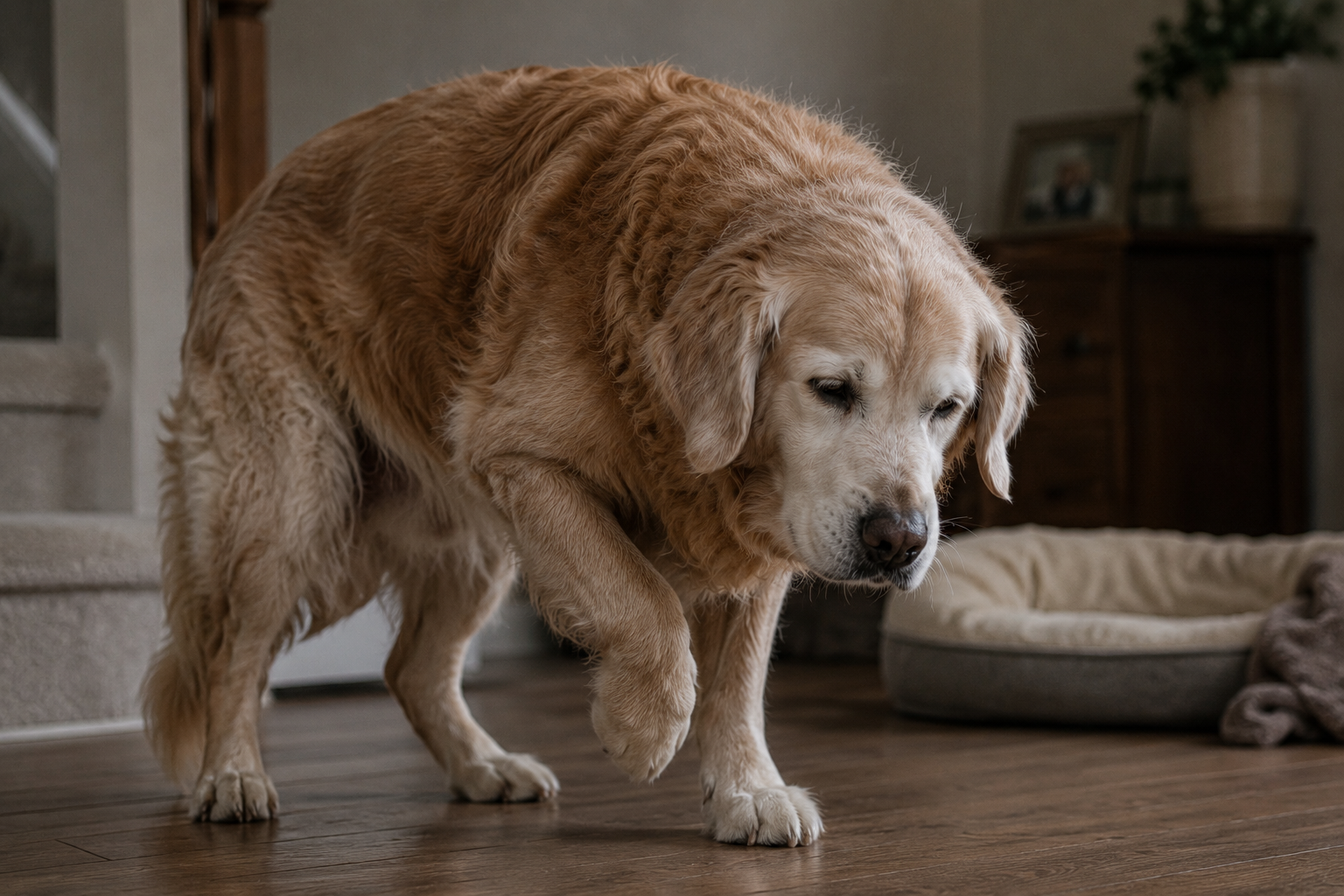
10 Signs Your Senior Dog Might Be in Acute Pain
1. Sudden Reluctance to Move or Bear Weight
A senior dog that was moving freely an hour ago and now refuses to put weight on a leg, avoids stairs, or will not stand up is showing a clear acute pain signal. The sudden onset is what separates this from the gradual chronic stiffness that arthritis produces.
Watch for hesitation before standing, holding a paw off the ground, or an obvious change in how weight is distributed while standing still.
2. Limping or Altered Gait
Limping is one of the most visible signs of acute pain, but it is not always dramatic. A subtle change in gait, a slight favouring of one side, or a shorter stride on one leg can all indicate pain that has not yet become severe.
The real danger with limping in a senior dog is compensation. A dog favouring a front leg shifts weight to the opposite front leg and both rear legs, joints and muscles that already have less cartilage and muscle mass to absorb that extra load than they did years earlier. That creates new stress and potential new injury on top of the original problem.
3. Vocalising When Touched or Moving
A senior dog that yelps, whines, or growls when touched in a specific area, or when making a particular movement, is communicating pain directly. This is one of the clearest signals available, and it deserves to be taken at face value rather than explained away as grumpiness.
Note which area triggers the response and how consistent it is. A dog that reacts every time you touch its lower back, a specific joint, or its abdomen is telling you something specific about where the pain is located.
4. Sudden Changes in Behaviour or Personality
A normally friendly senior dog that becomes irritable, snaps when approached, or withdraws from interaction it previously enjoyed is very often in pain. This is not a personality change. It is a pain response, and treating it as the former means missing the actual cause.
Equally, a normally independent senior dog that becomes unusually clingy or anxious may be experiencing discomfort it cannot understand and is seeking reassurance for.
5. Panting at Rest Without an Obvious Reason
Panting is normal after exercise or in heat. Panting while resting in a cool environment is not. Unexplained panting, particularly at night, is a significant pain indicator that many owners of senior dogs miss because they assume their dog is simply warm or anxious.
Heavy panting at rest alongside any other sign on this list warrants prompt attention.
6. Restlessness and Inability to Settle
A senior dog in acute pain cannot find a comfortable position. It gets up, lies down, moves to a different spot, and repeats the cycle. It may circle repeatedly before attempting to lie down and then get up again shortly after.
This restlessness often looks like anxiety to owners. But if it has come on suddenly and is accompanied by other signs from this list, pain is the more likely cause, particularly in a dog whose joints and comfort needs have already changed with age.
7. Changes in Breathing
Shallow, rapid breathing, or laboured breathing not explained by heat or exercise, can indicate chest or abdominal pain. Some senior dogs in significant acute pain breathe differently as a direct response to the discomfort.
If your dog’s breathing pattern has changed suddenly and does not return to normal quickly, take this seriously rather than waiting to see if it passes.
8. Excessive Licking or Attention to a Specific Area
A senior dog that suddenly and obsessively licks, chews, or nuzzles a specific part of its body is often responding to pain or discomfort in that area. The skin may look completely normal. The problem is underneath.
Watch for this particularly on joints, paws, and the abdomen, all common sites for both acute injury and the arthritis that becomes so common with age. Persistent attention to the same spot without an obvious skin reason is worth investigating.
9. Facial Tension and Changed Expression
Dogs show pain in their face. Squinting eyes, a furrowed brow, pinned-back ears, a tense jaw, or an overall withdrawn expression can all indicate discomfort.
You know your dog’s normal resting expression better than anyone. When something looks different and you cannot immediately place why, trust that instinct. It is often picking up on subtle facial tension that is difficult to put into words but genuinely real.
10. Trembling or Shaking Without Cold or Fear
Trembling not explained by cold or a known fear trigger can be a pain response. It is particularly common in senior dogs with sudden back pain, abdominal pain, or a significant joint injury.
If your dog is shaking in a normal environment without an obvious trigger, particularly alongside any other sign from this list, pain is a likely cause.
The Compensation Problem in an Ageing Body
This is one of the most important things to understand about acute pain in a senior dog, and one of the least discussed.
When a dog is in pain in one area, it instinctively compensates by using other body parts differently. A senior dog with a painful right front leg shifts weight to the left front leg and the rear legs. A dog with a sore back adjusts posture and gait in ways that put different demands on the neck, shoulders, and hips.
Over time, those compensating body parts start experiencing strain and damage of their own, and this happens faster in a senior dog than it would in a younger one, since the joints and muscles absorbing that extra load already have less capacity to spare. What started as one problem in one location becomes multiple problems across the body. A dog that came in with a sore leg can leave months later with a sore leg, a stressed opposite shoulder, and early signs of hip strain, none of which existed before the compensation began.
This is why acting early on acute pain matters so much for a senior dog specifically. The longer the compensation continues, the more widespread the secondary damage becomes, and the harder it is to reverse in a body that was already working with less margin than it had a few years earlier.
What to Do If You Think Your Senior Dog Is in Acute Pain
See your vet promptly. Acute pain that has come on suddenly warrants a vet visit sooner rather than later. Do not wait to see if it resolves on its own if your dog is showing multiple signs from this list or if the pain seems significant. Your vet can identify the source, assess severity, and recommend appropriate treatment, and for acute injuries in an older dog, early intervention makes a genuinely bigger difference to the outcome than it would in a younger, more resilient body.
Do not give human pain medication. Never give your dog ibuprofen, aspirin, paracetamol, or any other human pain medication. These are toxic to dogs and can cause serious organ damage, sometimes fatally. Only use medication prescribed or approved by your vet specifically for dogs.
Restrict movement until you know what you are dealing with. If your dog is limping or showing signs of acute pain, limit activity until you have a clearer picture. Do not encourage exercise or play that could worsen an injury you have not yet assessed.
Keep them comfortable. A warm, quiet resting spot with a genuinely supportive surface reduces physical stress while you arrange veterinary care. A heating pad designed for dogs can help with muscle or joint pain specifically. For recommendations, our guide to the best heating pad for dogs with arthritis covers safe, effective options, and for a broader range of pain relief products beyond heat specifically, our guide to the top 7 best pain relief products for senior dogs covers what else is worth considering.
Monitor and note what you observe. Before your vet appointment, write down what you have observed, when it started, how it has changed, and any recent events that might be relevant, a fall, a collision during play, or unusual activity. This information helps your vet assess the situation more accurately, particularly for a senior dog whose baseline behaviour you know better than anyone examining them for ten minutes ever could.
For further, gentle at-home comfort measures alongside veterinary care, our guide on soothing tips for dogs in pain covers what actually helps.

FAQ
My senior dog seems fine sometimes and in pain other times. Is that normal?
Yes, this is common with acute injuries and early chronic conditions. Pain often varies with activity level, rest, and time of day. A dog that seems fine after resting but deteriorates after movement is likely dealing with a real pain issue even if it is not constant.
How do I know if my senior dog is in serious pain?
Signs of serious pain include an inability to bear weight at all, continuous vocalisation, laboured breathing, trembling that does not stop, refusal to eat or drink, and obvious distress. These warrant immediate veterinary attention rather than a routine appointment.
Can a senior dog mask pain so well that even a vet misses it?
Yes, sometimes. This is exactly why detailed observations from you at home are so valuable. A dog can appear relatively normal during a short vet examination while managing significant pain at home. Video footage of the behaviour you have observed can be genuinely useful for your vet to see.
Is limping always a sign of pain in a senior dog?
Usually, yes. Occasional brief limping that resolves immediately can sometimes follow an awkward sleeping position. Consistent or recurring limping in a senior dog is almost always pain-related and worth investigating rather than dismissing.
How quickly does compensation damage develop?
It varies depending on the severity of the original pain and how much the dog continues moving. In an active senior dog with significant gait changes, secondary strain can develop over weeks. In a less active dog it tends to develop more slowly. Either way, earlier treatment of the original problem reduces the risk considerably.
Should I wait to see if acute pain resolves on its own?
For mild signs that appeared after unusual activity and improve significantly within twenty four hours, monitoring is reasonable. For significant signs, signs that are not improving, or anything suggesting a serious injury, do not wait. Early veterinary assessment is always the better call, particularly for an older dog with less capacity to compensate for a delay.
Final Thoughts
Signs that your senior dog is in pain are rarely the dramatic signals most people expect. They are often subtle behavioural shifts, changes in posture and movement, and expressions that only someone who knows their dog well would ever notice.
Acute pain specifically needs prompt attention in a senior dog. Not just because it is uncomfortable, but because of the compensation problem, an ageing body adapting around pain creates new strain on joints and muscles that already have less to give. A lot of owners miss this until it has already become several problems instead of one. But now that you know what to look for, you can act while it is still just the one.
Trust what you observe. Act early. If something feels off, it usually is.
Sources
https://www.akc.org/expert-advice/health/signs-of-pain-in-dogs/
https://www.avma.org/resources-tools/pet-owners/petcare/pain-management-dogs
https://www.ncbi.nlm.nih.gov/pmc/articles/PMC4765374/


Pingback: Soothing Tips For Dogs In Pain - seniordog-care
Pingback: Why an Good Orthopedic Dog Bed is Vital for Senior Dogs
Pingback: Joint Problems in Senior Dogs: Causes, Symptoms & Best Remedies
Pingback: How to Recognize Pain in Senior Dogs - seniordog-care