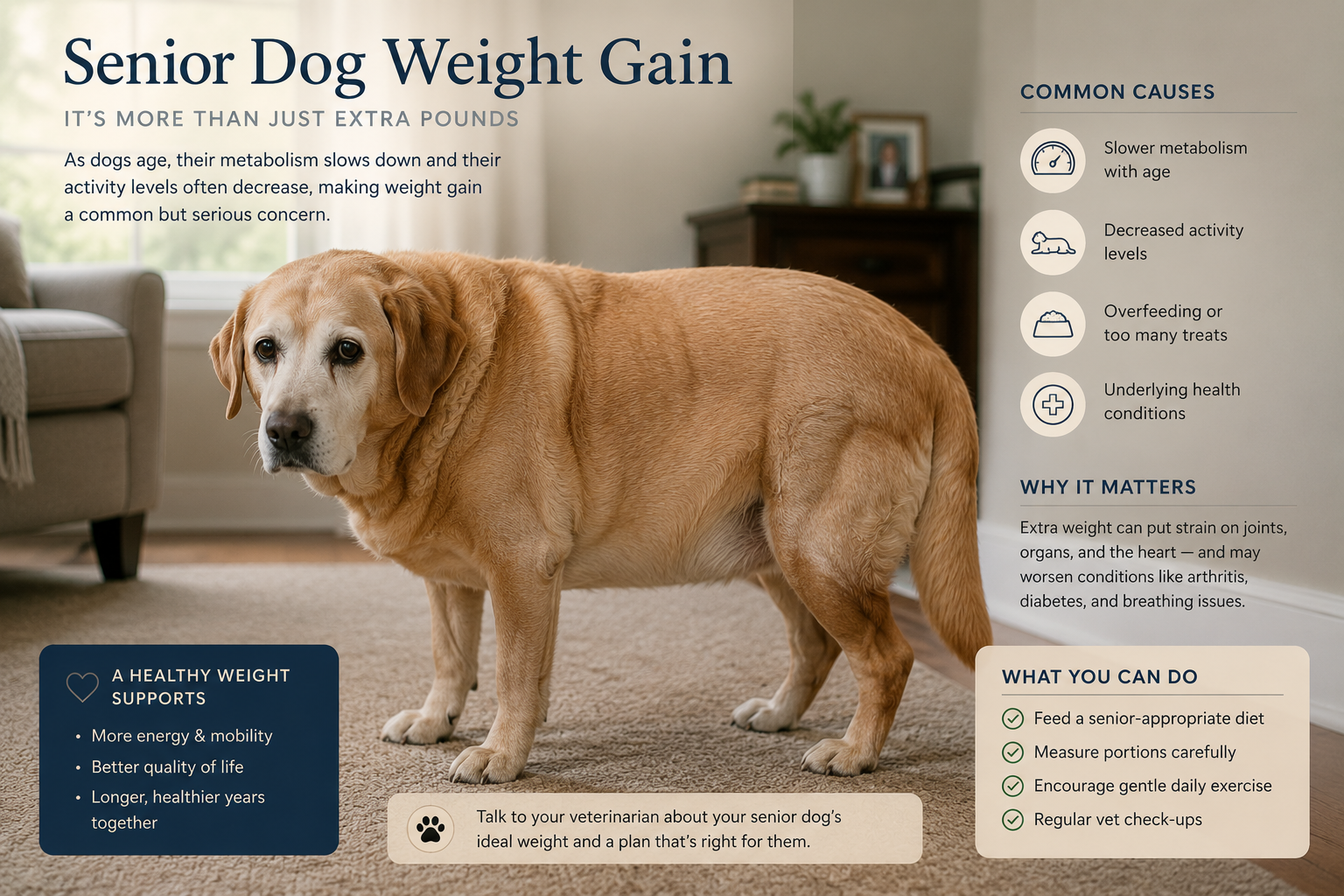
Senior dog weight gain is one of those problems that sneaks up on you. One day your dog looks fine. A few months later, you notice the waist has disappeared, the walks are slower, and getting up from the floor takes a little longer than it used to. It is the same pattern you see in aging humans. The metabolism slows down, the activity level drops, and the extra weight accumulates before most owners even register it as a problem.
That is the core issue with senior dog weight gain. It does not happen dramatically. It happens gradually, and by the time it is obvious, it has already been affecting your dog’s joints, energy, and organ function for months. Most owners know something is off but assume it is just aging. It is not just aging. It is a manageable problem, and the earlier you address it, the more impact your actions have.
Table of Contents
Why Senior Dogs Gain Weight More Easily Than Younger Dogs
The biological reasons behind senior dog weight gain are straightforward. Understanding them makes it easier to see why the same food and routine that worked at age three will not work at age nine.
Metabolism slows with age. Metabolism slows with age. As dogs get older, their resting metabolic rate decreases. The body burns fewer calories at rest, which means the same daily food intake that maintained a healthy weight in a younger dog creates a caloric surplus in an older one. Research suggests senior dogs may need up to 20 percent fewer calories than adult dogs of the same size, yet most owners continue feeding the same portions they always have. Our guide on how to help a senior dog with a slow metabolism covers this mechanism and what you can do about it beyond diet alone.
Muscle mass declines. Muscle tissue burns more energy than fat tissue, even at rest. As dogs age and become less active, they lose muscle mass through a process called sarcopenia. Less muscle means a lower baseline calorie burn, which compounds the effect of the slower metabolism. The dog needs less food, but unless the owner actively adjusts portions or switches to a lower-calorie formula, the gap between intake and output widens.
Activity levels drop. A dog that used to run in the park for an hour now prefers a 15-minute walk and a long nap. That reduction in daily movement represents a meaningful calorie difference over weeks and months. The food intake has not changed, but the energy expenditure has dropped significantly.
Hormonal changes. Thyroid function can decline with age in dogs, leading to hypothyroidism in some cases. This condition slows metabolism further and is more common in older dogs than most owners realise. If your senior dog is gaining weight despite a controlled diet, thyroid function is worth testing at your next veterinary visit.
Neutering. Spayed and neutered dogs have a lower metabolic rate than intact dogs. The effect is present from the time of the procedure but becomes more significant combined with the other age-related changes above.
Why Most Owners Miss It Until It Is Already a Problem
Senior dog weight gain happens slowly enough that owners normalise it. You see your dog every single day. A gradual change over six months does not register the same way a sudden change would. This is not negligence. It is just how human perception works when change is incremental.
The other factor is attitude. Most owners see a slightly heavier dog and think it is not that serious. It can wait. The dog is still eating, still moving, still happy enough. What most do not realise is that excess weight in older dogs is not a cosmetic issue. It is a health issue with measurable consequences that compound over time.
The third factor is information. Many owners genuinely do not know that their dog’s calorie needs have changed. Nobody tells them. The bag of food still recommends the same portion guidelines it always did. The dog finishes every meal with enthusiasm. Everything appears normal. The slow accumulation of extra weight continues unnoticed until it starts showing up as stiffness, reluctance to exercise, or a veterinary flag at the annual checkup.
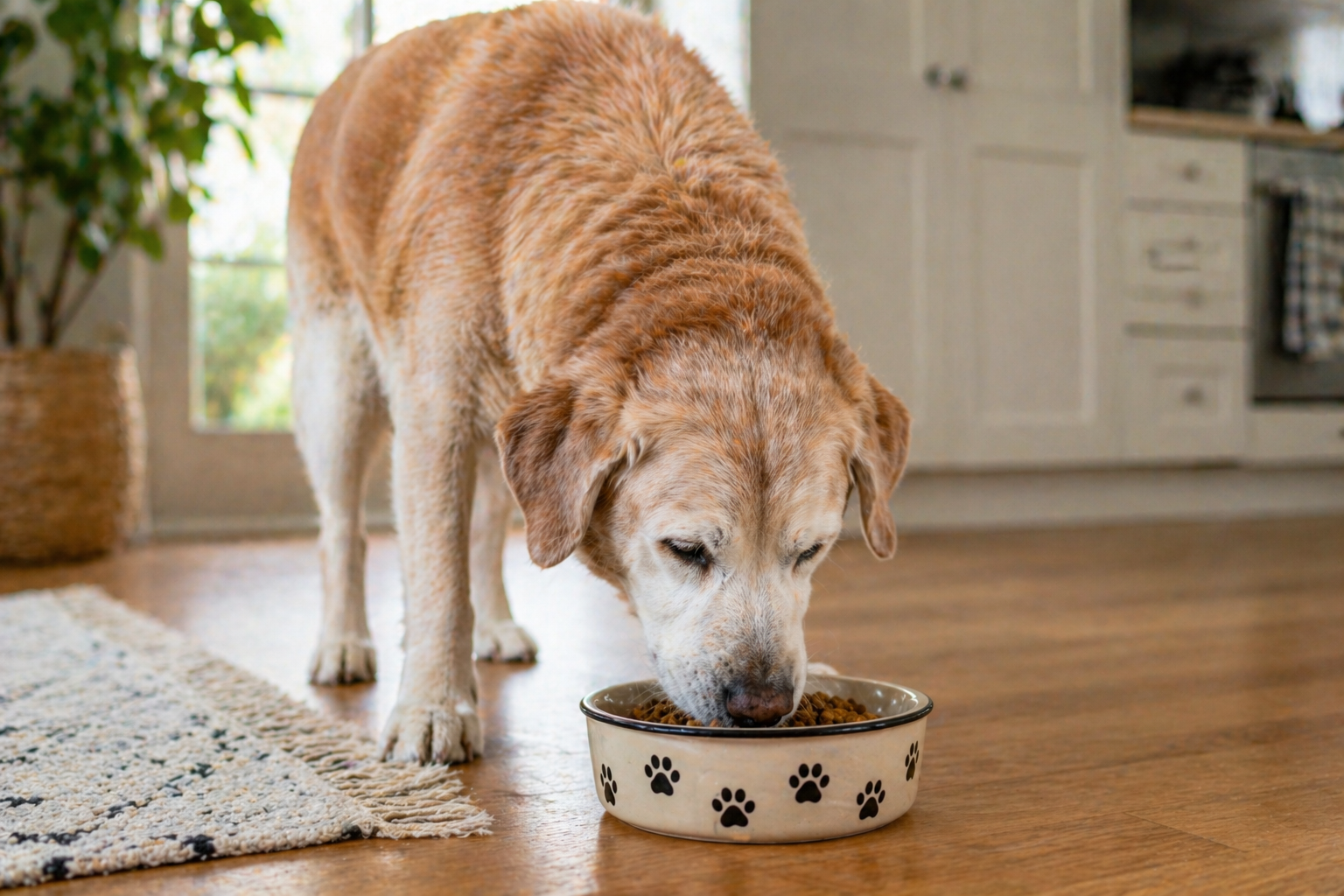
What Excess Weight Does to an Aging Dog’s Body
Senior dog weight gain matters because excess body weight does not just sit there harmlessly. It actively accelerates the health problems that aging dogs are already vulnerable to.
Joints. Every extra kilogram of body weight adds roughly three to five kilograms of effective force on a dog’s joints during movement, depending on the activity. For a senior dog whose cartilage is already thinning, this accelerates wear significantly. The link between obesity and earlier onset of osteoarthritis in dogs is well established in veterinary research. An overweight senior dog does not just feel heavier. It moves less because movement has become more painful, which leads to further muscle loss, which makes the weight problem worse. For more on how aging affects joint tissue directly, the guide on the impact of aging on dog joints covers this in detail.
Heart and respiratory system. Extra fat tissue requires a larger blood supply to maintain, which increases the workload on the heart. Overweight dogs show elevated resting heart rates and are more prone to cardiovascular strain. Fat deposits around the chest cavity also reduce lung capacity, which is why overweight dogs often breathe more heavily during minimal exertion.
Metabolism and diabetes. Excess body fat, particularly visceral fat around the organs, interferes with insulin sensitivity in dogs. This increases the risk of developing diabetes mellitus, a condition that requires lifelong management and significantly complicates daily care. Canine diabetes is substantially more common in overweight dogs than in lean ones.
Lifespan. The Purina Lifespan Study, one of the most cited long-term studies in veterinary nutrition, found that dogs maintained at a lean body weight lived an average of nearly two years longer than their overweight littermates. Not months. Years.
How to Tell If Your Senior Dog Is Overweight
The number on a scale is not the most reliable indicator of whether a senior dog is overweight, because ideal weight varies significantly by breed, frame size, and muscle mass. Veterinarians use a Body Condition Score, or BCS, to assess weight more accurately.
The BCS is a 1 to 9 scale. A score of 4 to 5 is considered ideal. You can do a basic assessment at home in about two minutes using three checks.
Rib check. Run your hands along your dog’s ribcage without pressing hard. You should be able to feel individual ribs easily, with a thin layer of tissue over them. If you have to press firmly to feel the ribs, or cannot feel them at all, the dog is carrying too much weight.
Waist check from above. Looking down at your dog from directly above, there should be a visible narrowing behind the ribcage. If the body is the same width from shoulder to hip or wider at the hips than the ribs, that is a sign of excess weight.
Abdominal tuck. Looking at your dog from the side, the belly should tuck upward behind the ribcage. A belly that hangs level with or below the chest indicates excess body fat.
If the rib check and waist check both raise concerns, it is worth discussing with your veterinarian before making significant dietary changes, particularly for older dogs who may have underlying conditions affecting their metabolism.
What Actually Works for Managing Senior Dog Weight Gain
The good news about senior dog weight gain is that it responds well to the right interventions. You do not need dramatic measures. You need consistent, targeted adjustments applied early enough to make a difference.
Adjust portions before switching food. The first and simplest step is recalculating how much your dog actually needs. Feeding guidelines on packaging are based on averages and are often generous. A senior dog with a slower metabolism needs less than the label suggests. For practical help calculating the right daily amount for your dog’s current weight and activity level, the ultimate guide to dog food portion size walks through this in detail.
Switch to a senior or weight management formula. Switch to a senior or weight management formula. Senior-specific dog foods are formulated with lower calorie density and adjusted fat levels while maintaining adequate protein for muscle preservation. Weight management formulas take this further with higher fibre content to support satiety. The key is choosing a food that keeps calories controlled without reducing protein quality, because muscle maintenance is still essential. For the broader nutritional principles behind this, our senior dog nutrition basics guide covers what to prioritise on the label. The best weight management dog food for senior dogs compares the top options currently available.
Treat calories count. Treats are one of the most overlooked contributors to senior dog weight gain. An owner who carefully measures meals but then adds several treats throughout the day may be adding a meaningful percentage of daily calories without realising it. If treats are a regular part of your dog’s routine, reduce the meal portion slightly to account for them, or switch to lower-calorie treat options like plain cooked vegetables.
Maintain daily movement. Reducing food intake alone is less effective than combining dietary adjustment with consistent low-impact exercise. Short daily walks preserve muscle mass during weight loss, which matters because you want the weight loss to come from fat, not muscle. Swimming is an excellent option for senior dogs with joint discomfort, as it burns calories without loading the joints. Even 15 to 20 minutes of gentle movement daily makes a measurable difference over time. Exercise for Senior Dogs: How Much Is Enough
Feed twice a day, not once. Splitting daily food into two smaller meals rather than one large feeding supports better metabolism and helps regulate blood sugar, which is particularly relevant for overweight senior dogs at higher risk of insulin resistance.
Weigh regularly. Monthly weight checks at home, using a bathroom scale where you weigh yourself holding the dog and then subtract your own weight, give you objective data to work with. Weight loss in older dogs should be gradual, around one to two percent of body weight per week. Faster loss can compromise muscle mass and organ function.
What Not to Do
A few common mistakes make senior dog weight gain worse rather than better.
Do not starve the dog into weight loss. Severe caloric restriction in older dogs causes rapid muscle loss alongside fat loss. This leaves the dog lighter on the scale but weaker and less mobile, which is the opposite of the goal. Gradual reduction is always better.
Do not eliminate protein to cut calories. Older dogs need quality protein to maintain the muscle they still have. Low-protein diets in senior dogs accelerate sarcopenia. The calories to reduce come from fat and refined carbohydrates, not from protein.
Do not assume the dog will self-regulate. Most dogs will eat whatever is in front of them. Free feeding, where food is left out all day, removes your ability to control intake and makes it impossible to track how much your dog is actually consuming.
Do not wait for the vet to bring it up. Annual checkups catch a lot, but weight creep over a full year is harder to act on than weight creep caught at six months. Proactive monitoring at home gives you earlier data to work with.
When to Involve Your Veterinarian
Most cases of senior dog weight gain can be addressed through the adjustments above. There are situations where veterinary involvement is essential rather than optional.
If your dog is gaining weight despite a controlled diet and consistent exercise, there may be an underlying medical cause. Hypothyroidism, Cushing’s disease, and certain medications can all cause weight gain that does not respond to standard dietary management. A basic blood panel including thyroid function will identify or rule these out.
If your dog needs to lose more than ten percent of its body weight, doing so without veterinary guidance carries risk. A vet can calculate a safe target rate of loss and monitor organ function during the process, particularly kidney function, which can be affected by rapid weight changes in older dogs.
Any sudden weight change in either direction warrants a veterinary visit. Rapid unexplained weight loss in a senior dog is often a more urgent concern than gradual weight gain and can signal serious underlying disease.
FAQ
How much weight is too much for a senior dog?
There is no universal threshold because ideal weight varies by breed and frame. The body condition score is a more reliable guide than a number on a scale. A BCS above 6 on a 9-point scale indicates excess weight that is likely affecting health. A BCS of 7 or above indicates obesity and warrants veterinary guidance on a weight loss plan.
Can an overweight senior dog lose weight safely?
Yes, but the rate matters. Gradual weight loss of one to two percent of body weight per week is safe for most senior dogs. Faster loss risks muscle breakdown and can stress the kidneys. Combining moderate caloric reduction with daily low-impact exercise produces better results than diet alone.
Should I switch to a senior dog food if my dog is gaining weight?
In most cases, yes. Senior and weight management formulas provide lower calorie density with adequate protein, which is exactly what an older dog with a slower metabolism needs. Continuing with a standard adult maintenance food makes calorie management harder because the calorie density is higher than necessary for a less active dog.
Are some breeds more prone to senior dog weight gain than others?
Yes. Labrador Retrievers, Beagles, Basset Hounds, Cavalier King Charles Spaniels, and Dachshunds are among the breeds with a higher genetic predisposition to weight gain. For these breeds, proactive weight monitoring from middle age onward is particularly important.
Do treats cause significant weight gain in senior dogs?
They can. If treats make up more than ten percent of daily calorie intake without a corresponding reduction in meal portions, they contribute meaningfully to weight gain over time. The issue is not occasional treats. It is the combination of treats added on top of full meal portions, which many owners do without tracking the cumulative caloric effect.
How often should I weigh my senior dog at home?
Monthly is a practical frequency for most owners. It gives you enough data points to spot a trend without becoming excessive. If your dog is actively on a weight loss programme, bi-weekly checks give you better feedback on whether the approach is working.
Final Thoughts
Senior dog weight gain is not inevitable, but it is predictable. The biology behind it is consistent: slower metabolism, less muscle, lower activity. The owner patterns behind it are equally consistent: same food, same portions, same routine, and an assumption that things are probably fine.
The gap between those two realities is where the extra weight accumulates. Closing that gap requires adjusting how you feed your dog as it ages, not because something is wrong, but because something has changed. The dog’s needs have shifted, and the care needs to shift with them.
Start with portions. Check the body condition score. Make the switch to a senior-appropriate food if you have not already. Keep the daily movement consistent, even when it is shorter and slower than it used to be. Those adjustments, applied consistently, are what prevent a manageable tendency from becoming a genuine health problem.
For a broader look at how to support your senior dog’s health across all areas, the guide on the best food for senior dogs is a practical starting point.
Sources
- https://www.purina.com/articles/dog/health/senior-dog-weight
- https://pubmed.ncbi.nlm.nih.gov/12420780/
- https://www.akc.org/expert-advice/health/overweight-dogs/
- https://academy.royalcanin.com/en/veterinary/sarcopenia-and-weight-management-in-older-dogs
- https://www.avma.org/resources/pet-owners/petcare/obesity-pets

Pingback: Best Weight Management Dog Food for Senior Dogs 2026
Pingback: How Much to Feed a Senior Dog: For Big and Small
Pingback: How to Help a Senior Dog with a Slow Metabolism