
Finding the best weight management dog food for senior dogs is harder than it looks because the goal is not simply to reduce calories. A senior dog that loses weight by eating less of the wrong food will lose muscle alongside fat, which worsens joint stability, reduces mobility, and accelerates the physical decline that weight management is supposed to prevent. The right approach is fewer calories with maintained or higher protein, which is a combination that not every weight management formula actually delivers.
This guide covers what drives weight gain in senior dogs, what to look for in a weight management formula, and the six products worth considering. For the broader nutritional principles behind these choices, our senior dog nutrition basics guide is worth reading alongside this one.
This post may contain affiliate links. If you buy through these links, I may earn a small commission at no extra cost to you. As an Amazon Associate, I earn from qualifying purchases.
Table of Contents
Quick Picks
Best raw option: We Feed Raw Turkey Recipe, zero-carb, best fat-to-protein ratio, precision-portioned subscription
Best for joint and weight combined: Purina Pro Plan Adult 7+ Weight Management, glucosamine and EPA alongside calorie control, widely vet-recommended
Best clinical evidence: Hill’s Science Diet Perfect Weight Adult 7+, 70% of dogs lost weight in 10 weeks in clinical study
Best for grain sensitivity: Victor Senior Healthy Weight Gluten-Free, L-carnitine, glucosamine, chondroitin, gluten-free formulation
Best mainstream option: Blue Buffalo Life Protection Healthy Weight Senior, widely available, L-carnitine, cold-formed LifeSource Bits
Best triple-protein formula: Nutro Ultra Weight Management Senior, broader amino acid profile, clean-label, superfoods blend
Why Senior Dogs Gain Weight and Why It Matters
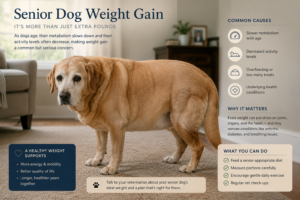
Weight gain in senior dogs follows directly from two changes that happen with age. Metabolism slows as the dog becomes less active and hormone levels shift. Muscle mass declines, and muscle burns more calories at rest than fat does.A dog that once maintained a healthy weight on a set daily portion now gains weight on that same amount because the calorie-burning capacity of the body has decreased. Our guide on how to help a senior dog with a slow metabolism covers this mechanism in more depth and what you can do beyond diet alone.
The consequences of excess weight in a senior dog are more serious than in a younger one. Every pound of additional body weight adds measurable mechanical load to joints that are already under stress from arthritis or cartilage deterioration. Research shows that dogs with osteoarthritis show significant improvement in mobility scores after losing even modest amounts of excess weight, without any change in treatment. The weight itself is part of the pain problem.
Beyond joints, excess body fat in older dogs increases the workload on the heart and kidneys, raises the risk of diabetes, and contributes to chronic low-grade inflammation that affects virtually every organ system. The liver processes fat differently in older dogs, and fat accumulation around internal organs, visceral fat, is more metabolically active and more harmful than subcutaneous fat.
The other side of the problem is muscle loss. A senior dog on a calorie-restricted diet that is also low in protein will lose lean muscle alongside fat. This looks like weight loss on the scale but worsens the dog’s physical condition because the muscle that was protecting and stabilising the joints has been sacrificed. Weight management dog food for senior dogs needs to reduce calories while preserving muscle, which is why protein content is the most important number to check on the label.
For a complete article about weight gain: Senior Dog Weight Gain: Why It Happens and What to Do
What to Look for in Weight Management Dog Food for Senior Dogs
Protein content is the priority. Senior dogs need more dietary protein relative to their total calorie intake, not less. The target is at least 25% protein on a dry matter basis, and ideally higher for a weight management formula where total calories are reduced. A food that achieves a lower calorie count by reducing protein is making the wrong trade-off for an aging dog.
L-carnitine is an amino acid compound that helps the body use fat as fuel rather than storing it. Clinical research in dogs shows that L-carnitine supplementation alongside caloric restriction produces better body composition outcomes than caloric restriction alone. It maintains lean muscle while accelerating fat loss. Not all weight management formulas include it. Those that do and list it at a meaningful dose are worth prioritising.
Fibre content affects satiety. A dog eating a lower-calorie diet will feel less full than before. High-fibre formulas extend the sensation of fullness by slowing gastric emptying, which reduces the likelihood of persistent hunger behaviours like begging or food obsession. Look for beet pulp, chicory root, or pea fibre as fibre sources in the ingredient list.
Calorie density is the practical number that determines how much the dog eats per meal. Most weight management kibbles run between 270 and 320 kilocalories per cup compared to 350 to 400 in standard formulas. Lower calorie density means larger volume per meal at the same calorie count, which helps with satiety. Always find the kcal per cup figure on the label or manufacturer’s website before calculating portion sizes.
Joint support ingredients are worth looking for in a weight management formula specifically because the dog that most needs to lose weight is also the dog most at risk of joint damage from excess load. Glucosamine, chondroitin, and omega-3 fatty acids in a weight management formula address both problems simultaneously.
For more detail on how to calculate the right daily portion for your specific senior dog, see the guide to how much to feed a senior dog.
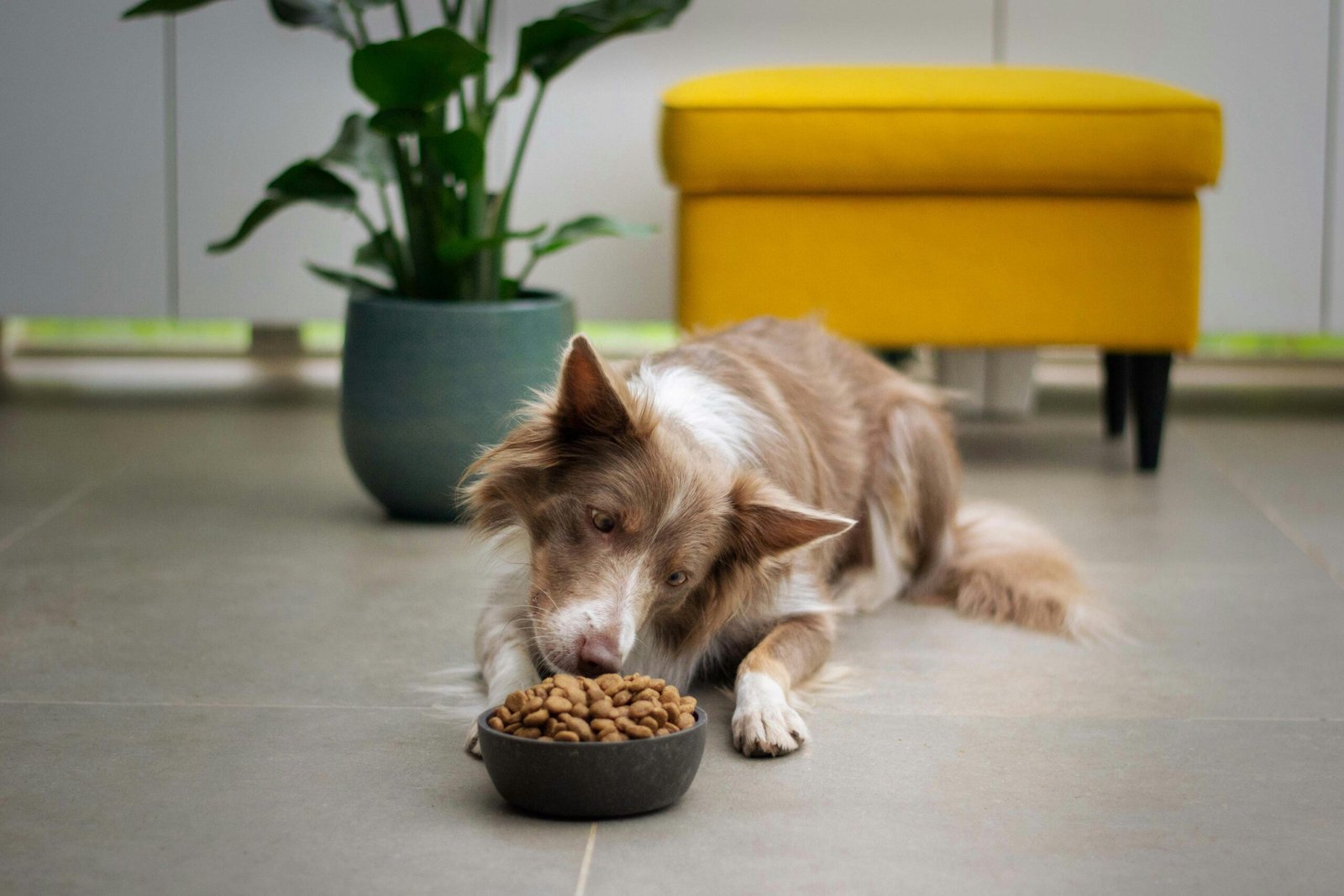
The 6 Best Weight Management Dog Foods for Senior Dogs
1. We Feed Raw Turkey Recipe
Best raw option for weight management in senior dogs
We Feed Raw does not have a dedicated senior light formula, but the turkey recipe is the strongest option in their range for weight management. At 48.6% protein and 25% fat on a dry matter basis, it has the best fat-to-protein ratio in the lineup. The zero-carb formulation eliminates the dietary starches that drive insulin spikes and fat storage in dogs with slower metabolisms. The subscription model calculates your dog’s exact daily calorie requirement based on their age, weight, breed, and activity level, then ships that precise portion. For senior dogs where overfeeding is the primary cause of weight gain, this removes the guesswork entirely.
Raw food is naturally high in moisture, which increases satiety per calorie and reduces the total volume needed to meet calorie targets. The turkey recipe uses HPP (high-pressure processing) to eliminate pathogens without heat, which maintains nutritional integrity while addressing the safety concern around raw feeding in older dogs with potentially weaker immune systems.
Pros
- Best fat-to-protein ratio in the We Feed Raw lineup for weight management
- Zero-carb formulation eliminates insulin-spiking starches
- Subscription model delivers exact daily calorie portion, removes overfeeding risk
- HPP processing addresses safety concerns for immunocompromised senior dogs
- High moisture content increases satiety per calorie
Cons
- Requires freezer storage and advance planning for deliveries
- Higher monthly cost than kibble-based alternatives
- Raw feeding not recommended by AVMA for dogs with confirmed immune compromise
Best for: Senior dogs whose weight gain is driven by metabolic slowdown and carbohydrate overload, where owners want a precision-portioned approach.
2. Purina Pro Plan Adult 7+ Weight Management Shredded Blend
Best kibble for senior dogs with joint concerns alongside weight management
The strongest veterinarian-recommended kibble for overweight senior dogs. The formula combines calorie-controlled chicken and rice with glucosamine and EPA for joint support, 15% less fat than standard Pro Plan formulas, and natural prebiotic fibre for digestive health. The shredded blend texture combines dry kibble with soft shreds, which improves palatability for senior dogs that have become indifferent to standard kibble. Formulated specifically for dogs aged seven and above.
The glucosamine and EPA inclusion is what separates this from generic weight management formulas. Overweight senior dogs almost universally have concurrent joint stress. A food that addresses weight and joint health simultaneously reduces the supplement burden and ensures consistent daily intake of joint support nutrients.
Pros
- Glucosamine and EPA address joint health alongside weight management
- 15% less fat than standard Pro Plan, calorie-controlled
- Shredded blend texture improves palatability for senior dogs
- Prebiotic fibre for digestive support
- Widely veterinarian-recommended, strong evidence base
Cons
- Contains corn and soy, not suitable for dogs with grain or legume sensitivities
- Shredded texture softens quickly when wet food is added
Best for: Overweight senior dogs with concurrent joint stiffness or arthritis where both problems need to be addressed through food.
3. Hill’s Science Diet Perfect Weight Adult 7+
Best clinically evidenced weight loss formula for senior dogs
Hill’s Perfect Weight has the strongest clinical evidence base for weight loss of any over-the-counter dog food on this list. In a clinical study, 70% of dogs lost weight within 10 weeks on this formula. The mechanism is a combination of L-carnitine for fat metabolism, high fibre for satiety, and a reduced calorie density that allows a larger feeding volume at a lower total calorie count. Formulated for dogs aged seven and above with AAFCO certification for senior maintenance.
The L-carnitine content is the clinical differentiator. Most weight management kibbles reduce calories by reducing fat without addressing the metabolic pathway that determines whether the body uses stored fat for energy. L-carnitine actively supports that pathway, which is why the clinical outcomes with this formula are better than with generic low-calorie foods.
Pros
- Clinical study: 70% of dogs lost weight within 10 weeks
- L-carnitine supports fat metabolism alongside calorie reduction
- High fibre for satiety on a reduced-calorie portion
- Formulated specifically for dogs aged 7 and above
- AAFCO-certified for senior maintenance
Cons
- Contains corn and chicken by-product meal, ingredient quality concerns for some owners
- Lower protein percentage than raw or high-protein alternatives
Best for: Overweight senior dogs where clinical evidence of weight loss efficacy is the priority, or where previous weight management formulas have not produced results.
4. Victor Senior Healthy Weight Gluten-Free
Best for senior dogs needing weight management with joint and digestive support
A gluten-free weight management formula built around beef, fish, and chicken meals with L-carnitine for lean muscle support, glucosamine and chondroitin for joint health, and the VPRO blend, a proprietary combination of probiotics, prebiotics, and selenium yeast for immune and digestive function. The gluten-free formulation uses milo and rice rather than wheat, which reduces the inflammatory potential for dogs with grain sensitivities. Made in the USA.
The combination of L-carnitine, glucosamine, and chondroitin in a weight management formula is genuinely useful for overweight senior dogs. Losing weight reduces joint load. The glucosamine and chondroitin supports the cartilage that is already under that load. Both work in the same direction.
Pros
- L-carnitine, glucosamine, and chondroitin in a single weight management formula
- Gluten-free formulation, appropriate for dogs with grain sensitivity
- VPRO probiotic and prebiotic blend for digestive and immune health
- Made in USA, premium-quality protein sources
Cons
- Less widely available than Hill’s or Purina options
- Higher price per pound than mainstream weight management kibbles
Best for: Overweight senior dogs with grain sensitivity or digestive concerns where weight management, joint support, and gut health need to be addressed simultaneously.
5. Blue Buffalo Life Protection Healthy Weight Senior
Best widely available mid-range weight management kibble
A mainstream weight management formula with L-carnitine for fat metabolism, LifeSource Bits (a blend of antioxidants, vitamins, and minerals cold-formed to preserve potency), and omega-3 and omega-6 fatty acids for coat and joint support. Real chicken as the first ingredient. Formulated specifically for senior dogs. Widely available in pet stores and online, which matters for owners who need reliable access without subscription commitments.
The LifeSource Bits are Blue Buffalo’s differentiator. Most kibble manufacturing uses heat that degrades heat-sensitive vitamins and antioxidants during production. Cold-forming the nutrient blend preserves the potency of ingredients that would otherwise be reduced by the extrusion process. For senior dogs whose immune function and antioxidant needs are higher than in younger dogs, this is a meaningful formulation choice.
Pros
- Real chicken as first ingredient, L-carnitine for fat metabolism
- LifeSource Bits preserve heat-sensitive vitamins and antioxidants
- Omega-3 and omega-6 for coat and joint support
- Widely available without subscription commitment
Cons
- Contains peas and legumes, which remain under FDA scrutiny for potential DCM links
- Lower protein content than raw or high-protein alternatives
Best for: Overweight senior dogs where mainstream availability and a recognisable brand with a solid ingredient standard are the priority.
6. Nutro Ultra Weight Management Senior Dog Food
Best triple-protein weight management formula for senior dogs
A triple-protein blend of chicken, lamb, and salmon as primary protein sources, combined with a superfoods blend including coconut, chia, kale, and blueberries. The multi-protein approach delivers a broader amino acid profile than single-protein formulas, which supports muscle maintenance during caloric restriction. High fibre content for satiety. No artificial colours, flavours, or preservatives. Made in the USA with non-GMO ingredients.
The chia and flaxseed inclusion adds plant-based omega-3s alongside the salmon-derived EPA and DHA, which provides both anti-inflammatory support and coat health. For a senior dog losing weight, maintaining coat condition is a visible indicator that the nutritional quality of the reduced-calorie diet is adequate.
Pros
- Triple protein blend delivers broader amino acid profile than single-protein formulas
- Superfoods blend adds antioxidants alongside the weight management formula
- No artificial additives, non-GMO ingredients, made in USA
- High fibre for satiety on a reduced-calorie portion
Cons
- Contains peas and lentils, legume content worth noting for DCM-sensitive owners
- Lower L-carnitine emphasis than Hill’s or Victor formulas
Best for: Overweight senior dogs where ingredient quality and clean-label formulation are the priority alongside weight management.
Comparison Table
| Product | Key Features | Protein | Best For |
|---|---|---|---|
| We Feed Raw Turkey Recipe | Zero-carb, HPP safety, precision portions | 48.6% DM | Raw feeding, metabolic weight gain |
| Purina Pro Plan Adult 7+ Weight Management | Glucosamine, EPA, shredded blend, prebiotic fibre | High | Joint and weight management combined |
| Hill’s Science Diet Perfect Weight Adult 7+ | L-carnitine, clinical study, high fibre | Moderate | Clinical weight loss evidence priority |
| Victor Senior Healthy Weight Gluten-Free | L-carnitine, glucosamine, chondroitin, VPRO blend | High | Grain sensitivity, joint and digestive support |
| Blue Buffalo Life Protection Healthy Weight Senior | L-carnitine, LifeSource Bits, omega-3 and omega-6 | Moderate | Mainstream availability, clean ingredient standard |
| Nutro Ultra Weight Management Senior | Triple protein, superfoods blend, non-GMO | High | Clean-label priority, amino acid breadth |
How to Transition to a Weight Management Food
A food switch in a senior dog should always be gradual. The digestive system in an older dog adjusts more slowly to new protein and carbohydrate sources than in a younger one. A sudden switch almost always causes loose stools or reduced appetite, which then gets blamed on the new food rather than the speed of the transition.
The standard schedule for senior dogs is 25% new food and 75% old food for days one to four, 50/50 for days five to eight, 75% new and 25% old for days nine to twelve, then 100% new food from day thirteen onward. Dogs with a history of digestive sensitivity should extend each stage by two to three additional days.
During the transition, monitor stool consistency rather than the calendar. Firm, well-formed stools at a given ratio mean the digestive system is handling the change. Loose or very frequent stools mean the transition is moving too fast. Hold the current ratio for three to four more days before progressing.
The weight management effect takes longer to evaluate than digestive tolerance. Do not assess whether the food is working based on the first two weeks. Weigh your senior dog every two to three weeks and look for a trend of losing 0.5 to 1% of body weight per month. Faster weight loss than this increases the risk of muscle loss alongside fat. Slower or no change may indicate the portion needs reducing by a further 10%. For detailed guidance on calculating portions, see the guide to how much to feed a senior dog.
For a step-by-step guide to switching your senior dog’s food without digestive problems, see the guide to how to transition your senior dog to a new diet.
Monitoring Progress: What Results to Expect and When
Realistic expectations prevent owners from abandoning a food that is working before the results are visible.
Weight loss in senior dogs should be gradual. The target is 0.5 to 1% of body weight per month, which for a 40-pound dog is roughly 0.2 to 0.4 pounds per month. This rate is slow enough to preserve muscle mass while allowing fat loss. It is also slow enough that it is easy to miss without regular weigh-ins.
The body condition score is more useful than weight alone. A dog at a body condition score of 6 or 7 on a 9-point scale that moves toward 5 over two to three months is making meaningful progress regardless of what the scale shows on any given day. Ribs that were hard to find under fat becoming palpable with light pressure, a waist appearing from above, and a slight abdominal tuck from the side are the physical signs that the diet is working.
Energy levels often improve before body weight changes are obvious. A dog whose joints are carrying less excess weight moves more willingly, which itself contributes further to calorie expenditure. This positive cycle, less weight means more movement means more calorie burn, is one of the reasons even modest initial weight loss tends to accelerate over time in senior dogs.
If weight is not changing after six to eight weeks on the new food at the calculated portion, reduce the daily amount by 10% and recheck in four weeks. If weight is dropping faster than 1% per month, increase the portion by 10%. The food provides the framework. Portion adjustment based on your individual dog’s response is what makes it work.
FAQ
How do I know if my senior dog needs a weight management food?
The clearest indicator is a body condition score above 5 on a 9-point scale. At a score of 6, the ribs are difficult to feel without firm pressure and the waist is barely visible from above. At 7 or above, the ribs are buried under fat and no waist is discernible. If your dog is at a healthy weight but gaining gradually on their current food at the correct portion, switching to a weight management formula with lower calorie density allows a larger meal volume at fewer total calories.
Can I just feed less of my dog’s current food instead of switching?
Technically yes, but there are two problems with this approach. First, reducing the portion of a standard adult or senior food reduces not just calories but also all nutrients proportionally. A dog eating 80% of their recommended portion is getting 80% of the protein, vitamins, and minerals they need. Weight management formulas are specifically formulated so that the correct weight-loss portion still delivers complete nutrition. Second, smaller portions increase hunger, which produces persistent food-seeking behaviour that is stressful for both the dog and the owner.
Will my senior dog feel hungry on a weight management food?
Initially, most dogs show some adjustment to a lower calorie intake. High-fibre weight management formulas reduce this significantly by extending the sensation of fullness. Splitting the daily portion into three meals rather than two can also help. Most dogs adjust within two to three weeks. If persistent hunger behaviours continue beyond this, the portion may need slight upward adjustment or the food may not have sufficient fibre content for that individual dog.
How long before I see weight loss results?
At the target rate of 0.5 to 1% of body weight per month, visible change takes time. In the first four weeks you are primarily establishing the new baseline. Weight loss typically becomes measurable after six to eight weeks of consistent feeding at the correct portion. Body condition improvements such as a returning waist and more palpable ribs often become noticeable before the scale shows significant change.
Should I use weight management food alongside joint supplements?
Yes. Excess weight and joint pain are closely linked in senior dogs. Reducing weight reduces the mechanical load on joints. Joint supplements slow cartilage loss and reduce inflammation. Both work in the same direction and neither replaces the other. If your senior dog is overweight and arthritic, addressing both through food and supplementation simultaneously produces better mobility outcomes than either approach alone. See the guide to joint supplements for senior dogs for a breakdown of the best options.
Is raw food a good option for weight management in senior dogs?
It can be, particularly for dogs whose weight gain is driven by carbohydrate overload from starch-heavy kibble. Raw food is naturally low in carbohydrates and high in protein, which supports muscle maintenance during weight loss. The main practical requirements are freezer space, advance delivery planning, and comfort with raw feeding. The AVMA advises caution with raw food for dogs with compromised immune systems, which is worth considering for senior dogs on immunosuppressive medication.
Final Thoughts
The best weight management dog food for senior dogs reduces calories without sacrificing the protein quality needed to maintain lean muscle. That combination, lower calories with maintained or higher protein, is what separates a food that produces healthy weight loss from one that produces weight loss at the cost of muscle and nutritional completeness.
Start with protein content on a dry matter basis, check for L-carnitine if clinical weight loss evidence matters to you, confirm the calorie density is meaningfully lower than your current food, and transition gradually. Weigh your dog every two to three weeks and adjust the portion based on the trend rather than any single reading.
For broader guidance on how weight fits into overall senior dog nutrition, the guide to best food for senior dogs covers the full landscape beyond weight management specifically.
Sources
- Association for Pet Obesity Prevention — 2024 Pet Obesity Survey
- Tufts University Cummings Veterinary Medical Center — Weight Management in Senior Dogs
- American Veterinary Medical Association — Raw Pet Foods
- VCA Animal Hospitals — Obesity in Dogs
- Dog Food Advisor — Best Dog Foods for Weight Loss 2026
Pingback: Best Senior Dog Food 2025 - seniordog-care
Pingback: Senior Dog Weight Gain: Why It Happens and What to Do
Pingback: Senior Dog Nutrition 101: The Complete Feeding Guide - seniordog-care
Pingback: How Much to Feed a Senior Dog: For Big and Small - seniordog-care