You are currently viewing How Much to Feed a Senior Dog: For Big and Small

How Much to Feed a Senior Dog: For Big and Small

Introduction

Figuring out how much to feed a senior dog is harder than most owners expect. Dogs come in such different sizes that there is no single answer, and what worked at age three is rarely still correct at age nine. A portion that kept your dog lean during active adult years can slowly push them toward obesity once their metabolism slows. On the other end, cutting portions too aggressively causes muscle loss that becomes very difficult to reverse in older dogs.

The shift I see most often is this: young dogs can handle imprecise feeding relatively well. They burn off small excesses, compensate for minor deficits, and bounce back quickly. Senior dogs have a much narrower margin. Their metabolism is slower, they are less active, and they often need specific nutrients in higher amounts even as their total calorie needs go down. Getting portions right matters more at this stage, not less.

This guide walks through how to calculate the right amount for your senior dog, what changes as they age, and how to monitor whether the current portion is actually working.

By Seniordog-Care.


Why Portion Size Becomes More Important for Senior Dogs

A senior dog eating the same portion they ate at age four is almost certainly being overfed. Metabolic rate drops with age, and so does average daily activity. The calories that once fueled long walks and play sessions now have nowhere to go. The body stores them as fat, which adds weight to joints that are often already showing early signs of wear.

The problem compounds quietly. A dog gaining half a pound per month looks fine for the first three months. By month six, the change is visible and already affecting mobility. Excess body weight in a senior dog is not just a cosmetic issue. It accelerates joint degeneration, increases the load on the heart and kidneys, and shortens the window during which the dog feels genuinely comfortable and active.

The opposite problem is less common but equally serious. Senior dogs that lose lean muscle mass, whether through illness, low appetite, or a protein-poor diet, lose the physical foundation that keeps them mobile and stable. Muscle loss in older dogs looks like weakness in the hindquarters, difficulty rising, and reduced stamina. It is often mistaken for normal aging when it is actually a nutritional problem that can be partly addressed through better feeding.

Both directions of error come back to portion control combined with food quality. The right amount of the right food is what keeps a senior dog in the window between too little and too much.


What Determines the Right Portion for a Senior Dog

Several factors shift how much your dog actually needs. Weight and breed size set the starting point, but age, activity, and health conditions can move the target significantly.

Body weight and ideal weight are the first inputs. If your dog currently weighs more than they should, base your calorie calculation on their target weight, not their actual weight. Feeding for the current weight maintains the excess. This is one of the most common mistakes in senior dog feeding.

Breed size affects when senior adjustments kick in. Large and giant breeds age faster metabolically and are generally considered senior from around age six or seven. Small breeds may not reach that threshold until nine or ten. A seven-year-old Labrador and a seven-year-old Chihuahua are at very different stages of aging, and their portions should reflect that.

Activity level is the most variable factor day to day. A senior dog with moderate arthritis that still goes on two 20-minute walks daily burns meaningfully more calories than a dog of the same weight that moves very little. When activity drops, either due to seasonal changes, pain, or health issues, portions need to follow.

Health conditions can override every other calculation. Hypothyroidism reduces calorie burn and makes weight gain easy. Kidney disease changes protein requirements. Cushing’s disease affects metabolism and appetite. Cancer increases calorie needs in ways that are counterintuitive. Any chronic diagnosis should prompt a conversation with a vet about specific feeding targets rather than relying on general guidelines.

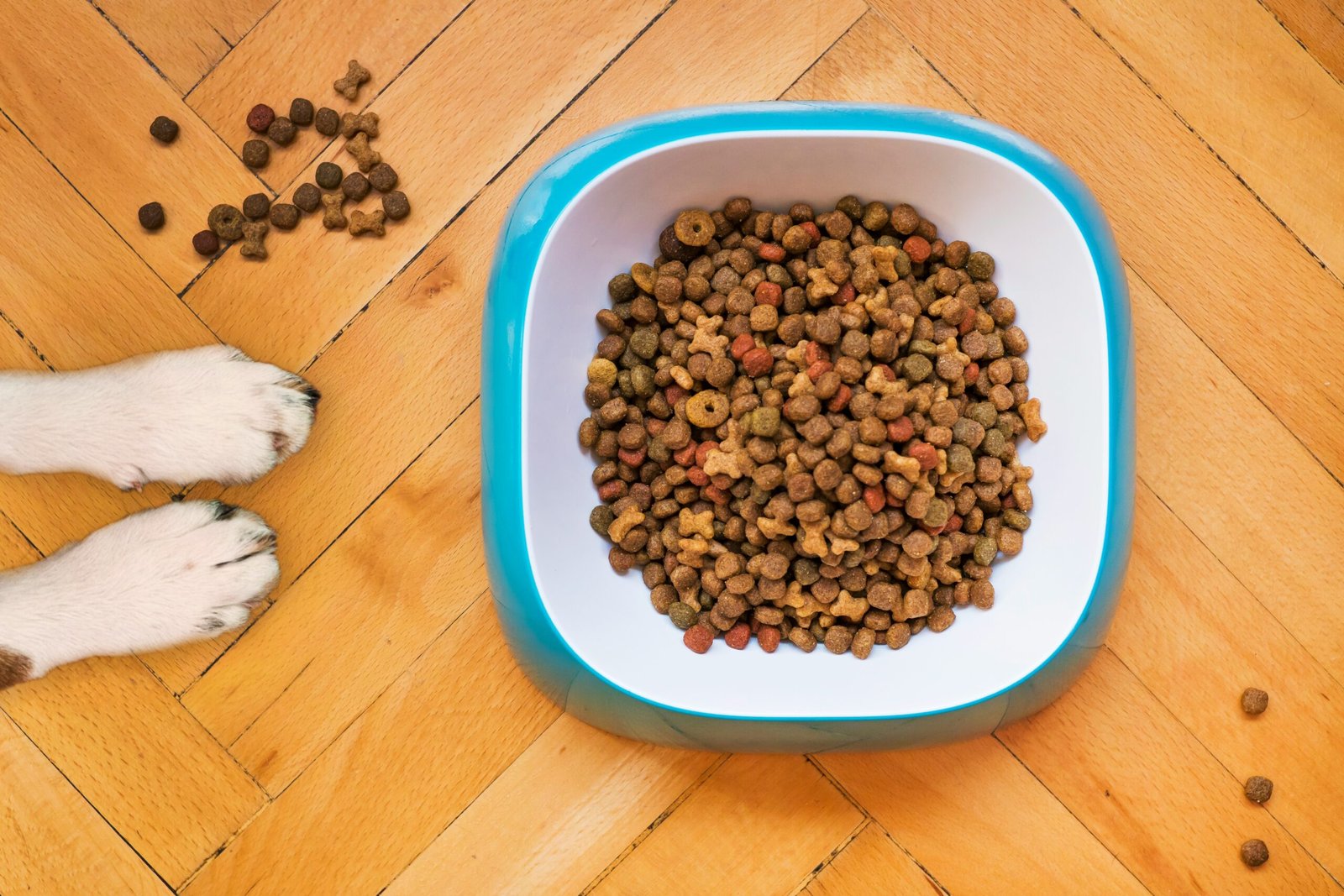
Food type and calorie density matter more than most owners realize. Kibble averages 300 to 400 kilocalories per cup. Wet food typically runs 100 to 150 kilocalories per cup. A dog eating wet food and kibble at the same volume as before a food switch will consume very different calories. Always check the kilocalories per cup figure, not just the volume.


How to Calculate How Much to Feed a Senior Dog

The calculation is not complicated. It takes five minutes and gives you a far better starting point than any generic feeding chart.

Step 1: Find the calorie content of your food. Look for the metabolizable energy (ME) figure on the packaging, usually listed as kcal per cup or kcal per 100g. If it is not on the bag, it is almost always on the brand’s website. This number is the foundation of everything else.

Step 2: Estimate your senior dog’s daily calorie needs. Use these ranges as a starting point:

  • Inactive or low-activity senior dogs: 25 to 30 kilocalories per pound of ideal body weight per day
  • Moderately active senior dogs: 30 to 35 kilocalories per pound of ideal body weight per day
  • Very active senior dogs: 35 to 40 kilocalories per pound of ideal body weight per day

Senior dogs generally fall in the lower half of these ranges compared to younger adults. Start at the lower end and adjust upward only if your dog is losing weight or condition.

Step 3: Do the calculation. Take your dog’s ideal weight, multiply by the appropriate kilocalorie figure, then divide by the food’s kcal per cup number. The result is the daily cup amount.

Example: a 40-pound moderately active senior at 30 kcal per pound needs 1,200 kilocalories per day. If the food provides 350 kcal per cup, the daily portion is approximately 3.4 cups, split across two meals.

Step 4: Cross-check against the manufacturer’s feeding guide. If your calculation lands well above or below their recommendation, investigate the gap. Either the calorie density is unusual or your activity estimate needs adjustment. The manufacturer’s guide is not gospel, but a large difference is worth understanding.

Step 5: Weigh rather than scoop. Measuring cups are unreliable for dog food because kibble of different sizes and shapes settles differently in a cup. The same cup can vary by 10 to 20% between scoops. A digital kitchen scale measuring in grams removes that variation entirely. Weigh the food once, note the gram weight that matches your calculated portion, and use that number every meal.


Protein: The Counter-Intuitive Senior Dog Nutrition Fact

Most people assume senior dogs need less protein. The research says the opposite. Older dogs are less efficient at processing dietary protein and lose lean muscle mass more easily. Studies from veterinary nutrition consistently show that senior dogs benefit from higher protein intake relative to their total calories, not lower.

The old advice to reduce protein for aging dogs came from concern about kidney strain. Current veterinary consensus is that high-quality protein does not damage healthy kidneys and that protein restriction should only apply to dogs with confirmed kidney disease, not as a blanket senior recommendation.

In practice, this means checking that your senior dog’s food provides at least 25% protein on a dry matter basis, and preferably higher. Many senior formulas have already updated their formulations to reflect this, but not all. If your current food is below 22 to 23% protein and your senior dog is losing muscle along their back and hindquarters, food quality may be part of the problem alongside portion size.

You can read more about what to look for in senior-specific formulas in the senior dog nutrition guide.


How Portions Should Shift as Your Dog Ages

Calorie needs in senior dogs are not static. They change gradually and sometimes more rapidly when health conditions develop. The owners who manage senior dog weight best are the ones who treat feeding as something to monitor and adjust, not something to set once and leave.

From age seven onward in medium and large breeds, total calorie intake typically needs to drop by 10 to 20% relative to peak adult levels. This does not happen all at once. A useful approach is to reassess every three to four months rather than waiting for visible weight change. Small adjustments made early are far easier than larger corrections made after six months of gradual gain.

The calorie reduction does not mean reducing protein or nutrients proportionally. The goal is to reduce total calories while maintaining or even increasing the nutrient density per calorie consumed. This is one of the practical reasons why switching to a senior-specific formula often makes sense, as these are typically formulated with this balance in mind.

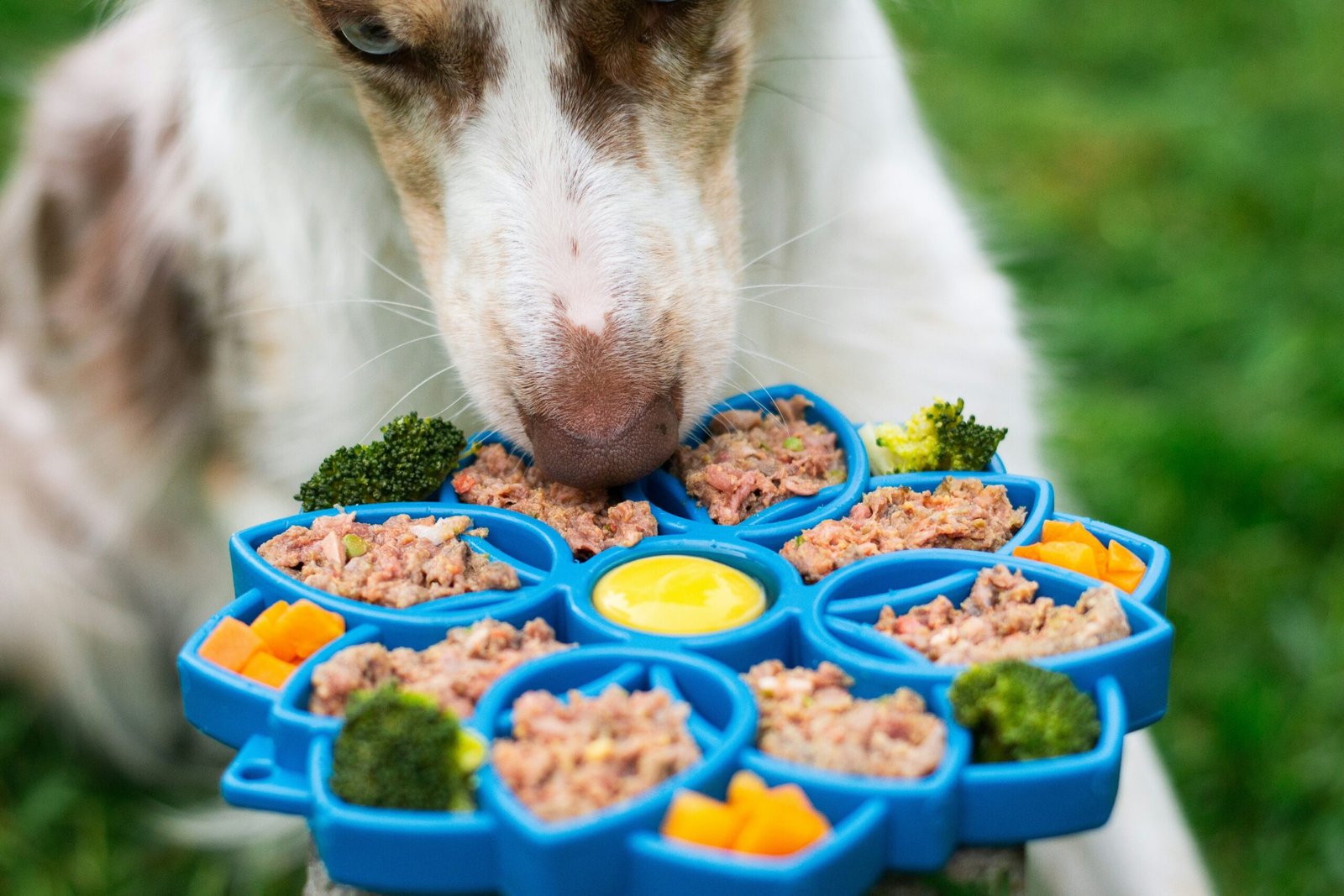
Water intake becomes more relevant as dogs age. Senior dogs are more prone to mild chronic dehydration, which affects digestion, kidney function, and overall energy. Adding water to kibble or mixing in some wet food increases moisture content without significantly affecting calorie counts. A dog that seems perpetually hungry on a reduced kibble portion often does better with the same calorie count delivered partly through wet food, which creates more volume and satiety per kilocalorie.

For more detail on how the digestive system changes with age and what that means for feeding, see the guide on how aging affects digestion in senior dogs.


How to Monitor Whether Your Portions Are Working

A calculated portion is a hypothesis. Your dog’s body confirms or corrects it over the following weeks. Two tools give you the most useful feedback.

The body condition score (BCS) is the more informative of the two. On a 1 to 9 scale, the target for most senior dogs is 4 to 5. At that score, you can feel the ribs with light pressure from your fingertips but cannot see them. There is a visible waist when you look down at the dog from above. The abdomen tucks up slightly when viewed from the side. A score of 6 or 7 means the ribs require firm pressure to find and the waist has disappeared. A score of 3 or below means ribs, spine, and hip bones are visible. Both directions indicate a portion adjustment is needed.

Body weight provides a second check. Weigh your senior dog every two to three weeks, either at the vet or at home on a bathroom scale. Weigh yourself, then weigh yourself holding the dog, and subtract. Track the number over time. A trend matters more than any single reading. If your dog is consistently gaining or losing more than 1% of body weight per month, adjust the daily portion by 10% in the appropriate direction and recheck after three weeks.

Stool consistency is a third, often overlooked signal. Loose or very frequent stools can indicate overfeeding or poor food digestibility. Firm, well-formed stools produced once or twice daily generally indicate the portion and food quality are both appropriate.


Tools That Make Consistent Feeding Easier

Consistency is as important as the initial calculation. A portion that is correct on average but variable by 15 to 20% day to day will not deliver the results you are tracking for.

A digital kitchen scale is the most effective single tool. It removes the scooping variability entirely and makes switching between foods straightforward because grams remain a reliable unit regardless of kibble shape or density. Any basic kitchen scale with a tare function works well.

Measuring cups are adequate if you use the same cup every time, level the surface rather than heaping, and account for the fact that different kibble sizes pack differently. They are a reasonable fallback but less accurate than weight.

Slow feeder bowls help dogs that eat too quickly. Fast eating in senior dogs leads to swallowed air, post-meal discomfort, and poor satiety signalling. A dog that finishes their meal in 30 seconds and immediately looks for more food is likely a candidate for a slow feeder. Extending the same portion over three to four minutes changes how the dog experiences the meal without changing the calorie count.

Automatic feeders are useful for households where feeding times are inconsistent or where two people may both feed the dog without coordinating. They deliver a fixed portion at a set time and remove the human variable from the equation. The portion accuracy depends entirely on how the feeder is set up initially.

how much to feed a senior dog

FAQ About How Much to Feed a Senior Dog

At what age should I start adjusting my dog’s food portions?

For large and giant breeds, reassess portions from around age six or seven. For small and medium breeds, age eight to nine is a more typical threshold. The trigger is not a specific age but a combination of reduced activity, slower metabolism, and any visible changes in body condition. If your dog is maintaining a healthy weight and energy level, the current approach is working. If you see gradual weight gain without a change in feeding, the metabolic shift has likely begun.

How do I know if my senior dog is getting enough food?

Check body condition monthly. Adequate feeding at a healthy weight means ribs you can feel but not see, a visible waist from above, and a slight abdominal tuck from the side. Consistent energy for their age, stable body weight, and regular well-formed stools are all positive signs. Muscle loss along the spine and hindquarters, low energy, or a dull coat can indicate the food quality or quantity is not meeting needs.

Should I switch to a senior-specific dog food formula?

It depends on the formula. Senior foods vary widely. The better ones have higher protein content, reduced overall calories, and added joint support ingredients like glucosamine. Check the protein percentage on the label before switching. If the senior formula has lower protein than your current food, it may not be an improvement. If it has comparable or higher protein with better ingredient quality and appropriate calorie density for a less active dog, it is worth considering.

Do dental chews and treats count toward daily calories?

Yes. Every treat, dental chew, pill pocket, and table scrap adds to the daily calorie total. A single medium dental chew can contain 50 to 100 kilocalories. Keep all non-meal calories below 10% of the daily total and reduce the next meal portion accordingly when treats have been given.

My senior dog always seems hungry. Should I feed more?

Not necessarily. Persistent hunger in a senior dog at a healthy weight can indicate that the food is not meeting nutritional needs, that the protein content is too low, or that an underlying condition like diabetes or Cushing’s disease is affecting appetite regulation. Switching to a higher-protein, more nutrient-dense food often resolves constant hunger without increasing total calories. If the hunger is recent and sudden, a vet check is worthwhile before adjusting portions.

How many times a day should I feed my senior dog?

Most senior dogs do well on two meals per day, spaced approximately 10 to 12 hours apart. Dogs with digestive sensitivity, a history of bilious vomiting, or very low appetite sometimes do better on three smaller meals. The total daily calorie amount stays the same regardless of how many meals it is split into. Senior Dog Weight Gain: Why It Happens and What to Do


Final Thoughts

How much to feed a senior dog is one of those questions that does not have a single answer, but it does have a reliable process. Start with your dog’s ideal weight, calculate their daily calorie needs using the ranges above, find the kilocalorie content of your food, and let the math give you a starting portion. Then watch body condition and weight over the following weeks and adjust in 10% increments as needed.

The part most owners miss is that this process needs to repeat every few months. Senior dogs change, and their portions need to change with them. A dog that was at a healthy weight six months ago may have shifted due to reduced activity, a new health condition, or simply the continued progression of aging. Catching that early makes correction straightforward. Catching it after a year of gradual change is harder.

If you are also reconsidering what food you are feeding alongside how much, i have already made a list of the best dog food for senior dogs check it here: Best Senior Dog Food.


Sources

This Post Has 6 Comments

Comments are closed.