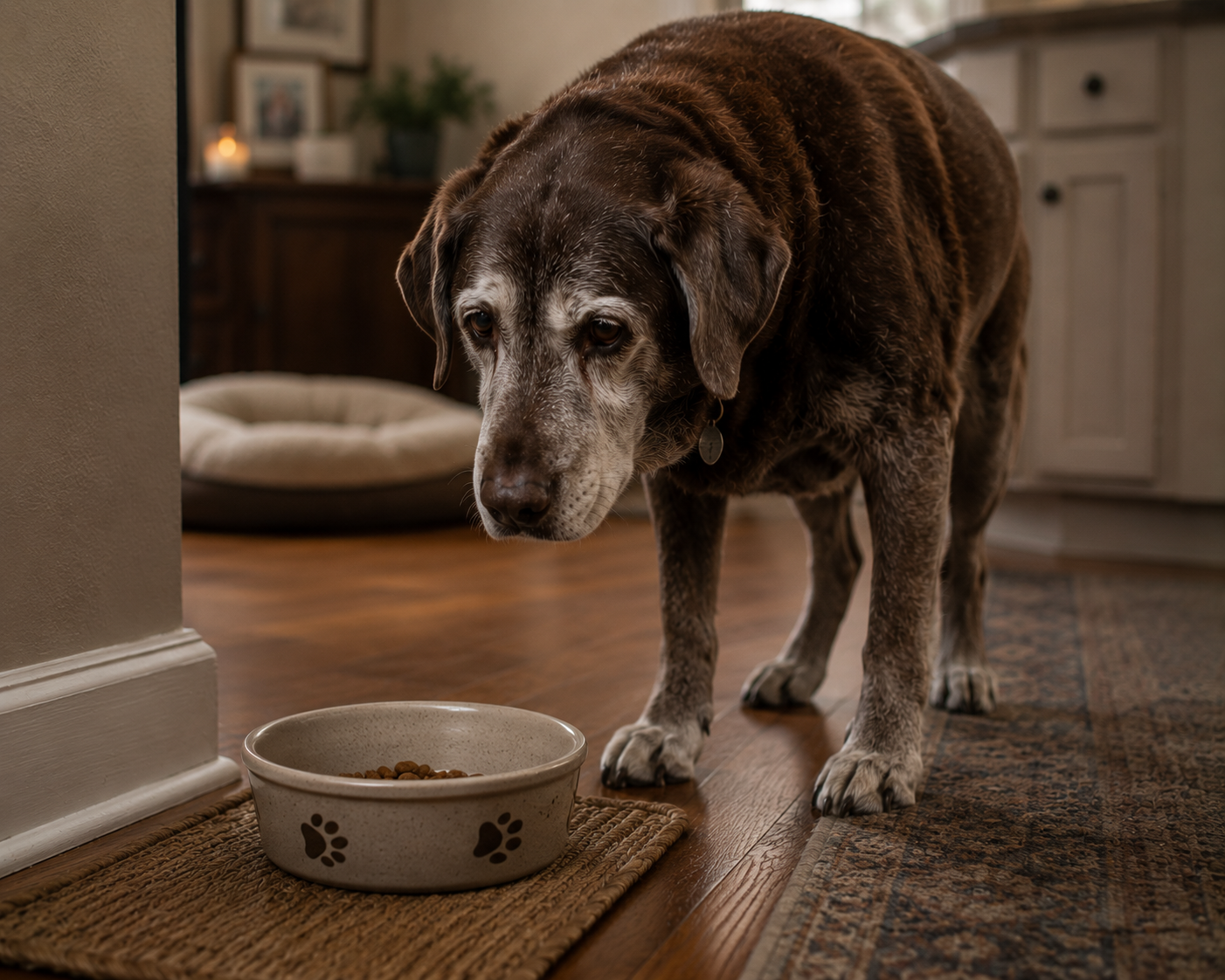
How to help a senior dog with a slow metabolism, If your senior dog is gaining weight without eating more than usual, a slow metabolism is likely the reason. It is one of the most common and least understood changes that happens as dogs age, and the instinctive response most owners have simply feeding less usually makes things worse rather than better.
A slow metabolism in older dogs is not a behaviour problem or a sign of laziness. It is a physiological shift that requires a different approach to food, exercise, and daily routine. This article covers why senior dog metabolism changes happen, what the consequences are if left unaddressed, and what actually works to help a senior dog with a slow metabolism maintain a healthy weight and good energy levels. For the broader nutritional principles behind these choices, our senior dog nutrition basics guide is worth reading alongside this one.
Table of Contents
Why Senior Dog Metabolism Changes With Age
Metabolism is the rate at which the body converts food into energy. In younger dogs, this process runs efficiently and relatively quickly. As dogs age, several things happen simultaneously that slow it down.
Muscle mass decreases naturally with age, a process called sarcopenia. This matters because muscle is metabolically active tissue — it burns calories even at rest. Less muscle means fewer calories burned throughout the day, even when the dog is doing the same amount of activity as before. A senior dog gaining weight on the same food it has eaten for years is often experiencing exactly this: the food has not changed, but the body processing it has.
Hormone levels also shift as dogs get older. Thyroid function can decrease, which directly affects metabolic rate. Sex hormone changes after spaying or neutering, particularly when this happens later in life, can also contribute to senior dog weight gain by altering how the body manages fat storage.
Activity levels drop naturally too, which compounds the effect. A dog that walks slightly shorter distances, plays slightly less, and rests slightly more each year is burning fewer calories than it used to, even if the change is gradual enough that owners do not notice it happening.
The result of all these combined factors is a senior dog slow metabolism that requires fewer calories than the same dog needed at age three or four, but the same or higher quality of nutrition to stay healthy. Our guide on senior dog weight gain covers the consequences of this in more depth if the weight gain itself is your main concern right now.
Why Feeding Less Is Usually the Wrong Answer
When owners notice senior dog weight gain, the most common response is to reduce the amount of food in the bowl. This seems logical, but it creates a new problem.
Senior dogs already need more protein than younger dogs to maintain muscle mass, because older bodies are less efficient at processing and using dietary protein. If you reduce the total amount of food without changing what that food contains, you end up with a dog that is eating fewer calories but also getting less protein, fewer essential fatty acids, and lower levels of the nutrients that support joint health, coat condition, immune function, and cognitive health.
A dog that is underfed in this way may lose some weight, but it loses muscle along with fat. Lost muscle further slows the older dog metabolism, which means the weight often comes back and the dog is in a worse metabolic position than before.
The right approach is not less food. It is different food, combined with targeted adjustments to exercise and routine.
How to Actually Help a Senior Dog with a Slow Metabolism
Switch to a calorie-appropriate senior formula
The most effective first step for a senior dog with a slow metabolism is moving to a food specifically formulated for older dogs. A quality senior formula has a lower calorie density than adult maintenance food, which means your dog can eat a satisfying amount without taking in more calories than it needs. At the same time, a good senior formula maintains or increases protein content relative to calories, which protects muscle mass while managing weight.
Not all senior foods are equal. Some are essentially the same as adult food with minor tweaks. Look for formulas where protein is the first ingredient, where fat content is moderate rather than high, and where the calorie count per cup is clearly stated on the packaging. I have assessed the main options in my guide to the best dog food for senior dogs. If weight management specifically, rather than general senior nutrition, is the priority, the best weight management dog food for senior dogs guide compares formulas built directly for that
Increase protein, not just reduce calories
Helping a senior dog with a slow metabolism means thinking about macronutrient quality, not just quantity. Research consistently shows that older dogs need higher levels of dietary protein to maintain muscle than younger dogs do, because protein synthesis becomes less efficient with age.
If your dog is on a standard adult food, or a senior food that has reduced protein to reduce calories, the senior dog slow metabolism problem may be compounded by inadequate protein intake. A food with at least 25 to 30 percent protein on a dry matter basis is a reasonable target for most senior dogs managing weight.
Adjust meal frequency
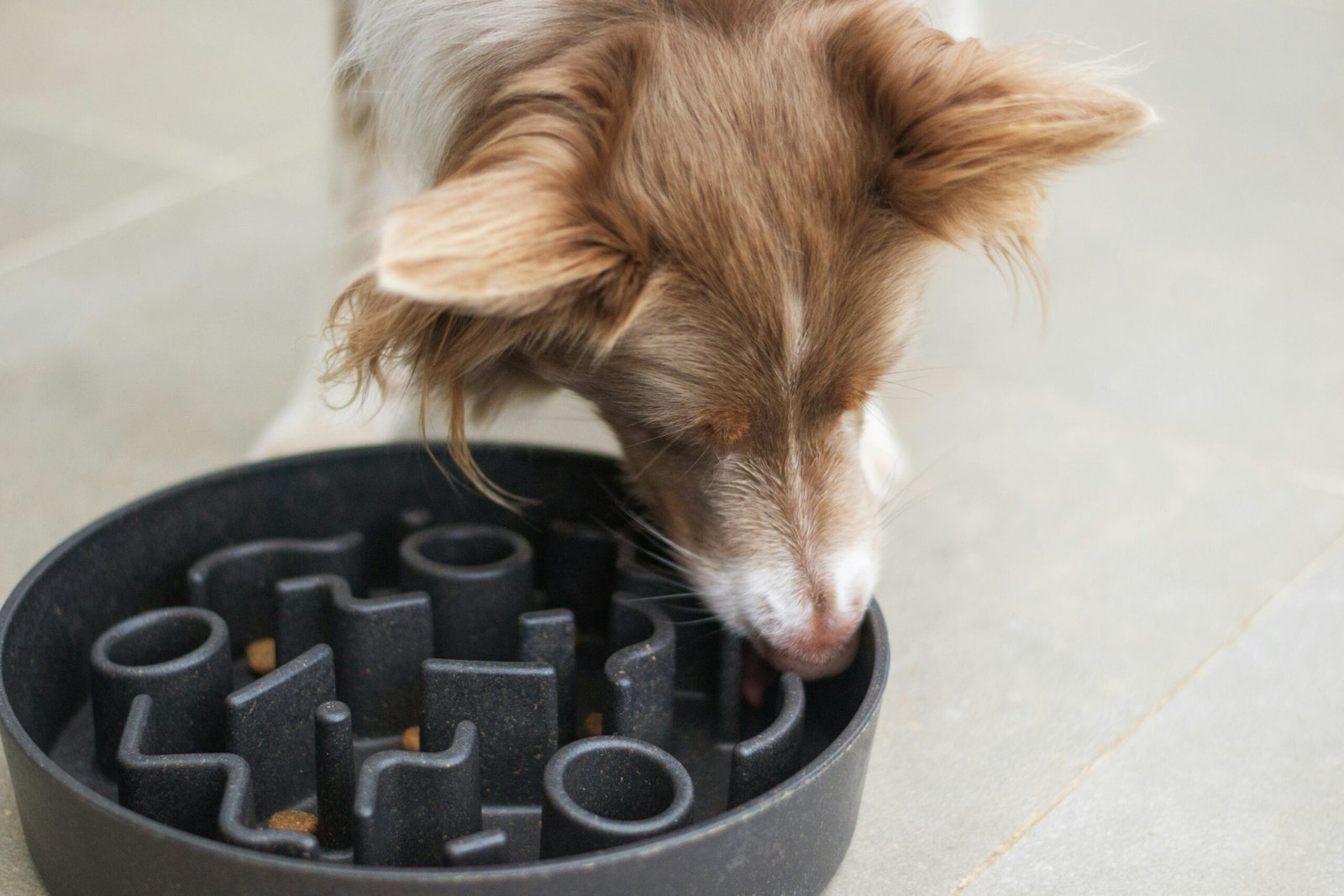
Rather than feeding one large meal per day, splitting the daily food allowance into two or three smaller meals can help manage senior dog metabolism change. Smaller, more frequent meals keep the digestive system working consistently, which has a mild thermogenic effect and reduces the blood sugar fluctuations that come with one large feeding. It also tends to keep dogs more satisfied throughout the day, which reduces food-seeking behaviour.
Prioritise muscle-preserving exercise
Exercise for a senior dog gaining weight should focus on maintaining muscle rather than burning calories in the short term. Sustained, gentle activity builds and preserves the metabolically active tissue that keeps the older dog metabolism running at a higher baseline rate.
Short, regular walks are better than occasional long ones. Gentle resistance activities such as walking on soft uneven ground or shallow water walking use more muscle than flat pavement walking and are well tolerated by dogs with mild joint issues. Swimming is excellent for dogs whose joints allow it, providing full-body muscle engagement without impact.
The goal is consistency rather than intensity. A dog that walks for 20 minutes twice a day, every day, will have a better metabolic profile over time than one that has occasional longer outings with long rest periods in between.
Address underlying health issues
Senior dog weight gain that does not respond to dietary and exercise changes warrants a vet check. Hypothyroidism is a common cause of slow metabolism in older dogs and is straightforward to diagnose with a blood test. Cushing’s disease, which involves elevated cortisol levels, also causes weight gain and reduced metabolism and can be mistaken for normal aging.
Both conditions are manageable once diagnosed. If your dog is doing everything right — eating an appropriate diet, getting regular exercise — and still gaining weight steadily, it is worth ruling these out before assuming it is simply a matter of aging.
What to Feed a Senior Dog with a Slow Metabolism
The best food for senior dog metabolism issues combines adequate protein, moderate fat, controlled calories, and good digestibility. Here is what to look for on the label.
Protein from named animal sources such as chicken, salmon, or turkey should appear first in the ingredient list. Named protein meals such as chicken meal are also acceptable and are often higher in protein by weight than fresh meat alone.
Fat content around 10 to 14 percent on a dry matter basis is appropriate for most senior dogs managing weight. Lower than this risks deficiencies in fat-soluble vitamins and essential fatty acids. Higher than this adds unnecessary calories.
Fibre content slightly higher than in adult food helps senior dogs feel full on fewer calories and supports the digestive changes that come with age. Look for sources like beet pulp, pumpkin, or chicory root.
Omega-3 fatty acids, particularly from fish oil or fish meal, support joint health, coat condition, and have some evidence for supporting metabolic function. For a dog already dealing with a slow metabolism and potentially some joint stiffness, this is a particularly useful nutrient to prioritise.
Avoid foods with high levels of simple carbohydrates or corn syrup as primary energy sources. These cause blood sugar spikes that work against stable energy and weight management in a dog with slower older dog metabolism.
The Role of Supplements
For senior dogs with a slow metabolism, a few supplements are worth considering alongside dietary changes.
L-carnitine is an amino acid involved in fat metabolism that has shown some evidence for supporting healthy weight in dogs. Some senior dog formulas include it, and it is available as a standalone supplement.
Omega-3 supplements, particularly fish oil, reduce inflammation which is often elevated in dogs with arthritis and metabolic changes. Lower inflammation has a positive effect on both mobility and metabolic function.
Digestive enzyme supplements can help older dogs extract more nutrition from their food, which matters when the goal is maintaining muscle and energy on controlled calories. I cover the supplement options I have assessed for senior dogs in my guide to the best supplements for senior dogs.

FAQ
Why is my senior dog gaining weight without eating more?
Senior dog weight gain without increased food intake is almost always related to the natural metabolic slowdown that comes with age. Reduced muscle mass, lower hormone levels, and decreased activity all reduce the number of calories the body burns each day. The food has not changed but the body processing it has.
Should I feed my senior dog less to manage weight?
Not necessarily. Reducing the amount of food without changing its composition risks lowering protein intake at exactly the age when dogs need more protein to maintain muscle. A better approach is switching to a calorie-appropriate senior formula that provides the right nutrition at a lower calorie density.
What is the best food for a senior dog with a slow metabolism?
Look for a senior-specific formula with named animal protein as the first ingredient, moderate fat content, slightly higher fibre, and omega-3 fatty acids. Calorie count per cup should be clearly stated. I have assessed the main options in my guide to the best dog food for senior dogs.
Can hypothyroidism cause slow metabolism in older dogs?
Yes. Hypothyroidism is a common cause of senior dog slow metabolism and produces weight gain, lethargy, and coat changes that can easily be mistaken for normal aging. It is diagnosed with a blood test and is manageable with daily medication once confirmed.
How much exercise does a senior dog with a slow metabolism need?
Consistency matters more than intensity. Two 20-minute walks per day is a reasonable baseline for most senior dogs. The focus should be on muscle-preserving activity rather than calorie burning, since maintaining muscle mass is the most effective long-term strategy for supporting older dog metabolism.
At what age does a dog’s metabolism start slowing down?
Most dogs begin showing metabolic changes from around age 7, though larger breeds often show signs earlier. The shift is gradual and not always obvious until weight gain has already been occurring for some time.
Final Thoughts
Helping a senior dog with a slow metabolism is less about restriction and more about adaptation. The metabolism of an older dog is different from what it was at peak adulthood, and treating it the same way produces predictable problems. Less food without better food leads to muscle loss, which slows the metabolism further and starts a cycle that is hard to reverse.
The approach that works is switching to a calorie-appropriate, protein-rich senior formula, maintaining consistent muscle-preserving exercise, and addressing any underlying health conditions that might be contributing. A senior dog gaining weight does not have to stay that way, and with the right adjustments, most dogs respond well.
Sources
- https://www.vet.cornell.edu/departments-centers-and-institutes/riney-canine-health-center/canine-health-topics/senior-dog-nutrition
- https://www.akc.org/expert-advice/nutrition/how-to-keep-your-senior-dog-at-a-healthy-weight
- https://www.petmd.com/dog/nutrition/evr_dg_nutritional_needs_of_senior_dogs
- https://todaysveterinarypractice.com/nutrition/nutritional-management-of-the-senior-canine
- https://www.merckvetmanual.com/dog-owners/routine-care-and-breeding/routine-health-care-of-dogs

Pingback: The Ultimate Guide to Dog Food Portion Size: Avoid Overfeeding or Undernourishing
Pingback: Senior Dog Weight Gain: Why It Happens and What to Do
Pingback: Best Weight Management Dog Food for Senior Dogs 2026