How to recognize pain in senior dogs is something most owners think they already know. If my dog was in pain, I would know. They would cry or whimper or stop eating.
The reality is different. Dogs do not show pain the way humans do. They do not cry out, complain, or ask for help. They adapt. They move a little less, rest a little more, and quietly work around the discomfort. By the time most owners notice something is wrong, their dog has often been managing pain for weeks or months.
The other common assumption is that slowing down is just part of getting older. And yes, senior dogs naturally change with age. But there is a big difference between normal aging and a dog that is in pain and not getting the help they need. Accepting everything as “just old age” means missing things that are genuinely treatable.
This guide covers exactly how to recognize pain in senior dogs, what to watch for, and what to do when you think something is wrong.
This post contains affiliate links. If you buy through these links, I may earn a small commission at no extra cost to you. As an Amazon Associate, I earn from qualifying purchases.
Table of Contents
Why Senior Dogs Hide Pain
Understanding why dogs hide pain helps explain why it is so easy to miss.
Dogs are descended from animals where showing weakness meant becoming a target. That instinct to mask discomfort is deeply ingrained. A dog in significant pain will often continue to wag their tail, greet you at the door, and appear outwardly normal — while internally managing chronic discomfort that is affecting their quality of life every single day.
Senior dogs are particularly good at this. They have had years of practice adapting to physical changes. A dog that has been managing mild joint pain for two years has adjusted their gait, their activity level, and their behavior around it in ways that look normal to an owner who does not know what to look for.
This is why the signs of pain in senior dogs are mostly behavioral and subtle rather than dramatic. You have to know what you are looking at.
Physical Signs of Pain in Senior Dogs
Changes in Movement and Posture
Movement changes are often the earliest and most reliable indicators of pain in senior dogs.
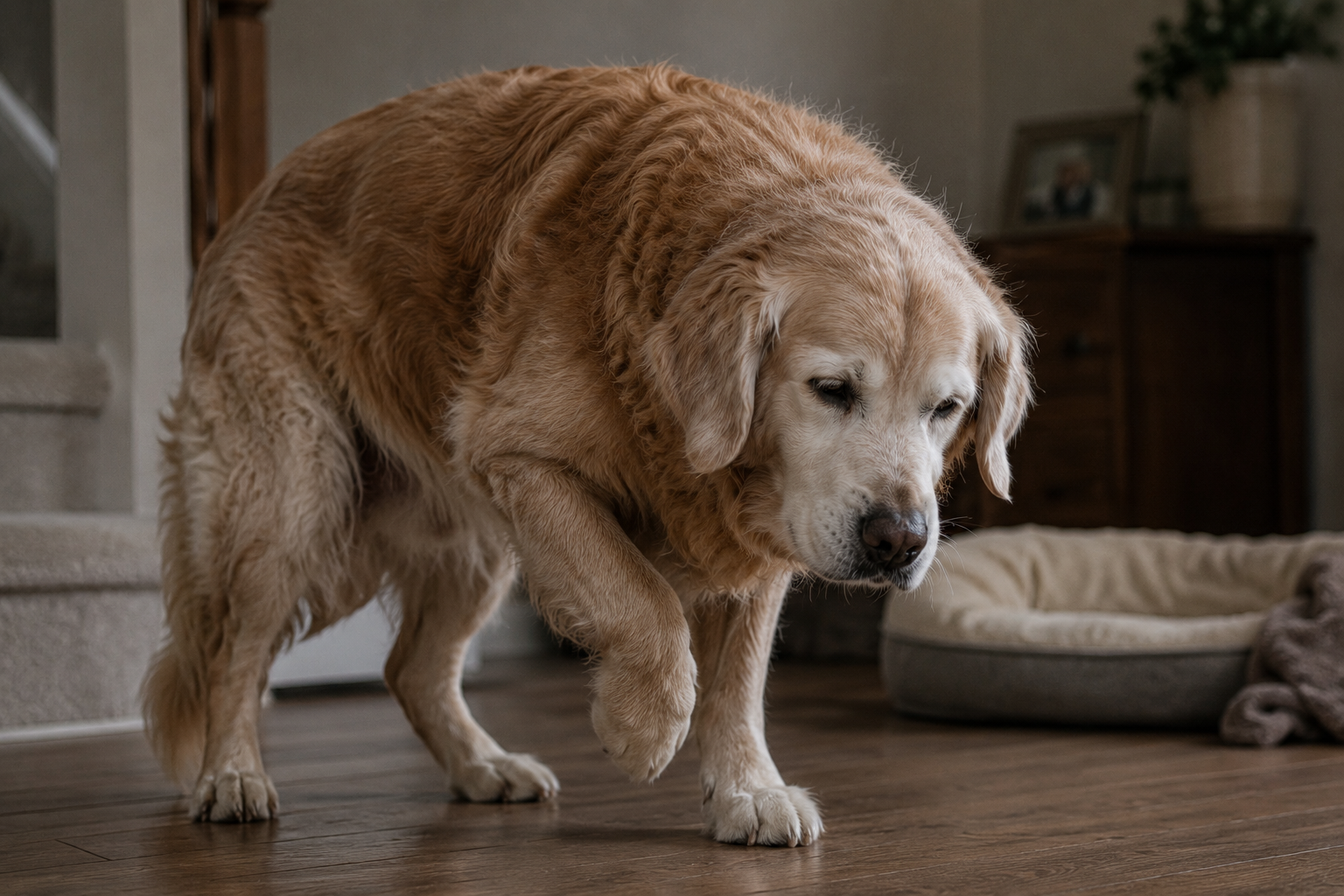
Watch for stiffness after rest, particularly in the morning. A dog that takes longer than usual to stand up, walks carefully for the first few minutes before loosening up, or hesitates before lying down is showing classic signs of joint pain.
Limping is an obvious sign but it is often intermittent at first. A dog that limps slightly after a walk but seems fine an hour later is not pain-free. The pain is there. It is just variable.
Postural changes are subtler but equally meaningful. A dog that holds their head lower than usual, has a rounded back, or shifts weight from one side to another when standing is compensating for discomfort somewhere in their body.
Changes in Physical Appearance
Pain changes how a dog looks and maintains themselves.
Dogs in pain often stop grooming areas that hurt to reach. A senior dog with hip or back pain may stop cleaning their hindquarters properly. Coat quality can drop in affected areas.
Muscle loss in specific areas, particularly the hindquarters, often indicates that your dog is avoiding using those muscles because movement is painful. This is different from the general muscle loss of aging and tends to be more localized.
Pupils that appear larger than normal, or a glazed expression, can indicate that a dog is in significant acute pain.
Behavioral Signs of Pain in Senior Dogs
Changes in Personality and Mood
This is where owners most often miss the connection. Behavioral changes in senior dogs are frequently attributed to aging or personality shifts when they are actually pain responses.
A dog that becomes less social, withdraws from family interaction, or stops engaging with things they used to enjoy is often telling you they do not feel well. Pain is exhausting and demoralizing. A dog managing chronic discomfort has less emotional energy for the things that used to bring them joy.
Increased irritability or snapping when touched, particularly in specific areas, is a direct pain response. A dog that has never shown aggression but starts growling when you touch their hips or back is telling you clearly that it hurts.
Conversely, some dogs in pain become unusually clingy and anxious. They seek reassurance because they are uncomfortable and do not understand why.
Changes in Sleep and Rest Patterns
Pain disrupts sleep. A senior dog in pain has difficulty finding a comfortable position, wakes more frequently, and may seem restless at night. They often compensate by sleeping more during the day, but the quality of that sleep is poor.
Watch for frequent position changes during rest, getting up and lying down repeatedly, and choosing unusual sleeping spots — sometimes on cooler or harder surfaces, sometimes seeking warmth in different places than usual.
Changes in Appetite and Drinking
Significant or chronic pain reduces appetite in many dogs. A senior dog that suddenly loses interest in food they previously ate enthusiastically is worth paying attention to.
Some pain medications and health conditions that cause pain also affect thirst. Increased or decreased water intake alongside other signs is worth noting and mentioning to your vet.
Changes in Bathroom Habits
Pain can make it difficult for senior dogs to get into the squatting position needed to urinate or defecate comfortably. A dog that starts having accidents indoors despite previously being reliable may be avoiding the discomfort of the position rather than losing control.
Straining, changes in posture while toileting, or obvious discomfort during elimination are direct pain signals.
The Most Commonly Missed Signs
These are the signs owners most frequently overlook or attribute to something else:
Panting without an obvious reason, particularly at rest or at night, is a significant pain indicator in dogs. Many owners assume their dog is just warm or anxious when it is actually a response to chronic discomfort.
Yawning frequently, licking lips, or appearing to swallow repeatedly can indicate nausea from pain rather than digestive issues.
A dog that stops jumping onto furniture, climbing stairs, or getting into the car they used to manage without hesitation is avoiding those movements because they hurt. This one is particularly easy to miss because it looks like a preference rather than a pain response.
Slowing down on walks, wanting to turn back earlier, or sitting down mid-walk are movement-related pain responses that owners frequently attribute to tiredness or aging rather than discomfort.
What to Do When You Think Your Senior Dog Is in Pain
Talk to Your Vet
This is always the first step. Describe the specific changes you have noticed, when they started, and how they have progressed. The more specific you can be, the more useful the conversation will be.
A physical examination and basic blood work can identify many common causes of pain in senior dogs. X-rays are often recommended to assess joint health. Do not wait until your dog is obviously distressed to have this conversation. By that point, the pain has usually been building for a long time.
Support Joint Health
The most common source of chronic pain in senior dogs is joint disease. Glucosamine, chondroitin, and omega-3 fatty acids are the most evidence-backed supplements for supporting joint health and reducing inflammation. They work best started early and used consistently.
For a full guide: What Supplements Do Senior Dogs Need?
Improve the Sleep Environment
A dog sleeping on an unsupportive surface wakes up stiffer and more painful than one sleeping on proper orthopedic foam. This is one of the most practical and impactful changes you can make for a senior dog managing chronic pain.
For recommendations: Best Orthopedic Dog Beds for Senior Dogs
Use Heat Therapy
Gentle heat applied to stiff, painful joints increases blood flow and reduces stiffness. A heating pad designed for dogs placed beside or under their bed can make a noticeable difference in morning comfort and overall pain levels.
For recommendations: Best Heating Pad for Dogs with Arthritis, or for a broader range of options across warmth, sleep, mobility, and supplements together, see Top 7 Best Pain Relief Products for Senior Dogs.
Adjust Daily Activity
Short, consistent, gentle walks are better than occasional long ones for dogs managing joint pain. Avoid hard surfaces where possible. Let your dog set the pace and never push them past what they are comfortable with.
None of these steps replace each other, and combining them tends to work better than relying on any single one. Our guide on soothing tips for senior dogs in pain brings the environment, sleep, and supplement pieces together into one daily routine.
A support harness can help dogs that struggle with stability or need assistance on walks. For recommendations: Best Senior Dog Harness
FAQ
Is it normal for senior dogs to be in pain?
It is common but not something to accept as inevitable. Arthritis affects the majority of dogs over age 8, and chronic pain from joint disease is widespread in senior dogs. But it is largely manageable with the right approach. Normal aging does not have to mean significant unmanaged pain.
My dog still wags their tail and seems happy. Can they still be in pain?
Yes. Dogs are remarkably good at appearing happy despite chronic pain. Tail wagging and greeting behavior are social responses, not reliable pain indicators. A dog can wag their tail at you and be managing significant joint pain at the same time.
How do I tell the difference between pain and normal aging?
Normal aging is gradual and consistent. Pain responses tend to be more variable, more behavioral, and more specific. A dog that suddenly changes behavior, develops new reluctances, or starts reacting to touch in areas they previously accepted is more likely showing pain than just aging.
Should I give my dog human pain medication?
Never. Human pain medications including ibuprofen, aspirin, and paracetamol are toxic to dogs and can cause serious organ damage. Only use medications prescribed or approved by your vet specifically for dogs.
At what age should I start watching for pain signs in my senior dog?
For large breeds, from age 6 to 7. For medium breeds, from age 7 to 8. For small breeds, from age 8 to 9. But any dog that has had a previous injury should be monitored earlier regardless of age.
Can pain in senior dogs be treated effectively?
Yes, in most cases. The combination of appropriate veterinary pain management, joint supplements, improved sleep environment, heat therapy, and adjusted activity levels makes a significant difference for most senior dogs with chronic pain. Early intervention always produces better outcomes than waiting.
Final Thoughts
How to recognize pain in senior dogs comes down to one shift in thinking. Stop assuming that changes in your senior dog are just old age and start asking whether those changes might mean something.
Your dog cannot tell you they are in pain. They will not cry or complain. They will just slowly adjust their behavior around the discomfort and hope that you notice. Most of the time, the signs are there. They just do not look the way most owners expect.
Pay attention to the small things. The hesitation before lying down. The morning stiffness that takes a few minutes to work out. The reluctance to do things they used to do without thinking. Those are the signs that matter.
If what you are seeing came on suddenly rather than gradually, our guide on 10 signs your senior dog might be in acute pain covers that specific situation, since acute pain needs faster action than the chronic pain covered here.
The sooner you catch them, the more you can do.
For more on managing arthritis and joint pain in senior dogs, read: Signs of Arthritis in Dogs
Sources
- https://www.akc.org/expert-advice/health/signs-of-pain-in-dogs/
- https://www.avma.org/resources-tools/pet-owners/petcare/pain-management-dogs
- https://www.ncbi.nlm.nih.gov/pmc/articles/PMC4765374/
- https://www.vet.cornell.edu/departments-centers-and-institutes/riney-canine-health-center/canine-health-information/pain-recognition-dogs

Pingback: Signs of Arthritis in Dogs – How to Recognize It Early
Pingback: What Supplements Do Senior Dogs Need? (2026 Guide)
Pingback: 10 Signs Your Senior Dog Might Be in Acute Pain (And What to Do)
Pingback: Top 7 Best Pain Relief Products for Senior Dogs - seniordog-care