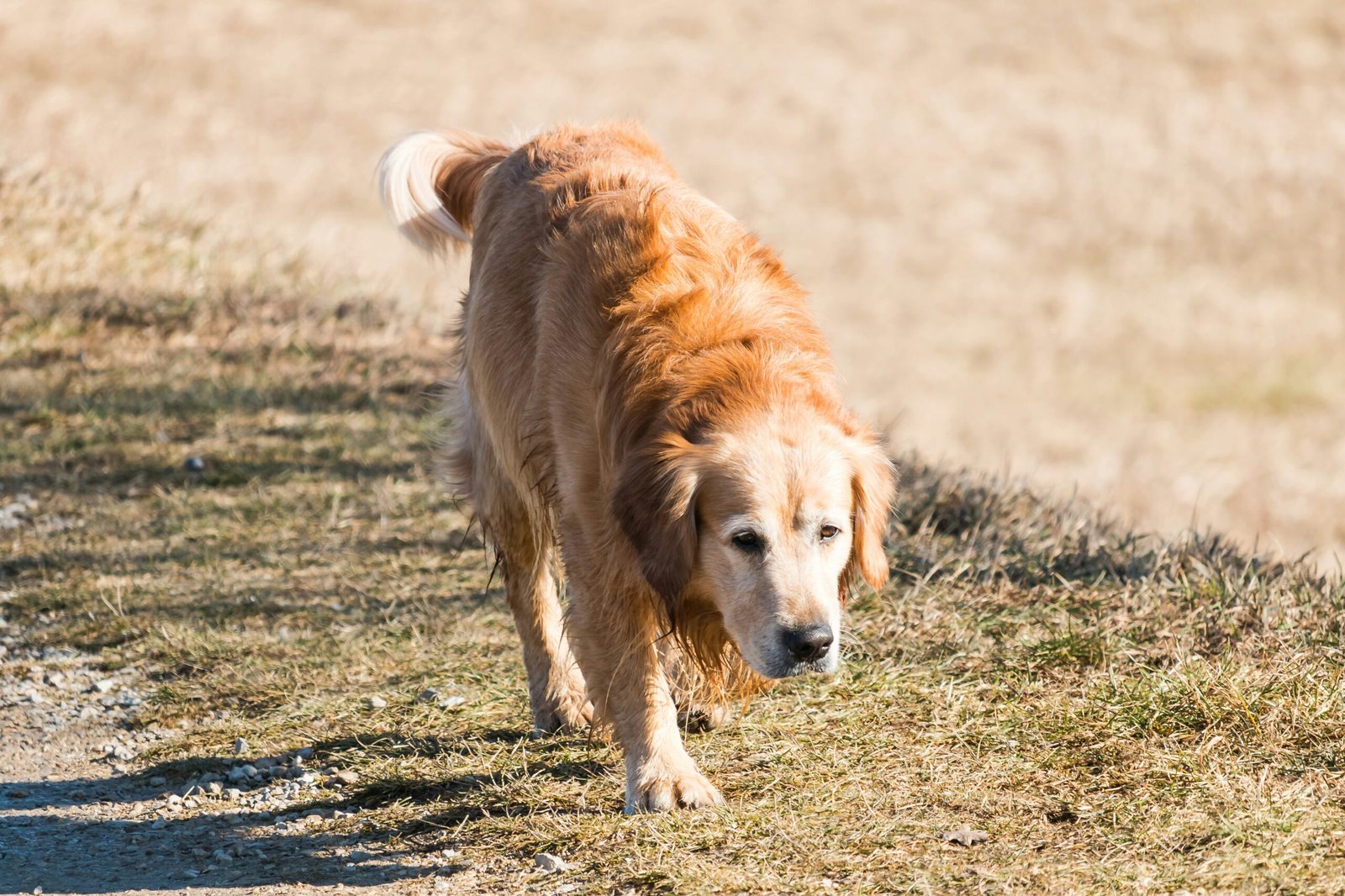
The impact of aging on dog joints is a natural part of growing older, but understanding what is actually happening at a tissue level helps explain why joint support works the way it does, rather than treating supplements and exercise as things to do without knowing why they matter. Cartilage, ligaments, and synovial fluid all change with age, and each change contributes to the stiffness and discomfort senior dogs experience differently.
This guide covers what actually happens inside an aging dog’s joints, the early signs worth watching for, and where to go for specific prevention and support. For the right amount of activity, our guide on exercise for senior dogs covers how much is genuinely appropriate. For recognizing arthritis specifically, our guide on signs of arthritis in dogs covers early detection in depth. For equipment and home support, our guide to best mobility aids for senior dogs covers the full range. For comfort during rest, our guide to the best heating pads for dogs with arthritis covers safe, effective options.
This post may contain affiliate links. If you buy through these links, I may earn a small commission at no extra cost to you. As an Amazon Associate, I earn from qualifying purchases.
Table of Contents
How Aging Affects Dog Joints at a Tissue Level
Joints are complex structures made up of cartilage, ligaments, tendons, and synovial fluid, all working together to allow smooth, pain-free movement. Each of these components changes with age in a distinct way, and understanding the difference helps explain why a single intervention rarely addresses everything at once.
Cartilage acts as a cushion between bones, absorbing shock during movement. It gradually wears down with age, making joints less flexible and more prone to pain, and this breakdown is the underlying mechanism behind most arthritis in older dogs.
Ligaments and tendons provide joint stability. With age they lose some elasticity and strength, reducing stability and increasing the risk of strains or sprains, sometimes contributing to secondary injuries layered on top of existing joint wear.
Synovial fluid, the natural lubricant inside a joint capsule, decreases in both quantity and quality with age, leading to stiffer joints and more friction during movement, independent of cartilage loss itself.
Common resulting conditions include arthritis, chronic inflammation causing stiffness and pain, hip dysplasia, a hereditary condition affecting how the hip joint fits into its socket, and cruciate ligament problems, partial tears or degeneration in the knee that become more common with age.
As joints become less flexible and more painful, senior dogs often move more slowly, hesitate before jumping or climbing stairs, sleep more, and sometimes become irritable or withdrawn due to ongoing discomfort.
Recognizing the Early Signs
Senior dogs are skilled at masking pain, which makes subtle changes worth watching for rather than waiting for something dramatic. Limping or stiffness, particularly after resting or first thing in the morning, is often the earliest and clearest sign. Reluctance to jump onto furniture, get into the car, or climb stairs signals a dog avoiding the strain those movements place on hips, knees, or spine. Reduced activity levels, sleeping more or showing less enthusiasm for walks, and behavioral changes such as irritability or withdrawal when touched near sore areas are both worth taking seriously rather than dismissing as simple aging. Visible swelling or heat around a joint is less common but always warrants veterinary attention.
Catching these signs early means starting supportive measures before mobility has declined significantly, and regular vet check-ups help monitor joint health and catch developing issues before they become serious. Our guide on signs of arthritis in dogs covers this recognition process in more depth.
Where to Go for Prevention and Support
Understanding the mechanism behind joint decline is the foundation, but the practical response depends on matching the right tool to what your dog actually needs.
Weight management and nutrition reduce the mechanical load driving cartilage wear and provide the raw materials cartilage maintenance still depends on. Our guide on best supplements for senior dogs covers joint-specific nutrition in depth.
Appropriate, low-impact exercise keeps muscles strong and joints flexible without adding the strain that accelerates wear. Our guide on exercise for senior dogs covers exactly how much and what type is right at this stage.
Home and equipment support, orthopedic bedding, ramps, non-slip flooring, and appropriate mobility aids, reduces the daily physical cost of the changes covered above. Our guide to best mobility aids for senior dogs covers the full range, and our guide to the best heating pads for dogs with arthritis covers a specific, accessible comfort measure worth adding.
Veterinary involvement remains essential even alongside good home management. Prescription anti-inflammatories, joint injections, or in more advanced cases surgical intervention may be needed, and regular check-ups let you catch problems early and adjust the approach as your dog’s needs change.
Common Mistakes to Avoid
Over-supplementing does not speed up results and can cause digestive upset or other issues. Stick to recommended doses and check with your vet before increasing amounts.
Introducing multiple supplements at once makes it difficult to tell which one is helping, or causing a problem. Introduce one product at a time and observe your dog’s response before adding another.
Inconsistent administration reduces effectiveness considerably. A consistent daily routine, ideally at the same time each day, matters more than any single dose.
Waiting too long to intervene is the most common mistake overall. Starting support before obvious limping or stiffness appears tends to slow progression more effectively than responding after the decline is already visible.
How Aging Joints Affect Different Breeds Differently
Not every dog experiences the tissue-level changes covered above at the same pace or in the same way, and understanding where your specific dog falls on this spectrum matters for how proactively you should approach prevention.
Large breeds carry more mechanical load through every joint across a lifetime simply due to size, which accelerates cartilage wear and makes conditions like hip dysplasia and cruciate ligament problems appear earlier and more severely than in smaller dogs. A Labrador or German Shepherd showing early stiffness at six or seven years old is not an anomaly. It reflects the cumulative load those joints have carried for years longer than a smaller dog’s equivalent joints have.
Smaller breeds age differently. Cartilage wear still happens, but the mechanical load driving it is proportionally lower, which is part of why small dogs often stay visibly mobile well into their senior years. This does not mean small dogs are exempt from joint issues. Conditions like patellar luxation, a kneecap that slips out of its normal position, have more to do with joint conformation than cumulative wear, and can affect small breeds independently of the aging process covered in this guide.
Body condition compounds both patterns regardless of size. Excess weight adds mechanical stress that accelerates cartilage breakdown in a large dog and represents a proportionally larger burden on a small dog’s considerably smaller joint surfaces. Knowing your own dog’s breed-typical risk profile, rather than applying one universal timeline to every dog, is what turns general awareness into a genuinely proactive approach.
What Owners Often Get Wrong About Joint Aging
A few assumptions about joint aging are common enough to be worth addressing directly, since they shape how owners respond, sometimes in ways that delay effective action.
The assumption that slowing down is simply normal and not worth addressing. Some degree of reduced activity is a natural part of aging, but a dog that has gone from an enthusiastic forty-minute walk to consistently wanting to turn back after ten minutes within a period of months is showing a change worth investigating, not simply accepting as inevitable.
The assumption that a dog would show obvious pain if something were genuinely wrong. Dogs are remarkably good at masking discomfort, and the absence of visible limping does not mean the absence of joint changes. Subtle behavioral shifts, quieter play, more time spent resting, hesitation before a specific movement, often precede any visible limp by weeks or months.
The assumption that joint supplements alone are sufficient regardless of the other factors covered in this guide. Supplements support the biological side of cartilage maintenance, but they do not compensate for excess weight, inadequate exercise, or an unsupportive home environment. All of these factors interact, and addressing only one while ignoring the others tends to produce disappointing results that get blamed on the supplement rather than the incomplete approach.
The assumption that joint aging is a single, uniform process. As covered earlier, cartilage, ligaments, and synovial fluid all change through different mechanisms and at different rates. A dog with significant synovial fluid decline but relatively preserved cartilage needs a different emphasis than one with the reverse pattern, even though both might present with similar-looking stiffness from the outside.

Monitoring Joint Health Over Time Rather Than at a Single Point
Because joint aging progresses gradually, a single observation on any given day provides considerably less useful information than a pattern tracked consistently over weeks or months.
A simple, informal record, noting how quickly a dog warms up after resting, how far a typical walk goes before enthusiasm visibly drops, or how many attempts it takes to jump onto a familiar piece of furniture, turns vague day-to-day impressions into something genuinely comparable over time. This matters more for catching gradual decline than a single annual vet visit can, since a ten-minute examination captures only one snapshot, while an owner observing daily behavior is positioned to notice a slow trend developing across months that a single exam would miss entirely.
This kind of tracking also makes veterinary conversations considerably more productive. Reporting that a dog has gone from confidently jumping onto the couch to needing several attempts, consistently, over the past two months, gives a vet something specific and actionable to work with, in a way that a general sense that “he seems a bit stiffer lately” cannot match. The goal is not formal record-keeping, but enough consistent attention to distinguish a single off day from a genuine, ongoing trend that deserves a more proactive response.
FAQ
How can I tell if my dog is developing joint problems?
Early signs include stiffness, limping, reluctance to jump or climb stairs, and reduced activity levels. Behavioral changes such as irritability or withdrawal sometimes accompany these physical signs.
At what age do joint problems typically appear in dogs?
Large breeds often show signs from middle age onward, sometimes as early as five or six. Smaller breeds tend to develop issues later, often not until nine or ten, though genetics, weight, and activity level all influence the timeline.
Can supplements prevent arthritis entirely?
No. Supplements can slow cartilage breakdown, reduce inflammation, and support mobility, but they cannot prevent arthritis entirely in every dog. Consistent care across diet, exercise, and joint support gives the best realistic outcome.
Are certain breeds more prone to joint issues?
Yes. Large breeds such as Labradors, German Shepherds, and Golden Retrievers carry a higher risk of hip and joint problems. Smaller breeds are not exempt, though issues often develop later and tend to be milder.
What are the safest ways to give supplements to senior dogs?
Mixing powders or capsules into food, using soft chews, or hiding tablets in a treat all work well. Consistency matters more than the specific method, and any new supplement should be monitored for digestive upset during the first week.
Final Thoughts
The impact of aging on dog joints comes down to changes in cartilage, ligaments, and synovial fluid that together produce the stiffness and discomfort senior dogs experience. Understanding this mechanism explains why supplements, exercise, and home support all play genuinely different, complementary roles rather than being interchangeable options.
Early attention, before limping or obvious stiffness appears, consistently produces better outcomes than waiting for the problem to become visible. For the specific next step depending on what your dog needs, the guides linked throughout this article go into the depth a general overview like this one cannot.

Pingback: Best Supplements For Senior Dogs - seniordog-care
Pingback: What Supplements Do Senior Dogs Need? (2026 Guide)
Pingback: Senior Dog Weight Gain: Why It Happens and What to Do