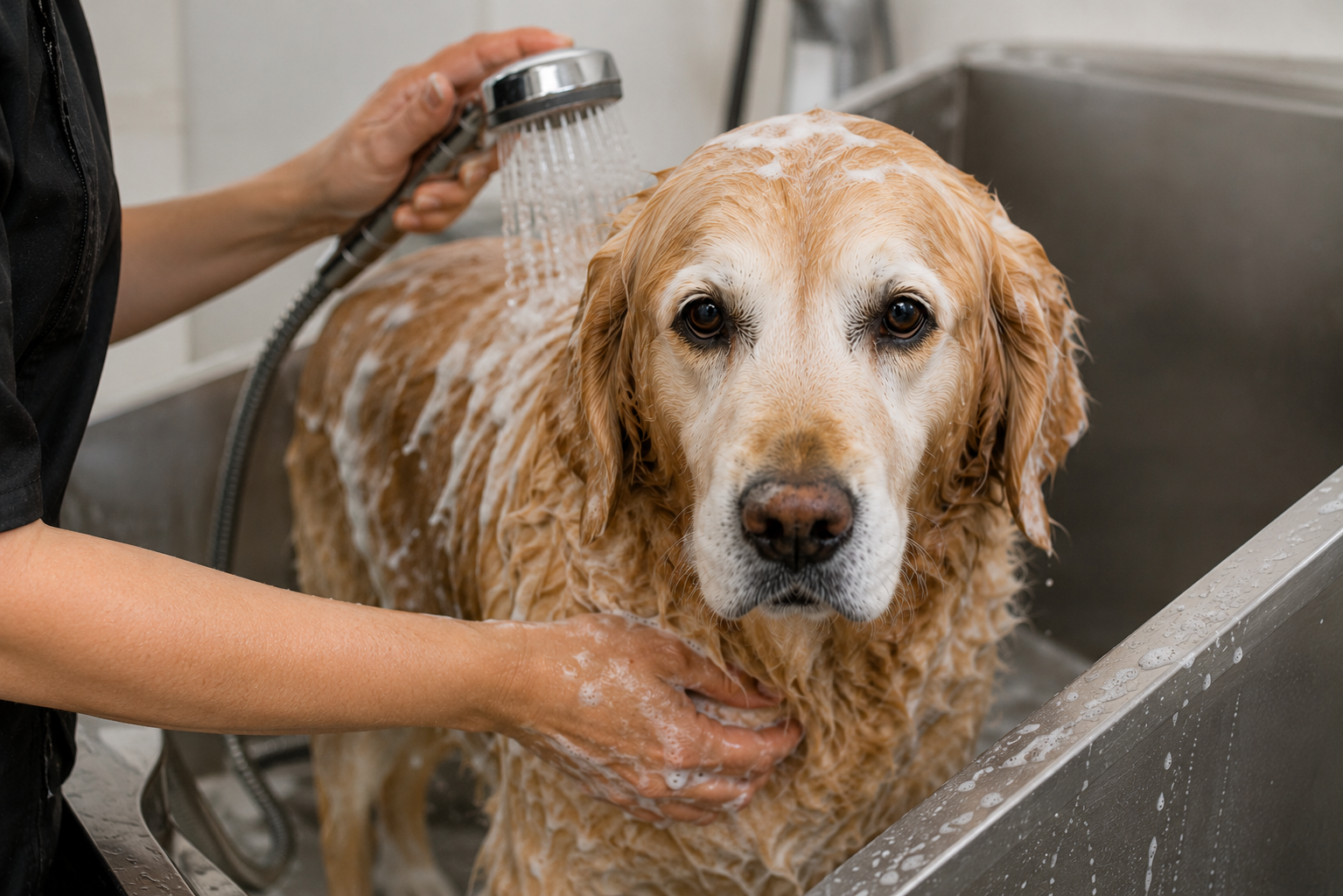
Bathing a senior dog is one of those tasks that most owners continue doing exactly as they always have, without realising that the dog’s skin, coat and physical tolerance have changed enough to warrant a different approach. Too frequent, too hot, wrong shampoo, wrong setup. Any one of these turns a routine grooming task into a source of skin irritation, joint stress or genuine anxiety for an older dog.
This guide covers how often to bathe a senior dog, how to do it safely, and what to change compared to bathing a younger dog.
Table of Contents
How Bathing a Senior Dog Differs from Bathing a Younger Dog
The differences are not dramatic, but they are consistent and they matter.
Skin becomes drier and more fragile with age. The sebaceous glands produce less natural oil, which means the coat loses some of its natural moisture barrier. Bathing strips oil from the skin and coat, and in a younger dog with healthy glandular activity that oil replenishes relatively quickly. In an older dog it replenishes more slowly, which means over-bathing causes persistent dryness, flaking and itching that owners often attribute to other causes.
Physical tolerance for the bathing process decreases. A dog that stood in the bath without difficulty at four years old may find the same position uncomfortable at ten because of joint stiffness, reduced balance or simply lower stamina. The setup that worked for years may now be the source of the problem.
Thermoregulation becomes less efficient with age. Senior dogs are less able to maintain a stable body temperature, which means water that is too hot raises the body temperature faster than a younger dog would experience, and a damp coat in a cool environment after bathing contributes to joint stiffness more than most owners anticipate.
None of these changes make bathing a senior dog particularly difficult. They make it a task that requires more deliberate preparation and a slower pace than it used to.
How Often Should You Bathe a Senior Dog
The honest answer is less often than most owners bathe their dogs, and less often than most grooming advice suggests.
For the majority of senior dogs, bathing every four to six weeks is appropriate. This frequency keeps the coat clean without stripping the natural oils that dry senior skin depends on. A dog that is bathed every week or two is losing those oils faster than they can replenish, and the resulting dryness causes itching and skin irritation that the owner then tries to address with more bathing, which makes the problem worse.
The right frequency varies depending on three factors. The first is coat type. Dogs with oily coats, such as Basset Hounds and Labrador Retrievers, produce more sebum and may need bathing more frequently than every six weeks without issue. Dogs with dry or thin coats typical of many senior dogs need the longer interval to maintain skin health.
The second factor is lifestyle. A dog that swims regularly, rolls in things outdoors or spends significant time on dirty ground needs bathing more frequently out of practical necessity. A dog that is largely sedentary and indoors needs it less. The question is not what the calendar says but what the coat and skin actually need.
The third factor is skin condition. A senior dog being managed for a diagnosed skin condition may have a bathing frequency specified by the vet using a medicated shampoo. In those cases, follow the veterinary guidance rather than the general recommendation here.
Between full baths, grooming wipes or a damp cloth over the coat address surface dirt and odour without the disruption of a full bathing session. For a senior dog that finds bathing stressful, reducing full baths and supplementing with wipe-downs is a reasonable approach that keeps the dog clean without the frequency that causes skin problems.
Choosing the Right Shampoo for Bathing a Senior Dog
The shampoo matters more for an older dog than it does for a younger one, and most owners continue using whatever they have always used without considering whether it is appropriate for senior skin.
Look for a shampoo that is pH balanced for dogs. Human shampoo is formulated for human skin pH, which is different from dog skin pH. Using human shampoo on a dog disrupts the skin barrier and causes irritation regardless of how gentle the human formulation is.
For most senior dogs, an oatmeal-based or moisturising shampoo is the most appropriate choice. These formulations soothe and hydrate rather than strip, which is what dry senior skin needs. They are also gentle enough for frequent use if the dog’s lifestyle requires more regular bathing.
Avoid shampoos containing alcohol, artificial fragrances, sulphates or parabens. These are unnecessarily harsh on fragile senior skin. The ingredient list on a shampoo designed for sensitive or mature dog skin should be short and recognisable.
Medicated shampoos for specific skin conditions should only be used on veterinary advice and at the frequency the vet recommends. Using a medicated shampoo on a dog that does not need it disrupts the natural skin environment without any benefit.
Setting Up for Bathing a Senior Dog Safely
The physical setup is where most problems with bathing a senior dog arise, and where the most straightforward improvements can be made.
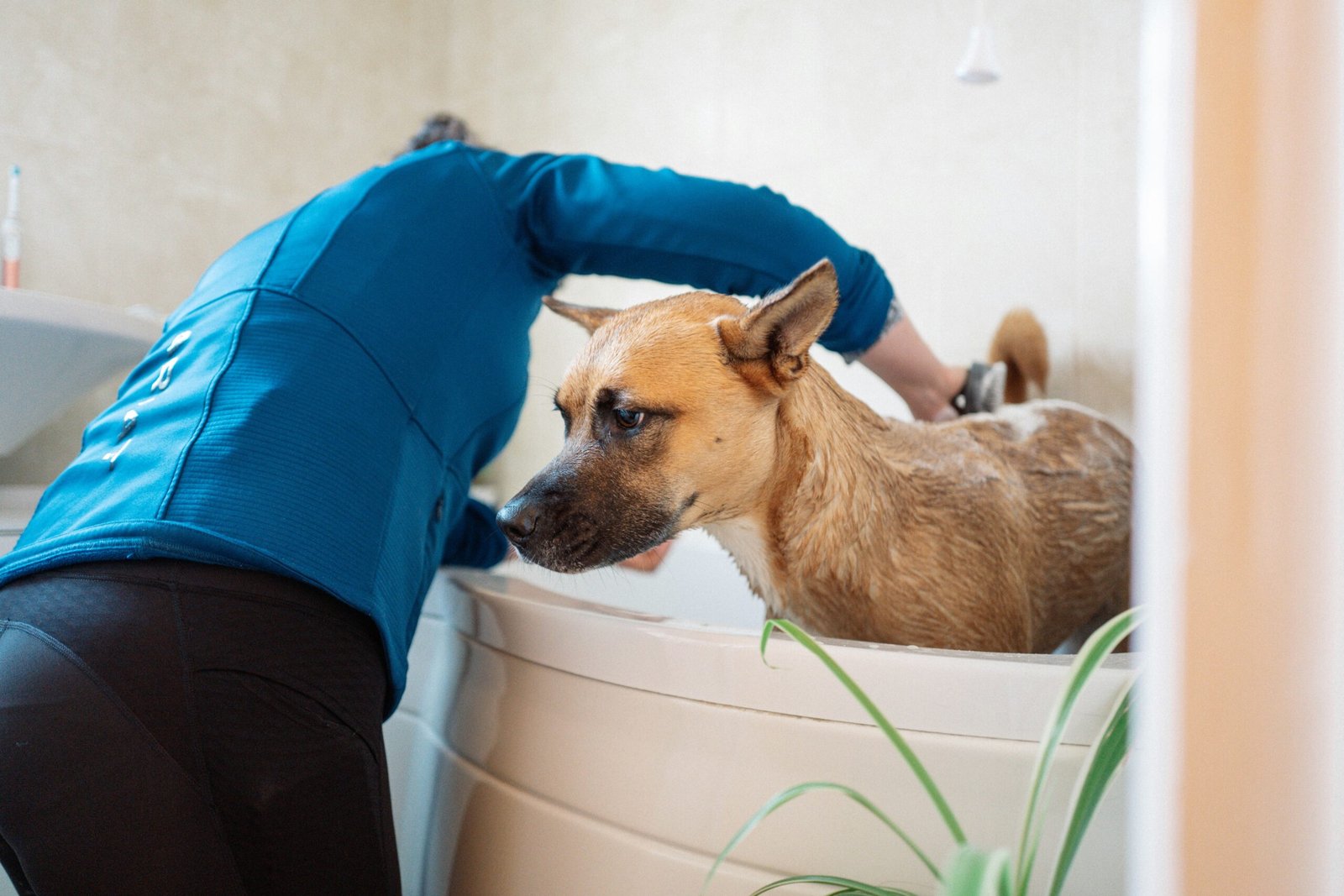
A non-slip mat in the bath or shower is not optional for an older dog. A senior dog with joint stiffness and reduced balance standing on a wet, smooth surface is at genuine risk of slipping and injuring itself. The mat removes that risk entirely and makes the experience less stressful for a dog that is already uncertain about its footing.
For dogs that are anxious about the bath, a lick mat with a small amount of peanut butter or wet food attached to the wall of the bath at nose height gives the dog something to focus on throughout the process. This is a simple intervention that makes a significant difference for many dogs.
Water temperature should be warm but not hot. Test it on the inside of your wrist before the dog enters. Lukewarm water that feels comfortable on your skin is the right target. Water that feels pleasantly warm to your hand is often too hot for a dog, particularly a senior dog with reduced thermoregulation.
For large dogs or those with significant mobility limitations, bathing with a second person present makes the process substantially safer. One person handles the washing while the other provides physical support and reassurance. For very large or very mobility-limited senior dogs, a professional groomer with a hydraulic table and appropriate facilities may be a more practical option than home bathing.
The Bathing Process Step by Step
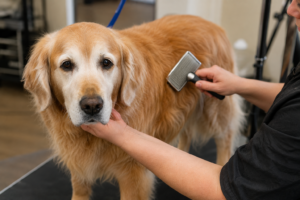
Step 1: Brush before bathing. Brush the coat thoroughly before getting the dog wet. Mats that are damp are significantly harder to remove than dry ones, and water causes mats to tighten against the skin. Any matting should be addressed before the bath, not after.
Step 2: Settle the dog and wet the coat. Bring the dog to the bathing area calmly. Wet the coat thoroughly with warm water, working from the neck backward. Avoid getting water directly in the ears. For dogs prone to ear infections, placing a small cotton ball loosely at the entrance to each ear canal before bathing reduces the amount of water that enters. Remove them immediately after the bath.
Step 3: Apply shampoo and work through the coat. Apply a small amount of shampoo to the coat and work it through with your fingers using light, circular movements. Pay attention to areas where dirt accumulates: under the armpits, between the toes, around the tail and under the collar line. Use light pressure throughout, particularly over the spine and hindquarters where senior skin is often thinnest.
Step 4: Rinse thoroughly. Rinse until the water running off the coat is completely clear. Shampoo residue left on senior skin causes persistent itching and irritation. This step takes longer than most owners allow for it. When you think you have rinsed enough, rinse again.
Step 5: Apply conditioner if needed. For dogs with particularly dry or coarse coats, a dog-formulated conditioner applied after shampooing and rinsed out thoroughly adds moisture back to the coat. This is optional for most dogs but beneficial for those showing significant coat dryness.
Step 6: Dry thoroughly. This step matters more for senior dogs than most owners realise. A damp coat in a cool environment contributes directly to joint stiffness and discomfort. Towel dry as thoroughly as possible, then use a low-heat hairdryer at a safe distance if the dog tolerates it. Never hold direct heat close to senior skin. The goal is a coat that is dry to the touch before the dog settles into its resting area.
Managing Bathing for a Senior Dog with Anxiety or Mobility Issues
Some senior dogs develop anxiety around bathing that they did not have when younger, particularly if past bathing sessions have involved slipping, discomfort or physical difficulty. The association between the bath and a negative experience is strong and does not disappear simply because the physical setup has improved.
For these dogs, reintroduction needs to happen gradually. Bring the dog into the bathroom without bathing and reward. Put the dog in the dry bath and reward. Introduce water at a low level while the dog stands and reward. Progress through the stages over multiple sessions before attempting a full bath. This approach takes longer than simply bathing the dog, but it produces a dog that tolerates future sessions rather than one that needs to be physically managed each time.
For dogs with significant mobility limitations, bathing a senior dog on a non-slip mat on the floor of a shower with a handheld shower head is often more accessible than a raised bath. The dog can lie down if needed, entry and exit are easier, and there is no risk of a fall from a height.
For the full picture on managing a grooming routine that accounts for mobility limitations and joint sensitivity, this guide to how to groom a senior dog at home covers every aspect of home grooming for older dogs. For the broader context on all aspects of senior dog grooming, the senior dog grooming guide covers coat, nails, teeth and ears alongside bathing.
FAQ
Can I bathe my senior dog too often?
Yes. Bathing a senior dog more frequently than every four weeks strips natural oils from already dry skin and causes persistent dryness, flaking and itching. If the dog needs freshening between baths, grooming wipes or a damp cloth are more appropriate than a full bath.
My senior dog shivers after bathing even in a warm room. Is this normal?
Shivering after bathing in a warm environment indicates that the drying process was not thorough enough or that the dog’s thermoregulation is reduced enough that even mild temperature change causes a visible response. Dry the coat more thoroughly and ensure the dog rests in a warm area after bathing. If shivering is persistent or severe, a vet check is appropriate to rule out an underlying health issue.
Should I bathe my senior dog more often in summer?
Not necessarily. The frequency should be driven by the coat and skin condition rather than the season. A dog that is more active outdoors in summer and accumulating more dirt may need bathing more frequently out of practical necessity. A largely sedentary indoor dog does not need more frequent bathing in summer simply because the weather is warmer. For managing heat in summer through coat care, brushing to remove dead undercoat is more beneficial than increased bathing frequency.
My senior dog has always hated baths. Is there anything I can do at this stage?
Yes. Reintroduce bathing gradually using the desensitisation approach covered above. A lick mat in the bath, non-slip mat underfoot and warm water at the right temperature address the most common physical sources of bath aversion. For a dog with a long history of bath anxiety, improvement is possible but takes consistent, patient work over multiple sessions rather than a single improved bath.
What is the best way to dry a senior dog after bathing?
Towel drying first, followed by a low-heat hairdryer at a safe distance if the dog tolerates it. The coat should be dry to the touch before the dog settles. Pay particular attention to drying the ears, the skin folds if the breed has them, and the areas around the collar and armpits where moisture persists longest. A dog coat or towel wrap can help maintain warmth during the drying process for dogs that become cold easily.
Final Thoughts
Bathing a senior dog well comes down to frequency, setup and product. Get those three things right and the process becomes straightforward for both dog and owner. Get them wrong and what should be a routine grooming task becomes a source of skin problems, physical stress and increasing resistance from the dog.
The dog that tolerated bathing without complaint when it was younger has not become more difficult. Its body has changed, and the approach needs to keep pace with those changes. Less frequent bathing, a non-slip surface, the right shampoo and thorough drying. That is the difference between a bath that helps and one that causes problems.
Pingback: Senior Dog Grooming: The Complete Guide - seniordog-care