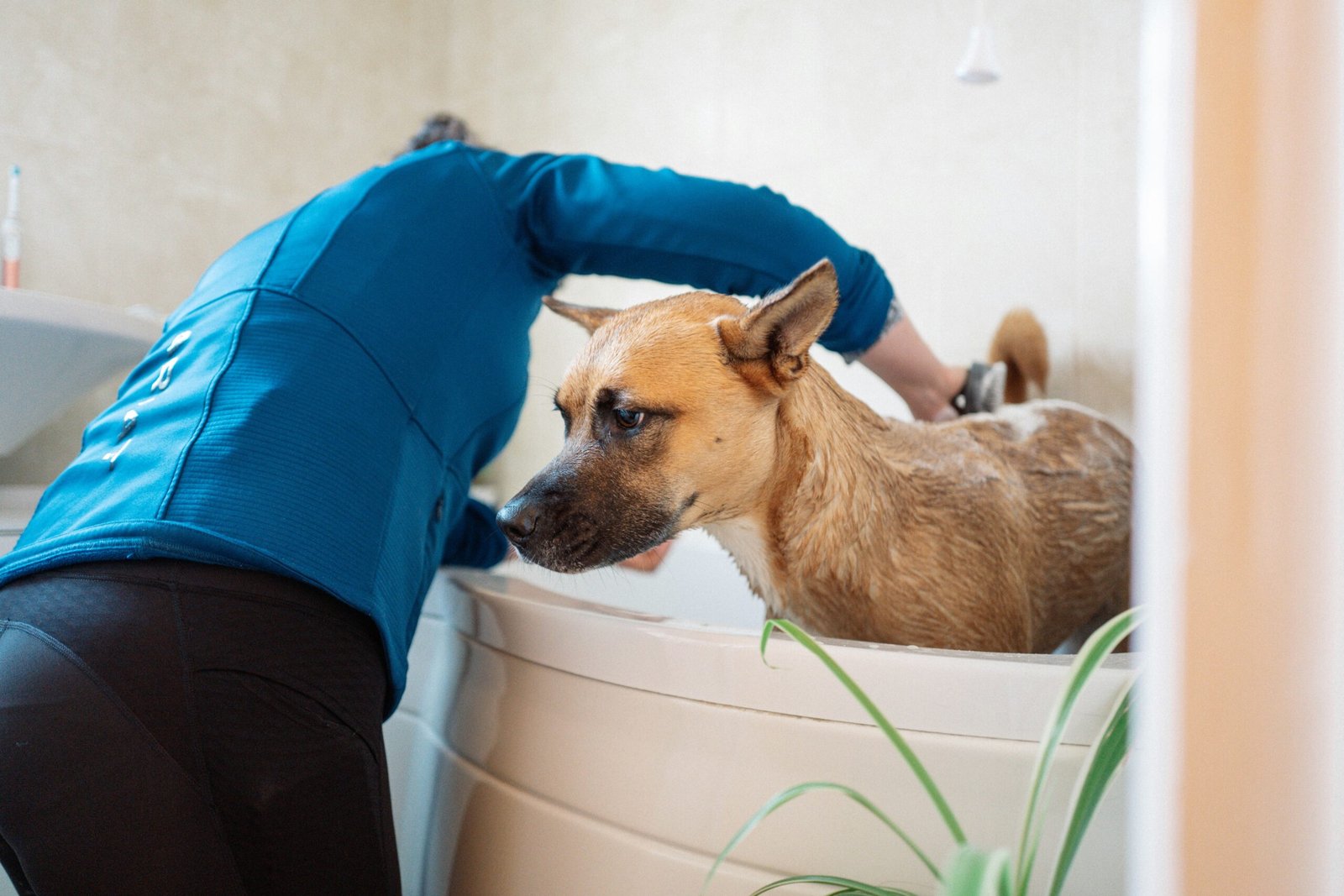
Senior dog care essentials are not a random shopping list. They are the small set of changes that actually reduce pain, prevent falls, and make daily life easier for a dog whose body no longer works the way it did five years ago. Most owners find this out the hard way, usually after a slip on the stairs or a night where the dog cannot get comfortable no matter how the blankets are arranged. A lot of owners miss this, so there is no shame in that. But now that you do know, you should act so your dog does not have to suffer through problems that a few practical changes could have prevented.
This guide brings together the four categories that matter most for daily senior dog care: orthopedic beds, harnesses, ramps, and the smaller gadgets that make a real difference once the bigger issues are covered. Each section links to a full guide on that specific topic, so treat this page as the starting point, not the final word.
Table of Contents
What Falls Under Senior Dog Care Essentials
Senior dog care essentials cover the physical environment your dog lives in every day, not medical treatment and not diet, those are separate topics. This is about the bed your dog sleeps on, the harness you use to walk or lift them, the ramp that saves their joints twenty times a day, and the smaller tools that remove friction from daily routines.
The reason these four categories belong together is simple. They all address the same underlying problem, which is joint strain and reduced physical control as a dog ages. A dog with hip stiffness benefits from an orthopedic bed at night, a supportive harness during the day, a ramp for the car and the couch, and often a non-slip mat or a raised bowl on top of that. Buying one of these without the others usually means the owner ends up buying the rest anyway, six months later, after watching the dog struggle.
There is also a sequencing problem that most owners run into without realising it. They notice one symptom, buy one product, and assume the issue is solved. A ramp helps with jumping, but it does nothing for a dog that still sleeps on a flat, worn out bed every night. A new bed helps with sleep, but it does nothing for the joint impact a dog absorbs every time it jumps off the couch during the day. Treating these as one connected set of essentials, rather than four separate purchases made in isolation, is what actually changes how a senior dog feels day to day.
Orthopedic Beds and Sleep Support
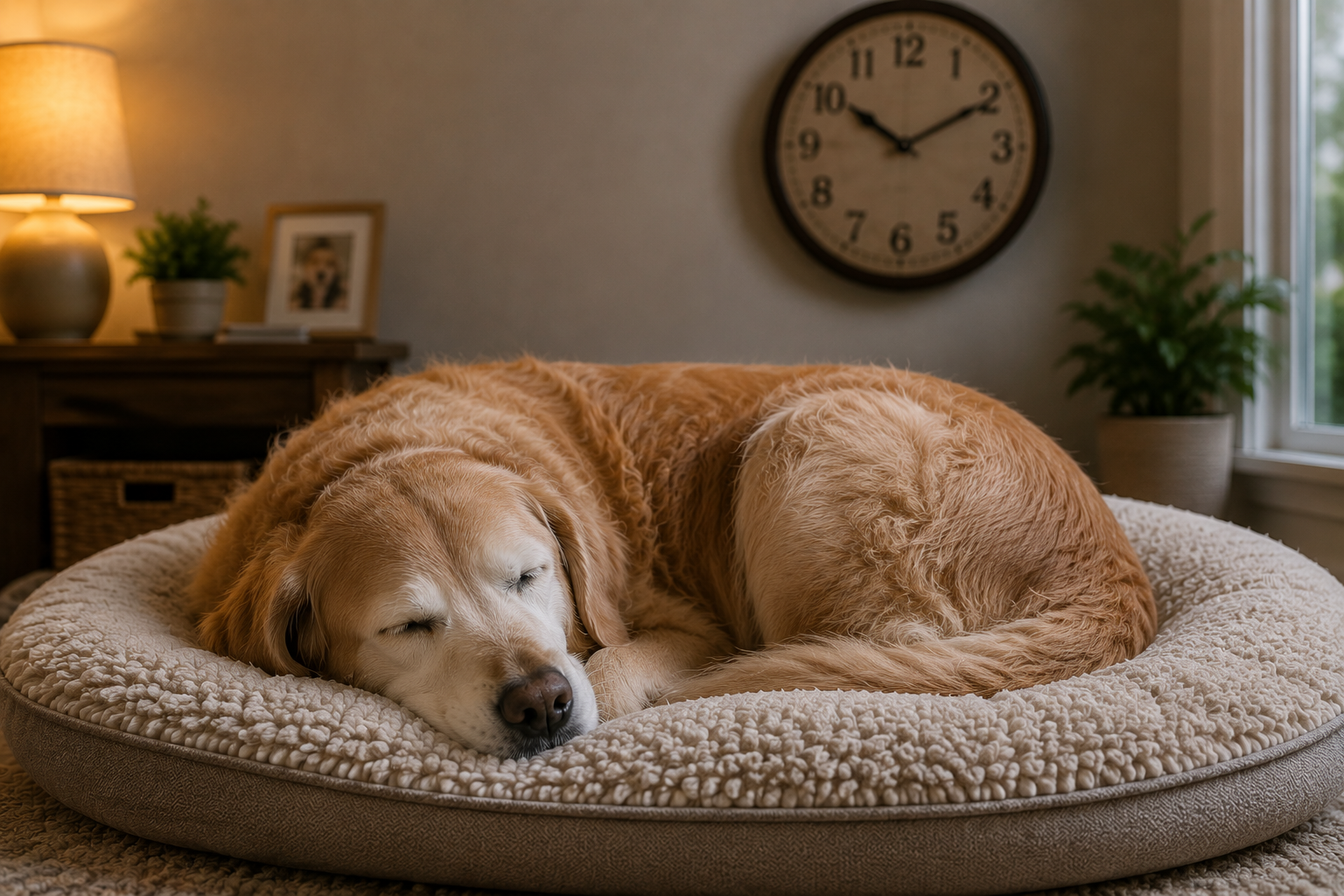
Sleep is the foundation of everything for an aging dog. When a dog sleeps well, joints recover overnight, inflammation has time to settle, and the dog wakes up with less stiffness than it would on a flat or worn-out surface. A standard bed that looked fine for a five-year-old dog often stops being enough once the dog reaches seven or eight, because it no longer supports the hips and shoulders the way memory foam or a properly designed orthopedic base does.
The signs that a dog needs an upgrade are usually visible before the owner puts a name to them. Circling multiple times before lying down, groaning when settling in, or choosing the cold tile floor over the dog bed are all signals that the current surface is not doing its job. For the full breakdown of what to look for, how thick the foam should be, and which beds hold up over time, see the complete guide to orthopedic dog beds.
Harnesses for Safer Daily Support
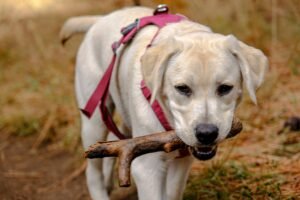
A harness matters more for a senior dog than it ever did when the dog was young. Where a young dog can handle a standard collar without issue, an older dog with a stiff neck, tracheal sensitivity, or reduced balance needs a harness that distributes pressure across the chest and body instead of the neck. For dogs with weaker hindquarters, a lift-style harness also gives the owner a way to physically assist the dog on stairs or getting into the car, without straining the dog’s spine or the owner’s back.
The mistake most owners make is waiting until the dog is already struggling before buying one. By that point the dog has often developed a fear of stairs or car rides, which then needs to be retrained on top of the physical support. Choosing the right harness earlier, once the first signs of stiffness appear, keeps the dog confident instead of anxious. The full harness guide covers the different types, how to size one correctly, and which designs work best for dogs with arthritis or hip dysplasia specifically.
Ramps for Reducing Jumping and Strain
Every time a dog jumps off a bed, a couch, or out of a car, the front legs absorb the full impact of that landing. For a healthy young dog this is not a problem. For a senior dog with early arthritis, it is a repeated injury that happens multiple times a day, often without the owner noticing because the dog does not yelp every single time. A ramp removes that impact entirely by letting the dog walk down at a gentle angle instead.
This is one of the essentials owners underestimate the most, because it does not look urgent the way a limp does. But repeated joint strain is cumulative. A dog that jumps down from the couch ten times a day for two years has absorbed thousands of unnecessary impacts, and that adds up to worse arthritis sooner than it would have otherwise. The ramp guide covers the right slope angle, weight limits, and how to train a hesitant dog to actually use one.
Everyday Gadgets That Make Senior Dog Care Easier
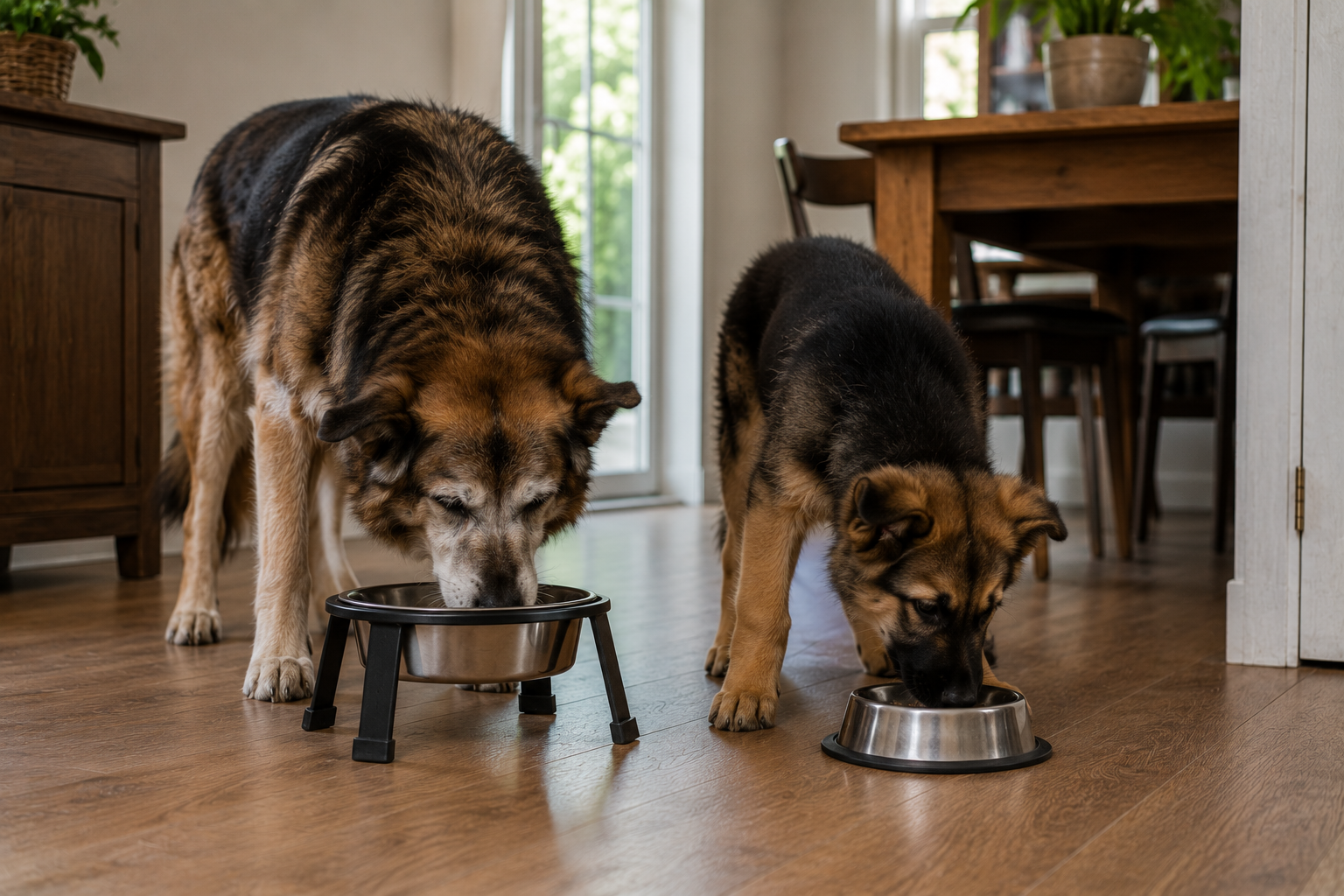
Once the bed, harness, and ramp are in place, a smaller set of tools closes the remaining gaps. Non-slip mats on hardwood or tile floors prevent the kind of sudden slip that can cause real injury in a dog with weak hips. Raised or elevated bowls reduce strain on the neck and shoulders during eating, which matters more than most owners expect once a dog has any spinal or joint sensitivity. Nightlights help dogs with declining vision navigate the house safely after dark, which becomes relevant earlier than owners assume, since a dog’s eyesight often starts fading before it becomes obvious in daylight.
None of these gadgets solve a problem on their own the way a bed or a ramp does. Their value is in removing the small daily frictions that add up to a harder life for an aging dog. The full gadget guide goes through the specific products worth buying and which ones are mostly marketing.
How to Prioritize: What to Buy First
Not every dog needs all four categories at once, and buying everything on day one is not the point. The order that makes the most sense follows how much daily impact each change has. A bed comes first, because sleep quality affects everything else and the dog spends more hours there than anywhere. A harness comes second if the dog is showing any hesitation on stairs or during walks, since safety during movement matters more than convenience add-ons. A ramp comes third, particularly for dogs that jump on and off furniture or in and out of a car multiple times a day. The smaller gadgets come last, once the larger physical support is already in place.
Budget also plays a role here, and there is nothing wrong with spacing these purchases out over a few months. What matters is not delaying the first one, the bed, since that is the change with the most immediate effect on how a dog feels day to day. A useful way to think about pacing is to introduce one category, give it two to three weeks to become part of the dog’s routine, and only then move to the next, rather than changing the entire environment at once and overwhelming a dog that already has enough to adjust to as its body changes.
Signs Your Dog Needs These Essentials Sooner Rather Than Later
Some signals should move a dog straight to the top of this list instead of waiting. Hesitating at the bottom of stairs, refusing to jump into the car, taking longer than usual to lie down or stand up, or sliding on hardwood floors are all indicators that the joints are already under more strain than they can handle unaided. A dog that has started avoiding a favorite spot on the couch because it can no longer get up there comfortably is telling you something specific, even if it cannot tell you directly.
Owners sometimes wait for a vet to confirm arthritis before making any changes. That is reasonable for medication and treatment decisions, but the physical support covered here does not need a diagnosis first. A ramp, a better bed, and a supportive harness help a dog with early stiffness just as much as one with a confirmed diagnosis, and there is no downside to introducing them early. For dogs already diagnosed with joint disease, it is worth pairing these essentials with a broader look at mobility aids for senior dogs, which covers wheelchairs and more advanced support options.
Making Room by Room Changes at Home
Most owners think about senior dog care essentials as individual products rather than as changes to the house itself, and that is where a lot of the real benefit gets missed. Walking through each room a dog actually uses, rather than buying items in isolation, reveals where the friction points really are. The living room usually needs a ramp or non-slip mat at the base of the couch. The bedroom needs either a ramp for the bed or a floor-level orthopedic bed if the dog is no longer allowed or able to get onto the bed itself. The kitchen benefits from an elevated bowl and a non-slip mat underneath it, since food and water areas are where slips happen most often because the floor there is frequently wet or freshly mopped.
Hallways and staircases deserve their own attention, since these are the areas where a fall does the most damage. A runner rug or grip strips along a staircase edge cost very little compared to what a fall down those same stairs could mean for an already fragile hip or shoulder. Thinking in terms of rooms, rather than only in terms of the four categories above, tends to surface two or three small gaps that a category-by-category shopping list would otherwise miss entirely.
FAQ
What are the most important senior dog care essentials to start with?
An orthopedic bed and a supportive harness make the biggest difference first, since sleep quality and safe daily movement affect a dog’s comfort more than any other single change.
At what age should I start introducing these changes?
Most dogs benefit from starting around seven to eight years old, or earlier for large breeds that age faster. Waiting for visible pain usually means the dog has already been compensating in ways that cause additional strain.
Can senior dog care essentials help with arthritis specifically?
Yes. A ramp reduces the repeated joint impact from jumping, an orthopedic bed supports the joints overnight, and a proper harness prevents the dog from putting extra weight on already sore joints during walks or lifts.
Do small dogs need the same essentials as large dogs?
The categories are the same, but the products differ. Small dogs generally need lower ramp angles and lighter harnesses, while large dogs need higher weight limits and firmer orthopedic support.
Is it worth buying all four categories at once?
Not necessarily. Prioritizing the bed first, then the harness and ramp based on how much your dog is struggling with stairs or jumping, is usually the more practical approach for both budget and your dog’s adjustment period.
Final Thoughts
Senior dog care essentials are not about buying more products for the sake of it. They are about removing the specific physical strain that builds up as a dog ages, one category at a time. Start with the bed, add the harness and ramp as your dog’s mobility changes, and treat the smaller gadgets as the finishing touches rather than the starting point. Getting this right early means fewer injuries, less pain, and a dog that stays confident in its own home for years longer than it otherwise would.
Sources
- https://www.akc.org/expert-advice/health/how-to-improve-your-senior-dogs-quality-of-life/
- https://www.akc.org/expert-advice/health/making-home-accessible-for-senior-dog/
- https://www.akc.org/expert-advice/home-living/dog-stairs-and-ramps/
- https://www.akc.org/expert-advice/health/ways-to-care-for-old-dog/

Pingback: Best Orthopedic Dog Beds for Senior Dogs (2026 Guide) - seniordog-care
Pingback: Best Gadgets for Senior Dogs: The Complete Guide