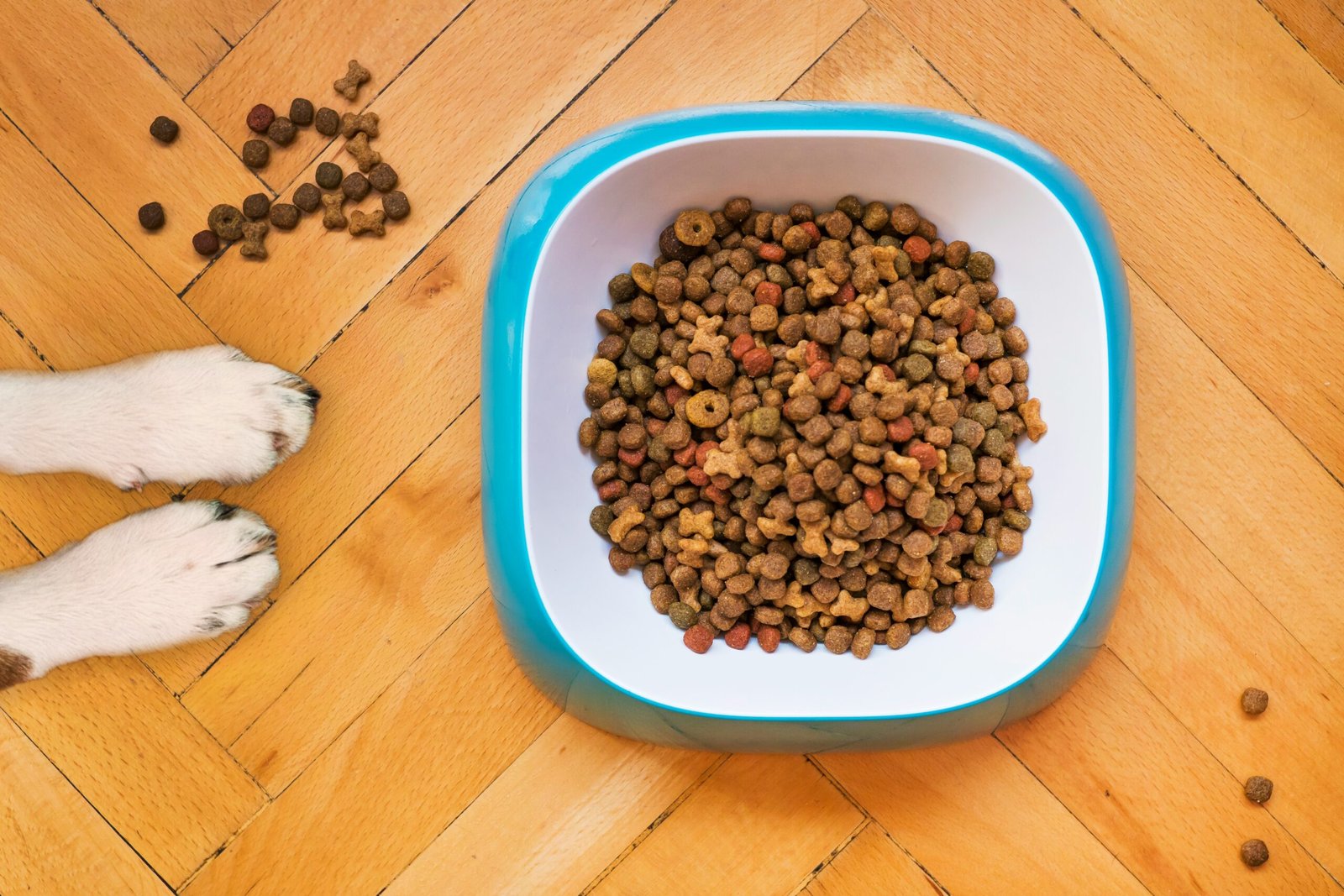
Best dog food for big senior dogs needs to solve problems that a generic senior formula rarely addresses: joints carrying substantially more load per step than a small dog’s, a deep chest that raises the risk of a life-threatening condition called bloat, and a body that reaches its senior years earlier than a small breed does, often from age five or six rather than seven or eight.
Large breed formulas exist for a reason. They are not simply a bigger bag of the same food. This guide covers the strongest options for big senior dogs specifically, what actually matters on the label for this size category, and the feeding practices that reduce real risk. For the general nutritional picture, our senior dog nutrition basics guide is worth reading alongside this one. If your dog has no specific large-breed concerns and you want a broader view of dry food options, our guide to the best dry dog food for senior dogs covers that ground as well.
This post may contain affiliate links. If you buy through these links, I may earn a small commission at no extra cost to you. As an Amazon Associate, I earn from qualifying purchases.
Table of Contents
Why Big Senior Dogs Need a Different Formula
Large breeds carry more mechanical load through every joint with every step than a small dog does, which is why joint disease appears earlier and more severely in this size category. A senior formula without meaningful glucosamine and chondroitin is missing the single ingredient category that matters most for this specific population.
Bloat, known clinically as gastric dilatation-volvulus or GDV, is the other defining concern. It occurs when the stomach fills with gas and, in the more dangerous form, twists on itself, cutting off blood supply. It is a surgical emergency that can be fatal within hours, and it affects large and giant, deep-chested breeds disproportionately, with Great Danes carrying a notably high lifetime risk. Food alone does not prevent bloat, but formulation and feeding mechanics both play a measurable role in reducing risk.
Calorie needs per pound are also lower in large breeds than in small ones, even though total daily calories are higher. Feeding a large-breed senior a formula built around a small dog’s metabolism, just in bigger portions, is a common and avoidable mistake.
Quick Picks
Best overall: Purina Pro Plan Large Breed Senior 7+ — chicken and rice formula with glucosamine, EPA and DHA, calibrated specifically for large breed joints and calorie needs.
Best budget: Blue Buffalo Life Protection Large Breed Senior — real chicken, joint support, and a controlled calcium-phosphorus ratio at an accessible price.
Best for joint support: Hill’s Science Diet Large Breed Senior Vitality — clinically studied glucosamine and chondroitin levels for large breed cartilage support.
Best for giant and deep-chested breeds: Royal Canin Giant Breed Senior Aging 8+ — kibble shape and digestive formula built specifically around giant breed anatomy and slower eating.
Best calcium-phosphorus calibration: Eukanuba Senior Large Breed — mineral ratio specifically balanced to reduce unnecessary skeletal load in ageing large dogs.
Best raw option: We Feed Raw — high bioavailability with portioning that adjusts precisely to a large dog’s actual weight and calorie needs.
What to Look for in Food for Big Senior Dogs
A large or giant breed specific formula, not a scaled-up standard senior food. These formulas calibrate calcium-to-phosphorus ratio, calorie density, and joint support specifically for a larger frame.
Meaningful glucosamine and chondroitin levels. Look for stated amounts rather than a vague joint-support claim on the front of the bag.
Moderate fat content. High-fat formulas are associated with increased bloat risk in large, deep-chested breeds. Avoid formulas listing oil or fat among the first four ingredients.
Larger kibble size. A bigger kibble piece slows down fast eaters, which reduces the air swallowing (aerophagia) that contributes to bloat risk.
Named animal protein first. Chicken, turkey, salmon, or lamb, not a vague meat meal, particularly important for maintaining muscle mass in a large frame as digestion becomes less efficient with age.
Controlled calorie density. Large breed seniors typically need fewer calories per pound than smaller dogs, and a formula that does not account for this contributes to the joint strain that excess weight causes on an already loaded frame.
Top Picks in Detail
1. Purina Pro Plan Large Breed Senior 7+
Built specifically around a large breed senior’s joints and calorie needs, this formula combines real chicken with glucosamine for cartilage support and EPA and DHA from fish oil for anti-inflammatory support. The calorie density is calibrated for a less active large dog rather than adapted from a standard adult recipe.
Pros:
- Chicken as first ingredient with adequate protein for muscle maintenance
- Glucosamine included specifically for large breed joint support
- EPA and DHA for anti-inflammatory support
- Calorie density calibrated for large breed seniors specifically
Cons:
- Not formulated around bloat-specific feeding mechanics beyond standard kibble size
- Mid-range price
- Not suitable for dogs with chicken sensitivities
Who should NOT buy this: dogs with a diagnosed chicken sensitivity, or owners specifically prioritising giant breed digestive formulation over general large breed nutrition.
Best for: most large senior dogs without a specific diagnosed condition, needing well-rounded joint and calorie support.
2. Blue Buffalo Life Protection Large Breed Senior
Real chicken leads the ingredient list, with glucosamine and chondroitin included alongside a calcium-phosphorus ratio calibrated for large breed skeletal needs, at a price noticeably below the premium tier.
Pros:
- Real chicken as first ingredient
- Joint support and calibrated mineral ratio at a budget-friendly price
- LifeSource Bits for antioxidant support
- Widely available
Cons:
- Contains grains and legumes
- Less specialised joint research behind it than Hill’s
- Standard kibble size rather than an especially large one
Who should NOT buy this: dogs needing the strongest available clinical joint evidence, where Hill’s is the stronger pick.
Best for: budget-conscious owners of large senior dogs wanting solid joint support without a premium price tag.
3. Hill’s Science Diet Large Breed Senior Vitality
This formula uses clinically studied levels of glucosamine and chondroitin specifically calibrated for large breed cartilage support, backed by Hill’s own joint outcome research rather than ingredient marketing alone.
Pros:
- Clinically studied glucosamine and chondroitin levels
- Backed by published joint outcome research
- Chicken as first ingredient
- Strong veterinary reputation
Cons:
- Not formulated for significant weight loss
- Priced above Blue Buffalo
- Not suitable for dogs with chicken sensitivities
Who should NOT buy this: significantly overweight large seniors needing calorie restriction as the priority, where a weight management formula is more appropriate.
Best for: large senior dogs showing joint stiffness or early osteoarthritis needing clinically backed support.
4. Royal Canin Giant Breed Senior Aging 8+
Built specifically for giant and deep-chested breeds, this formula uses a kibble shape designed to slow eating speed, directly addressing one of the modifiable feeding-mechanics risk factors associated with bloat, alongside digestive support for a giant breed’s slower gut transit.
Pros:
- Kibble shape specifically designed to slow eating speed
- Digestive support calibrated for giant breed anatomy
- Joint support included for a frame carrying maximum load
- Formulated specifically for ages eight and above
Cons:
- Premium pricing
- Formula is size-specific, not appropriate for medium breeds
- Chicken-based, unsuitable for poultry sensitivities
Who should NOT buy this: medium breed seniors, where this level of giant-breed-specific formulation is unnecessary.
Best for: giant and deep-chested senior breeds such as Great Danes, Mastiffs, or Saint Bernards, where bloat risk and digestive support are the priority.
5. Eukanuba Senior Large Breed
This formula calibrates its calcium-to-phosphorus ratio specifically to reduce unnecessary skeletal load in an ageing large frame, paired with glucosamine and chondroitin and a moderate fat content appropriate for reducing bloat-associated risk factors.
Pros:
- Calcium-phosphorus ratio calibrated for large breed skeletal health
- Moderate fat content, appropriate for bloat-risk reduction
- Glucosamine and chondroitin included
- Chicken as first ingredient
Cons:
- Less widely available than Purina or Hill’s
- Not the most premium ingredient sourcing on this list
- Mid-range pricing
Who should NOT buy this: owners specifically wanting the most premium ingredient sourcing available, where Purina Pro Plan or a raw option are stronger picks.
Best for: large senior dogs where mineral balance and moderate fat content are the specific priority, particularly dogs with any bloat risk history.
6. We Feed Raw
A freeze-dried or fresh raw formula with high bioavailability, precisely portioned to a large dog’s actual weight and calorie needs, removing much of the calculation complexity that puts owners off raw feeding for a big dog.
Pros:
- High bioavailability supports absorption in a less efficient senior digestive system
- Precise portioning by weight removes guesswork
- No fillers or unnecessary carbohydrates
- Strong palatability
Cons:
- Considerably more expensive per serving for a large dog than kibble
- Requires substantial freezer space for a big dog’s portions
- Not suitable for immunocompromised dogs without veterinary guidance
Who should NOT buy this: owners without adequate freezer space, or large dogs with a compromised immune system.
Best for: large senior dogs that have not thrived on kibble, or owners committed to the highest ingredient quality available.
Comparison Table
| Product | First Ingredient | Key Feature | Best For | Price |
|---|---|---|---|---|
| Purina Pro Plan Large Breed Senior 7+ | Chicken | Joint support, calorie calibration | Most large senior dogs | $$ |
| Blue Buffalo Life Protection Large Breed Senior | Chicken | Budget joint support | Cost-conscious owners | $$ |
| Hill’s Science Diet Large Breed Senior Vitality | Chicken | Clinically studied joint support | Diagnosed joint stiffness | $$$ |
| Royal Canin Giant Breed Senior Aging 8+ | Chicken | Bloat-conscious kibble design | Giant, deep-chested breeds | $$$ |
| Eukanuba Senior Large Breed | Chicken | Calibrated calcium-phosphorus ratio | Skeletal and bloat-risk focus | $$ |
| We Feed Raw | Whole raw ingredients | High bioavailability, precise portions | Dogs unsettled on kibble | $$$$ |

Feeding Practices That Reduce Bloat Risk
Formulation is only part of managing bloat risk in a big senior dog. Feeding mechanics matter just as much, and several are worth adopting regardless of which food you choose.
Feed two or more smaller meals a day rather than one large meal. Splitting the daily total meaningfully reduces the volume sitting in the stomach at once. Use a slow-feeder bowl to reduce eating speed, which reduces the amount of air swallowed during meals. Avoid vigorous exercise for at least an hour before and after eating. Contrary to older advice, avoid elevated food bowls, since more recent research associates raised feeders with increased rather than decreased bloat risk in large breeds.
If your dog shows unproductive retching, a visibly distended abdomen, restlessness, or pale gums, this is an emergency. Get to a vet immediately rather than waiting to see if it passes.
How to Calculate the Right Portion for a Big Senior Dog
Large breed seniors need fewer calories per pound than smaller dogs, even though their total daily calorie need is higher. Feeding the same proportional amount you would use for a small dog leads to steady overfeeding on an already joint-stressed frame. Our guide on how much to feed a senior dog covers the calculation specifically by size, including the lower per-pound range appropriate for large and giant breeds.
FAQ
What age is considered senior for a large dog?
Large breeds typically reach senior status earlier than small breeds, often from age five to six rather than seven or eight, due to their generally shorter lifespan and faster physical ageing.
Does large breed senior food actually make a difference?
Yes. Large breed formulas calibrate calcium-phosphorus ratio, calorie density, and joint support specifically for a bigger frame carrying more mechanical load, rather than simply scaling up a standard adult recipe.
Can large breed senior food help prevent bloat?
Formulation plays a supporting role through moderate fat content and larger kibble size that slows eating, but food alone does not prevent bloat. Feeding mechanics, smaller frequent meals, slow feeders, and avoiding exercise around mealtimes, matter just as much.
How much joint supplement do large senior dogs need beyond food?
Food-level glucosamine and chondroitin provide a supportive rather than therapeutic dose. A dog already showing stiffness often benefits from an additional dedicated joint supplement alongside a joint-supportive food.
Is raw feeding safe for large senior dogs?
Generally yes for healthy large seniors, provided the diet is complete and balanced and meets AAFCO standards. The main practical considerations are cost and freezer space given a large dog’s total daily volume.
Final Thoughts
Best dog food for big senior dogs comes down to matching joint support, calorie calibration, and bloat-conscious formulation to a frame that carries more mechanical load and more risk than a smaller dog’s. Purina Pro Plan Large Breed Senior 7+ remains the strongest all-round choice for most large seniors, while Royal Canin Giant Breed Senior Aging addresses the specific anatomy of the largest, deepest-chested breeds.
Formulation is only half the picture. Feeding mechanics, smaller meals, slower eating, and calculated portions, matter just as much for reducing real risk in a big senior dog.


Pingback: How Much to Feed a Senior Dog: For Big and Small - seniordog-care