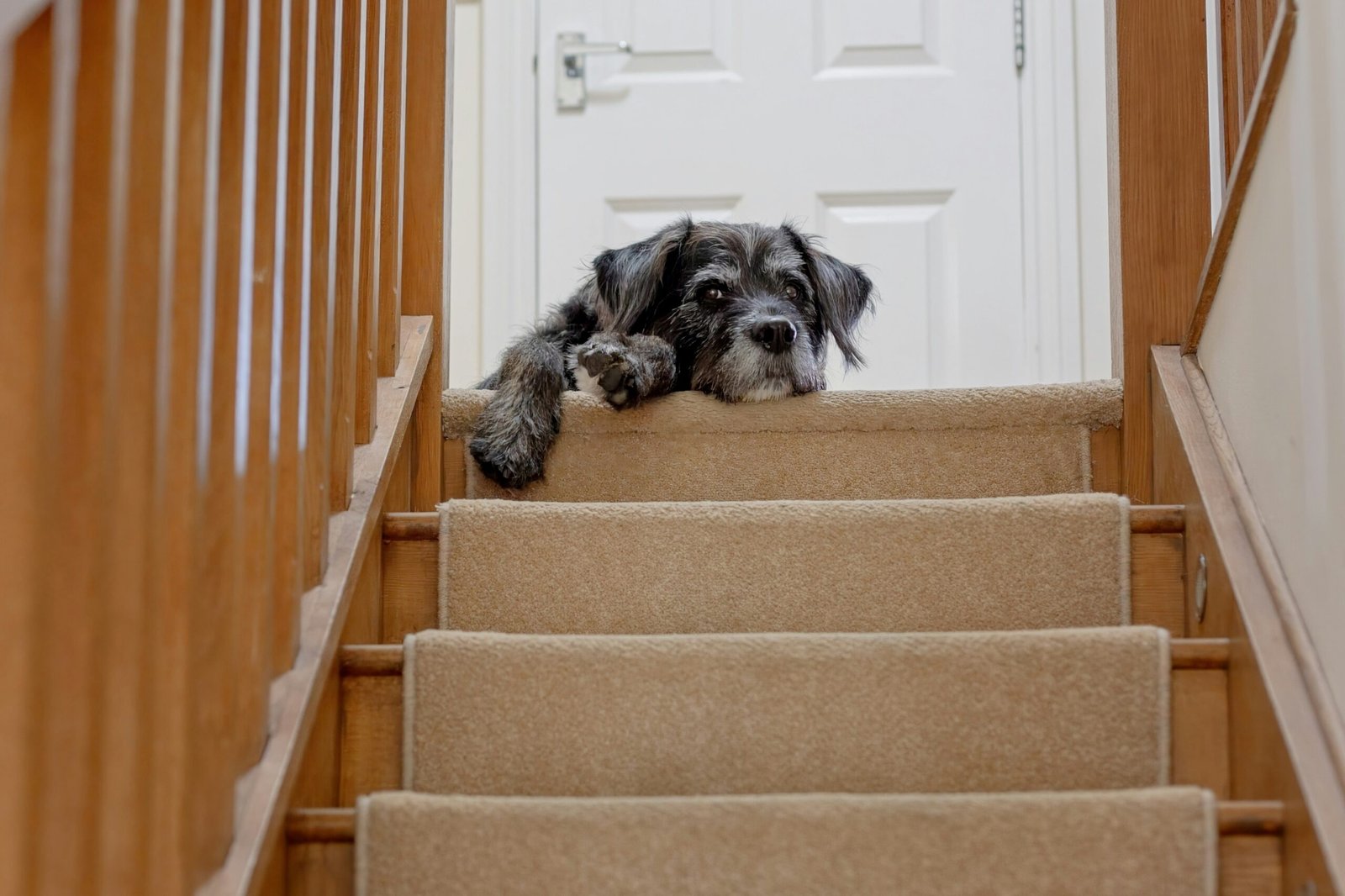
Creating a mobility-friendly home for your senior dog is about comfort, safety, and helping them stay independent as arthritis, hip dysplasia, or general ageing make everyday movement harder. Everyday obstacles that never used to register, slippery floors, a couch that used to be an easy leap, a food bowl at floor level, can become genuinely difficult or even dangerous once joints start to decline.
This guide covers how to assess your home from your dog’s perspective, the specific modifications that reduce daily strain, and when a DIY change is enough versus when it is worth bringing in professional help. For the equipment side of mobility support, our guide to best mobility aids for senior dogs covers ramps, harnesses, and beds in depth. For day-to-day arthritis management specifically, our guide on how to help senior dogs with arthritis at home covers weight, exercise, and supplements alongside the home changes covered here.
This post may contain affiliate links. If you buy through these links, I may earn a small commission at no extra cost to you. As an Amazon Associate, I earn from qualifying purchases.
Table of Contents
Assess Your Home from Your Dog’s Perspective
Before making any changes, it helps to see your home the way your senior dog actually experiences it. Watch where your dog hesitates, which surfaces seem to cause slipping, and which spots that used to be effortless now require visible effort.
Common trouble spots include stairs and couches that require jumping or climbing, slippery hardwood or tile that becomes genuinely risky for a dog with weakening joints, tight or cluttered spaces that limit manoeuvring room, and feeding stations set too low or too high for a dog with neck or shoulder stiffness. Identifying these specific problem areas first means the changes you make actually address what your dog is struggling with, rather than a generic list of upgrades.
Essential Home Modifications for a Senior Dog
Ramps and steps replace jumping with a gradual incline, removing the impact that repeated jumps add to already strained joints. Our guide to the best dog ramps for senior dogs covers specific products by size and use case.
Non-slip surfaces in high-traffic areas, hallways, near stairs, at the food bowl, prevent the slips that become more dangerous as balance and joint stability decline with age. Even a few well-placed rugs or runners make daily movement noticeably safer.
Clear pathways free of furniture, cords, or clutter reduce both the risk of a sudden awkward movement and the general anxiety a dog can develop around navigating a cramped space with compromised mobility.
Accessible feeding and water stations, raised to a comfortable height rather than floor level, remove the strain of bending the neck and shoulders repeatedly at every meal. Our guide to the best elevated dog bowls covers the right height and specific options for your dog’s size.
A genuinely supportive, accessible bed, placed somewhere your dog does not need to climb or jump to reach, matters more than almost any single other change, since sleep is when the body does most of its overnight recovery. Our guide to the best orthopedic dog beds for senior dogs covers the strongest options by size and budget.
Equipment That Supports Mobility Beyond the Home Itself
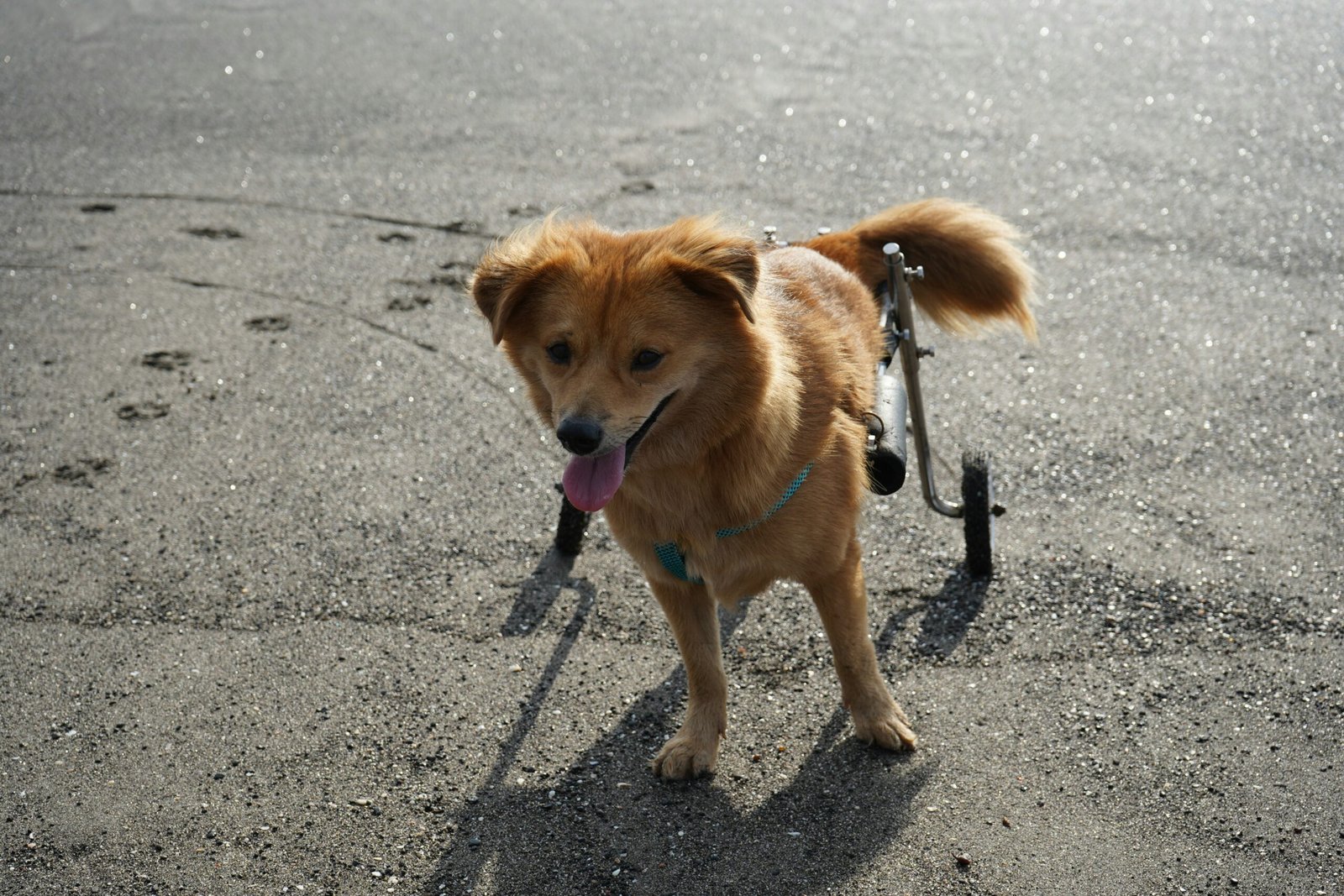
Home modifications solve part of the picture. For a dog that needs more active, physical support, getting up, navigating stairs, or being lifted into the car, dedicated mobility equipment fills the gap that ramps and non-slip mats alone cannot.
Rather than repeating product details here, our guide to best mobility aids for senior dogs covers the full range, support harnesses and slings, orthopedic beds, ramps, non-slip solutions, strollers, and wheelchairs, and helps you match the right combination to your dog’s specific situation.
Creating a Safe Living Environment Beyond the Obvious Changes
A few additional adjustments round out a genuinely mobility-friendly home, beyond the core modifications already covered.
Well-lit areas matter more as a senior dog’s vision often weakens alongside its mobility. Ensuring hallways, stairs, and entrances are well-lit, with motion-activated night lights where useful, reduces the risk of a fall in low light. Safe outdoor access, secure ramps or steps at porches and patios, and even walkways where possible, extends the same principle outside the house. Keeping pathways genuinely clear, not just tidied occasionally, matters more for a dog whose balance and joint stability are already compromised than it would for a younger, more surefooted dog.
DIY vs Professional Modifications
Not every change requires a contractor, but knowing which is which saves both money and, in some cases, prevents a poorly executed change from becoming its own hazard.
Reasonable DIY changes include placing rugs and non-slip mats in high-traffic areas, rearranging furniture and clearing cords, adjusting feeding and water station height, and adding night lights or motion-activated lighting. These are inexpensive, low-risk, and can be done in an afternoon.
Situations worth professional input include installing a permanent ramp or stair lift, where stability and the correct slope matter for genuine safety rather than just convenience, widening doorways or modifying flooring, where structural changes carry real risk if done incorrectly, and custom mobility solutions such as reinforced outdoor entries or built-in feeding stations that need proper planning to work as intended.
Combining sensible DIY changes with professional help where structural work is genuinely needed gives you a complete, safe setup without unnecessary cost or risk.
Why Small Changes Compound More Than Owners Expect
It is easy to look at a single rug or a slightly raised food bowl and assume the effect is minor, cosmetic even. For a senior dog, the reality works differently, because these small changes are not isolated events. They happen dozens of times a day, every single day, and the cumulative effect across weeks and months is considerably larger than any one change appears to justify on its own.
Consider a dog that slips slightly every time it crosses the kitchen floor to reach its water bowl. On any single occasion, that slip barely registers, a brief stumble, a quick recovery, nothing that looks like an emergency. But that dog crosses the kitchen floor multiple times a day, every day, for months or years. Each slip forces stabilising muscles to work harder than they should need to, each near-fall adds a small amount of stress to joints already carrying less cartilage cushioning than they used to have, and the cumulative wear from hundreds of these minor incidents genuinely adds up to something significant, even though no single instance looked like a problem worth addressing.
The same logic applies in the other direction. Adding a non-slip mat along that same route does not look like a dramatic intervention, and it is not going to produce a visible transformation overnight the way a new medication might. But removing even a small daily source of joint stress, repeated across months, produces a genuine cumulative benefit that is easy to underestimate when you are only looking at the mat itself rather than the thousands of steps it will absorb over the coming year.
This is worth keeping in mind specifically because it explains why home modifications sometimes get deprioritised in favour of things that feel more substantial, a new supplement, a vet visit, a piece of equipment. The home environment itself is not a minor detail sitting alongside the more serious interventions. For a senior dog spending most of its day inside that environment, it is one of the most consistently active factors in how much daily strain the body actually experiences.
Adapting the Home as Mobility Needs Continue to Change
A mobility-friendly setup that works well today is not guaranteed to remain sufficient in six months or a year, and treating home modifications as a one-time project rather than an ongoing process is one of the more common ways owners fall behind their dog’s actual, current needs.
Senior dogs rarely decline in a straight, predictable line. A dog managing reasonably well with a single ramp at the car might, a year later, need a second ramp for a bed that previously required no assistance at all. A feeding station height that was correct when first adjusted may no longer match a dog that has developed additional shoulder stiffness since. Revisiting the home periodically with the same fresh perspective used during the original assessment, rather than assuming the original setup remains adequate indefinitely, catches these gaps before they become a daily source of avoidable strain.
This matters particularly around transitions that are easy to miss because they happen gradually rather than as a single obvious event. A dog that has quietly stopped using a particular room, or that has started taking a longer, more roundabout route to reach a favourite spot, is often adapting around an obstacle it has learned to avoid rather than one you have consciously identified and addressed. Watching for these quiet behavioural adaptations, not just the more obvious signs like limping or vocalising, gives you a more complete picture of where the home environment may be falling short of what your dog currently needs.
Keeping a rough mental note, or even a simple written one, of when specific modifications were made and how your dog’s mobility has changed since makes it considerably easier to spot when it is time to reassess, rather than only noticing once a genuinely obvious problem has developed. A ramp that was gentle enough eighteen months ago may need a shallower incline now. A rug that provided adequate traction for a dog with mild stiffness may need reinforcing or replacing for a dog whose balance has since declined further.
Involving the Whole Household in a Mobility-Friendly Routine
A mobility-friendly home only works as well as everyone living in it treats it consistently, and this is a practical point that gets overlooked more often than it should. A carefully placed ramp does nothing if it gets moved out of the way during a cleaning session and never put back in exactly the right spot. A clear pathway does not stay clear if other household members leave bags, shoes, or cords in the same hallway your senior dog needs to navigate safely.
If you share your home with other people, briefly explaining why specific changes matter, not just that a rug is there but that it exists specifically to prevent your dog from slipping on a floor they can no longer safely cross without it, tends to produce far better long-term consistency than simply making the changes without context. Household members who understand the reasoning are considerably more likely to maintain the modification rather than treating it as clutter to work around.
This extends to guests and visitors too, particularly if your dog’s mobility needs are not immediately obvious to someone unfamiliar with the situation. A brief note near an entrance ramp, or a quick word to a visitor before they let your dog out for a walk, prevents well-meaning but uninformed decisions, letting your dog attempt stairs it can no longer safely manage, for instance, simply because nobody thought to mention the change.
Children in the household benefit from a similarly straightforward explanation, framed in terms they can understand and remember, since kids are often the ones most likely to unintentionally move a ramp, leave a doorway blocked, or encourage a dog to jump for a toy in a way that undoes the careful work the rest of the home modifications are meant to prevent. A mobility-friendly home is genuinely a household practice, not just a series of physical objects placed around the house, and it holds up considerably better when everyone living there understands their part in maintaining it.
FAQ
How do I know if my senior dog needs a mobility-friendly home?
Watch for difficulty climbing stairs, hesitation before jumping onto furniture, or slipping on smooth floors. Dogs with arthritis, hip dysplasia, or general age-related decline typically benefit from ramps, non-slip surfaces, and accessible feeding and sleeping areas.
Can ramps really help a senior dog with limited mobility?
Yes. Ramps let a dog reach a couch, bed, or car without jumping, which removes a genuine source of joint impact and can meaningfully improve independence and confidence for a dog that has started avoiding those activities.
Are harnesses and other mobility equipment safe for senior dogs?
Yes, when properly fitted and introduced gradually. Our guide on how to fit a dog support harness covers getting this right specifically.
How can I prevent falls and injuries in my home?
Non-slip rugs, clear pathways, ramps for elevated areas, and appropriate mobility support all reduce fall risk. Good lighting and accessible feeding and water stations matter too, particularly for a dog whose vision or balance has also declined with age.
Do I need professional help to make my home mobility-friendly?
Not always. Many changes, rugs, mats, adjusted feeding stations, are simple enough to do yourself. Structural changes such as permanent ramps or modified flooring are worth professional input to ensure they are genuinely safe and durable.
Final Thoughts
Creating a mobility-friendly home for a senior dog comes down to reducing the daily physical cost of ordinary movement, non-slip floors, accessible feeding stations, a ramp instead of a jump, a bed that does not require climbing to reach. None of these changes reverse arthritis or hip decline, but together they meaningfully reduce strain and help preserve independence for longer.
For the equipment side of mobility support beyond what a home modification alone can provide, our guide to best mobility aids for senior dogs covers the full range worth considering. For joint health more broadly, our ultimate guide to joint health and longevity covers the bigger picture beyond the home environment alone.
Sources
https://www.hillspet.com/dog-care/healthcare/mobility-issues
https://www.akc.org/expert-advice/health/senior-dog-mobility-tips/
https://vcahospitals.com/know-your-pet/arthritis-in-dogs
https://www.petmd.com/dog/conditions/musculoskeletal/c_dg_dog_mobility_issues

Pingback: Best Support Harness For Senior Dogs (best of 2025)
Pingback: Best Mobility Aids for Senior Dogs – 2026 Guide
Pingback: How to Help Your Senior Dog Live Longer - seniordog-care
Pingback: How to Help Senior Dogs with Arthritis at Home
Pingback: Senior Dog Anxiety: Why It Gets Worse with Age