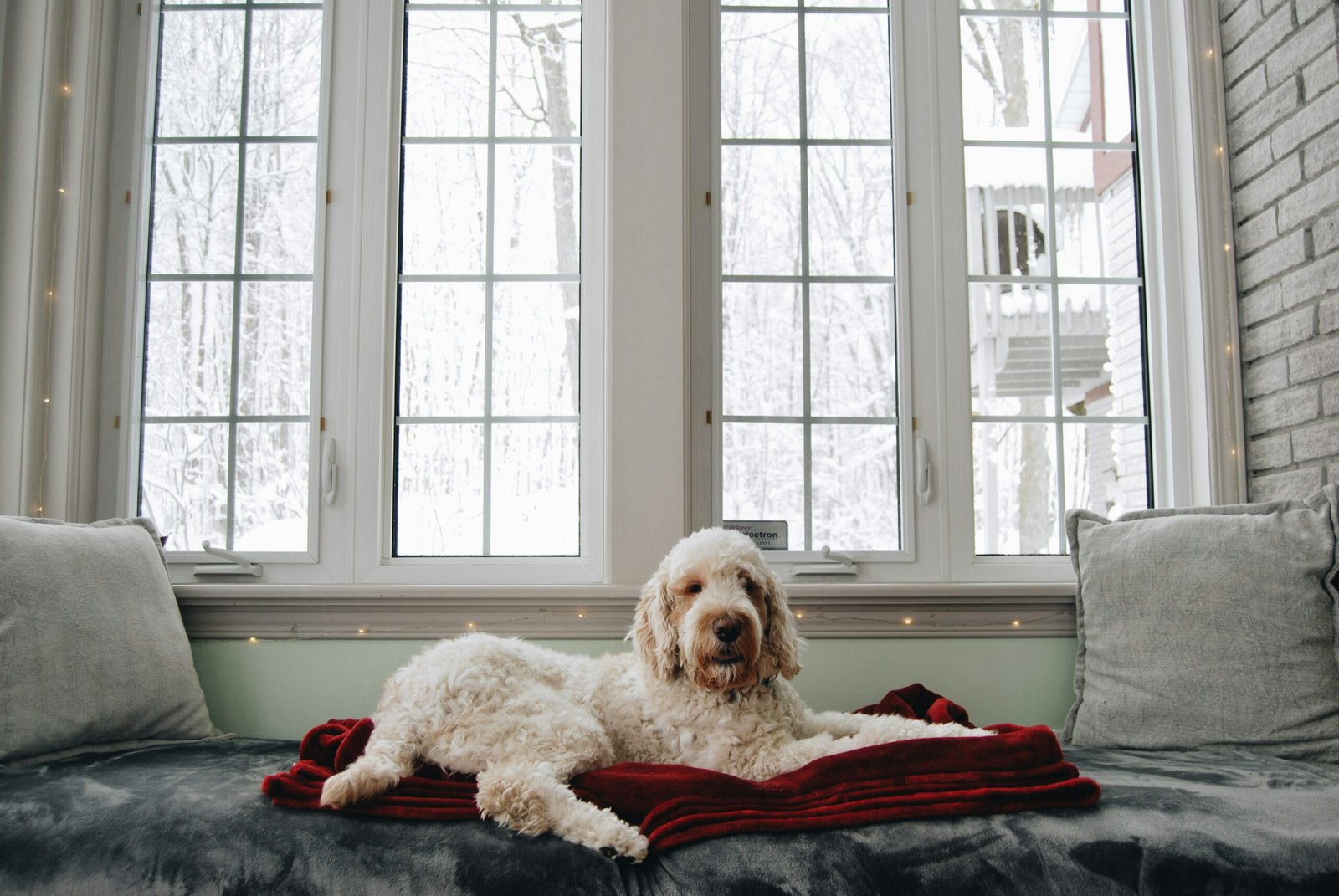
Signs your senior dog is cold are not always as obvious as shivering, and by the time shivering starts, the dog has often been uncomfortable for longer than the owner realizes. An older dog loses heat faster than a younger one and often shows it through small behavioral shifts before any physical sign appears. This guide breaks down what to actually watch for, from the earliest and easiest to miss signals to the signs that mean a dog needs to get warm immediately. For the broader picture of managing cold weather with a senior dog, see the senior dog winter care guide.
Table of Contents
Why Senior Dogs Show Cold Differently Than Younger Dogs
A young, healthy dog usually gives a fairly clear signal when it is cold. It shivers, it wants back inside, and the message is not hard to read. A senior dog’s signals are often quieter and easier to miss, partly because reduced muscle mass and slower circulation mean the body starts struggling with temperature regulation before the dog’s behavior shows anything dramatic. By the time a senior dog visibly shivers, it has frequently already been below a comfortable temperature for some time, sometimes for the better part of a walk or an evening indoors.
There is also a masking effect that catches owners off guard. Many senior dogs already move a little slower, rest a little more, and seem a little less enthusiastic than they did years earlier, simply as part of normal aging. This makes the early signs of being cold, slower movement, more time resting, less enthusiasm for going outside, blend into what already looks like normal senior dog behavior. Learning to separate the two matters, because a dog that is quietly cold every day through a long winter accumulates real discomfort even without a single dramatic moment that would make an owner stop and take notice.
Part of the difficulty is that these two processes, normal aging and cold discomfort, genuinely overlap rather than staying neatly separate. A dog slowing down in general does not stop feeling cold more sharply on top of that slowdown. Treating every winter behavior change as simply age moving forward, without asking whether temperature is part of the picture, means real discomfort can go unaddressed for an entire season.
Early Behavioral Signs
The earliest signs your senior dog is cold usually show up in posture and movement rather than anything more obvious. A dog that tucks its tail more tightly against its body than usual, even indoors, is often responding to a chill rather than anxiety or discomfort from another cause. Similarly, a dog that lifts one paw off cold ground while standing, shifting weight between paws, is showing a very direct physical response to a cold surface, a behavior sometimes called the cold-floor shuffle by owners who notice it repeatedly.
Reluctance is another early marker worth paying attention to. A senior dog that suddenly hesitates at the door before a walk, when it used to go out without any pause, may be responding to a temperature it finds unpleasant rather than simple stubbornness or a bad mood. The same goes for a dog that wants to turn back toward home earlier into a walk than usual, on a walk it has done comfortably many times before. A dog that used to enjoy a slow sniff around the yard but now does its business quickly and heads straight back to the door is showing the same kind of signal in a slightly different form.
None of these signs alone confirms the dog is cold, but a pattern across several of them, especially one that lines up with a recent drop in temperature, is a strong indicator. Owners who keep a rough mental note of how their dog usually behaves on a walk have an easier time noticing when something shifts, since the change is often gradual rather than sudden, appearing over the course of a week or two as temperatures drop rather than overnight.
Seeking Out Heat Sources
A senior dog that is cold will often start actively looking for warmth in ways it did not before. Curling up directly against a radiator or heating vent, choosing to lie in a small patch of sun rather than its usual spot, or refusing to leave a warm room even when it would normally follow the owner elsewhere in the house are all behaviors worth noticing. These changes are easy to write off as the dog simply liking a particular sunny spot, but a consistent pattern of seeking out the warmest available location in the house, especially a new pattern that started around the same time the weather turned, points toward cold rather than random preference.
Sleeping position changes as well. A dog that starts curling into a tighter ball than usual, or one that begins pressing against a person or another pet at night when it previously slept separately, is often doing so partly for shared body heat. A senior dog that suddenly wants to sleep under a blanket, pushing its way underneath rather than lying on top, is showing a fairly direct signal that its current sleeping setup is not warm enough on its own.
This pattern can also show up as a dog abandoning its usual bed entirely in favor of a spot it never used before, a corner near a heating vent, the base of a couch where warm air collects, or even a bathroom with underfloor heating if the house has it. The specific new spot matters less than the fact that the dog has moved away from its established routine spot without an obvious reason, since senior dogs generally do not change well-established habits without a reason driving the shift.
Shivering and Physical Signs
Shivering is the sign most owners recognize immediately, but it is worth understanding what it actually means when it appears. Shivering is the body’s attempt to generate heat through rapid muscle movement, which means by the time a dog is shivering, its normal temperature regulation has already fallen behind what the environment requires. In a senior dog specifically, shivering can appear at a milder temperature than it would in a younger dog, since the underlying capacity to regulate temperature is already reduced, so a temperature that a younger dog tolerates without issue may already be enough to trigger shivering in an older dog.
Beyond shivering, a few other physical signs indicate a dog is struggling with cold. Cold ears or paws, noticeably cooler to the touch than the rest of the body, suggest blood flow is being redirected away from the extremities to preserve core temperature, a normal but telling response. Checking the ears and paw pads directly, rather than relying only on visible behavior, gives a more concrete data point than posture alone.
Tense or hunched posture, with the back arched slightly and the head lowered, often accompanies prolonged cold exposure. A dog that seems stiff on top of its usual joint stiffness, moving even more cautiously than its typical baseline, may be dealing with cold compounding existing joint discomfort rather than a new or separate issue. This overlap between cold-related stiffness and existing arthritis stiffness is common enough that it is worth watching for both together rather than assuming one explanation covers everything the owner is observing.
Behavioral Changes That Look Like Something Else
Some signs of a cold senior dog do not look related to temperature at all on the surface, which is exactly why they get missed most often. A senior dog that becomes unusually clingy during cold weather specifically, following the owner from room to room more than it normally would, may be seeking proximity partly for warmth rather than purely for attention or anxiety. Decreased appetite during particularly cold stretches sometimes ties back to the body prioritizing energy for temperature regulation over digestion, though a drop in appetite always deserves attention regardless of the suspected cause, since it can also point to something unrelated to temperature entirely.
Irritability is another sign worth watching for. A dog that is normally tolerant but becomes snappish or withdrawn during cold weather specifically, compared to its usual temperament, may be uncomfortable in a way it cannot otherwise communicate. This does not mean every mood change in winter is about temperature, but when it appears alongside other signs on this list and lines up with genuinely cold conditions, it is worth taking as part of the same pattern rather than dismissing as unrelated.
A less obvious version of this shows up as restlessness rather than lethargy. Some senior dogs respond to feeling cold not by settling down but by pacing, repositioning repeatedly, or getting up and lying back down several times in a short period, unable to find a spot that actually feels comfortable. This looks more like anxiety on the surface than a temperature problem, which is exactly why it gets misread so often during winter months specifically.
When Cold Signs Become an Emergency
Most of the signs covered so far call for a warmer setup, not a trip to the vet, but a smaller set of signs cross into genuine urgency and should not be treated the same way as ordinary cold discomfort. Severe, uncontrollable shivering that does not stop once the dog is brought into a warm environment is one such sign. Confusion, unusual clumsiness, or a stumbling gait that was not present before going outside can indicate the body’s core temperature has dropped further than shivering alone can compensate for.
Extremely cold skin, particularly around the ears, tail, or paws, combined with pale or grey-tinged gums, are signs that point toward hypothermia rather than ordinary cold discomfort, and this requires immediate veterinary attention rather than simply warming the dog at home and waiting to see improvement. A senior dog is at higher risk of this progression than a younger dog specifically because its body compensates less effectively and for a shorter window before more serious symptoms appear. Any of these signs, especially in combination, should be treated as urgent rather than something to monitor overnight, and a dog showing them should be warmed gradually rather than with direct high heat, while veterinary care is arranged.
What to Do Once You Notice the Signs
Recognizing these signs is only useful if it leads to an actual change in routine. Once early signs appear, the most direct response is warming the dog’s immediate environment and reviewing the setup that has been in place, the bedding, the coat, the placement of the resting area relative to drafts. For a full breakdown of practical fixes, from choosing the right coat to building a warmer sleeping setup, see the guide on how to keep your senior dog warm, which covers exactly what to change once these signs show up.
Tracking when signs appear also helps refine the response over time. A dog that only shows early signs on the coldest days of the season may need a seasonal adjustment rather than a permanent one, while a dog that shows signs even on mild winter days likely needs a more substantial, ongoing change to its daily setup. Paying attention to the pattern, not just reacting to a single cold evening, leads to a setup that actually holds up through the full season rather than one that gets adjusted reactively every few weeks. Keeping a rough note of which signs appeared and on which kind of day, whether it was a brief outdoor walk or a longer cold spell indoors, builds a clearer picture over time than reacting to each individual moment in isolation.
If a coat is not yet part of your dog’s routine, start there. This guide to winter coats for senior dogs covers what actually holds up against real cold rather than just looking warm.
FAQ
What is usually the very first sign that a senior dog is cold?
Subtle behavioral changes typically appear before any physical sign, particularly tail tucking, paw lifting while standing, and hesitating before going outside on a walk the dog normally handles without pause.
Is shivering always a sign of being cold, or can it mean something else?
Shivering can also indicate pain, anxiety, or fever in some dogs, so it should be considered alongside other signs and the current weather conditions rather than assumed to always mean cold on its own.
How quickly can a senior dog become dangerously cold?
This varies by dog, coat type, and conditions, but a senior dog with a thin coat or existing health issues can progress from mild discomfort to a concerning state faster than a younger, healthier dog, sometimes within a relatively short period of continuous cold exposure.
Should I be more worried if my senior dog shows these signs indoors rather than outdoors?
Yes, in most cases. A dog showing cold signs indoors, in a heated home, suggests the current setup, bedding, room placement, or general warmth level, is not adequate, which is a different and often more persistent problem than temporary discomfort during a single outdoor walk.
Can cold signs in a senior dog be confused with pain from arthritis?
Yes, and the two often overlap directly, since cold weather commonly worsens arthritis symptoms. A dog showing both stiffness and cold-related signs at the same time may need attention to both joint comfort and warmth rather than addressing one and assuming it covers the other.
Final Thoughts
Signs your senior dog is cold rarely start with something as obvious as shivering. They start quietly, in posture, in where the dog chooses to lie down, in small hesitations before a walk, long before anything looks urgent. Learning to recognize these earlier signals, rather than waiting for a clear and dramatic one, lets you adjust a senior dog’s environment before real discomfort sets in, and catching the rare signs that do require urgent care makes the difference in a genuinely serious situation.


Pingback: Senior Dog Winter Care: A Complete Guide - seniordog-care
Pingback: How to Keep Your Senior Dog Warm This Winter - seniordog-care
Pingback: Best Winter Coats for Senior Dogs (2026) - seniordog-care