
Learning how to train your senior dog to use a ramp or stairs is one of the kinder, more practical things you can do once jumping has become genuinely difficult rather than simply less enthusiastic. As dogs age, jumping on and off beds, couches, or into cars puts real strain on joints that already have less cartilage cushioning than they had a few years earlier. What was once a playful hop can quietly turn into a genuine risk of injury, and many owners only notice the shift once their dog starts hesitating at the bottom of the stairs or refusing the car altogether.
Owning a ramp or a set of stairs is only half the solution. Without patient, structured training, even a genuinely well-chosen ramp can seem intimidating or confusing to a dog that has never encountered a sloped or stepped surface treated as something to trust rather than avoid. The goal is not simply physical safety. It is emotional comfort, since a dog that is afraid of the tool meant to help it will avoid using it, which defeats the purpose entirely.
This guide covers why this training matters specifically for an ageing dog, how to introduce a ramp or stairs step by step, the mistakes that most commonly slow or derail progress, and how to maintain confidence once your dog has learned to use either tool. For the direct comparison between the two options before you choose, our guide on dog ramp versus dog stairs covers which tends to suit which situation. For specific ramp recommendations, our guide to the best dog ramps for senior dogs covers six options by size and use case.
This post may contain affiliate links. If you buy through these links, I may earn a small commission at no extra cost to you. As an Amazon Associate, I earn from qualifying purchases.
Table of Contents
Why This Training Matters More for a Senior Dog
A moment of hesitation before jumping onto the couch or climbing into the car is not simply a sign of age. It is a sign of discomfort, uncertainty, or genuine pain, and for a senior dog specifically, that hesitation often reflects joint stiffness, reduced muscle mass, or early arthritis that has been building quietly for months before becoming visible in this way.
A ramp or stairs protects a senior dog’s joints by replacing a sudden jarring jump with a controlled, gradual motion. Instead of leaping onto a hard surface with all the impact concentrated in that single landing, your dog walks up naturally, distributing effort across several smaller movements rather than one large one. Over time, this reduces the risk of accelerating existing arthritis and prevents the kind of acute injury a bad landing can cause on a joint that is already compromised.
There is also a psychological dimension that matters more for an older dog than a younger one. A senior dog that has slipped or struggled once often develops a genuine, lasting wariness around the exact surface or motion involved, sometimes generalising that fear to jumping and climbing more broadly. Left unaddressed, this can lead to a dog avoiding the couch, the bed, or the car entirely, not because it no longer wants to be there, but because the anticipated discomfort or fear of falling has become stronger than the desire to reach that spot. Training your dog to trust a ramp or stairs, introduced correctly, interrupts this avoidance cycle before it becomes entrenched, restoring something genuinely close to independence rather than simply solving a physical problem in isolation.
Choosing the Right Ramp or Stairs Before You Start Training
The training process works considerably better when the tool itself genuinely fits your dog’s size, confidence level, and the specific height it needs to manage, since even excellent training technique cannot compensate for a ramp that is too steep or stairs that are too tall for your dog’s actual capability.
Match the incline or step height to your dog specifically. A ramp that is too steep will make even a confident dog nervous, while stairs with steps too tall or too far apart force a stretch that can strain already sensitive joints. Measure the actual height your dog needs to reach, your bed, the car, the couch, before choosing either option, rather than assuming a standard size will work.
Prioritise a genuinely non-slip surface. Confidence is built or destroyed largely through the paws’ first few experiences on a new surface. A smooth, slippery ramp or stair tread undermines training before it properly begins, since one slip early on can set back weeks of otherwise careful progress. Textured, carpeted, or rubberised surfaces give a senior dog’s paws something reliable to grip.
Consider portability if you need the tool in more than one place. A foldable or lightweight design matters if you are moving a ramp between the car and the house regularly, while a sturdier, fixed option makes more sense for a single, permanent spot such as a bed your dog uses every night.
Consider the environment it will actually be used in. Indoor options can prioritise softer padding and a look that fits your home, while anything used outdoors, at a doorstep or in a garden, needs to handle moisture and rough use without becoming slippery or unstable over time. For specific product options across these considerations, our guide to the best dog ramps for senior dogs covers the strongest choices by size, incline, and use case, and our guide on dog ramp versus dog stairs helps you decide which format suits your specific situation before you buy either.
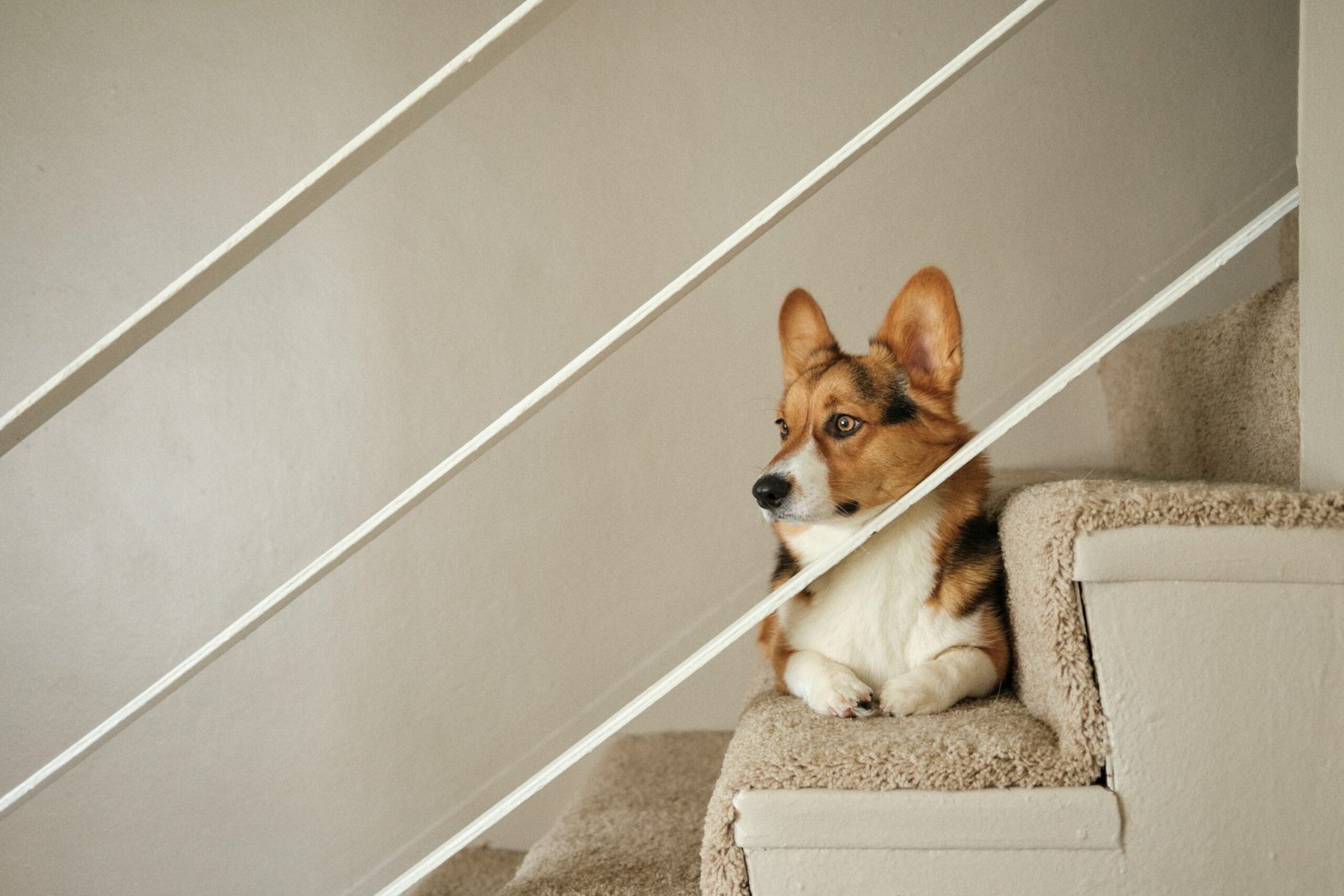
Step-by-Step Training Guide
Teaching a senior dog to use a ramp or stairs safely takes patience and consistency more than any particular technique, and the process genuinely works best when every single step feels like a positive experience rather than something being pushed through.
Step 1: Introduce the tool flat on the ground, with zero incline. Place the ramp or the bottom step flat and let your dog sniff, walk around, and investigate it entirely on their own terms, without any pressure to actually use it yet. Offer calm praise and a few treats simply for approaching or standing near it. If the ramp is portable, keep it perfectly steady during this stage, since any early wobble can undermine the trust you are trying to build before training has properly started.
Step 2: Reward every small step with treats and praise. Encourage your dog to place one paw, then a full step, onto the flat surface using treats or a favourite toy as motivation. Reward every bit of genuine progress rather than waiting for a complete, confident crossing. Some senior dogs need several separate sessions just to feel comfortable standing on the surface, and that pace is entirely normal rather than a sign something is going wrong.
Step 3: Add only a very gentle angle once the flat surface feels routine. Once your dog crosses the flat ramp comfortably and without hesitation, raise one end slightly, keeping the incline low enough that the change is barely noticeable at first. If working with stairs, introduce just one or two steps before adding more height, moving in genuinely small increments rather than large jumps in difficulty.
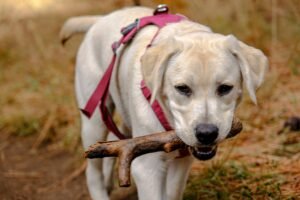
Step 4: Increase height gradually across multiple sessions, not one. Raise the ramp a little further each session until it reaches the full height needed for the couch, bed, or car, always moving at your dog’s own pace rather than a schedule you have set for yourself. Forcing progress faster than your dog is ready for risks creating a lasting fear response that takes far longer to undo than the time saved by rushing. A support harness with a rear handle can add useful physical stability during this stage for a dog managing significant joint weakness, giving you a gentle way to steady them without fully lifting their weight.
Step 5: Practise briefly every day and end on a positive note. Short daily sessions, generally five to ten minutes, build confidence more reliably than longer, less frequent ones that risk becoming stressful for a dog already uncertain about the process. Always end each session on a success, even a small one, with genuine praise and a reward, so the last thing your dog experiences that day is a positive association with the tool rather than frustration.
With consistent, patient practice, most senior dogs begin to associate the ramp or stairs with comfort and reward rather than uncertainty, and what started as a hesitant single paw eventually becomes a confident, unprompted stride.
Common Mistakes to Avoid
Even with a well-chosen ramp or set of stairs, a handful of common errors can slow progress considerably or, in some cases, create a fear response that is considerably harder to undo than the training itself would have been done correctly the first time.
Forcing progress faster than your dog is ready for. Expecting a senior dog to master a ramp or stairs within one or two sessions, or physically lifting them onto it before they have chosen to try it themselves, tends to create anxiety and active resistance rather than confidence. Letting your dog set the pace, even when that pace feels frustratingly slow, produces far more reliable long-term results.
Skipping rewards for small, incomplete successes. Dogs, and particularly older dogs already uncertain about a new challenge, respond strongly to consistent positive reinforcement. Ignoring a single tentative step or a moment of simply sniffing the ramp without fear, because it does not yet count as real progress, slows the entire process by failing to reinforce the behaviour you actually want to encourage.
Using a ramp or stairs with genuinely poor traction. A slippery surface undermines confidence faster than almost anything else in this process, and a single bad slip can create a lasting aversion that takes far longer to resolve than the traction problem itself would have taken to fix beforehand. Check grip before every early session, and add a removable anti-skid mat if the surface ever feels uncertain underfoot.
Ignoring visible signs of fear or reluctance. Hesitation, shaking, or backing away are your dog’s way of communicating that the current step is too much, too soon. Pushing through this signal rather than stepping back to an easier stage risks creating a fear response that generalises well beyond the ramp itself, sometimes extending to stairs or car access more broadly.
Training inconsistently rather than in a steady rhythm. Skipping days or practising only sporadically confuses the learning process and slows overall progress considerably. Short, consistent daily sessions build lasting confidence far more reliably than occasional longer ones, particularly for a senior dog whose memory and adaptability may already be somewhat reduced compared with a younger dog’s.
Maintaining Confidence Over Time
Training your dog to use a ramp or stairs successfully is only the beginning. Keeping that confidence solid over the following months requires a small amount of ongoing attention rather than assuming the behaviour, once learned, will simply persist on its own indefinitely.
Keep practising regularly, even after your dog has clearly mastered the tool. Continued daily use, a few trips to the bed, the car, or the couch, keeps the behaviour genuinely automatic and reinforces the muscle memory and confidence built during training, rather than letting the skill quietly fade from disuse.
Keep the ramp or stairs somewhere genuinely accessible. A tool stored away in a cupboard between uses is used inconsistently by definition, and inconsistent use slows the transition from a trained behaviour to a truly automatic habit. A visible, stable, always-available setup encourages the natural, repeated use that cements confidence long term.
Maintain the surface itself. Dirt, moisture, or general wear can quietly reduce traction over time, and a surface that has become less grippy than it was during training can cause a slip that undoes months of careful confidence-building in a single moment. Check and clean the surface periodically, and replace anything showing genuine signs of wear rather than waiting for a problem to occur.
Continue reinforcing success, even well after the initial training period. A brief word of praise each time your dog uses the ramp or stairs, long after the formal training sessions have ended, helps prevent the quiet regression that can happen when a previously reinforced behaviour stops receiving any acknowledgement at all.
FAQ
How long does it take to train a senior dog to use a ramp?
Most dogs learn within a few days to a few weeks, depending on their confidence level, existing joint discomfort, and how consistently you practise. Short, daily sessions of five to ten minutes tend to produce the most reliable, lasting progress.
What if my senior dog seems afraid of the ramp or stairs?
Fear is genuinely common, particularly in older dogs or those recovering from an injury or a previous fall. Start completely flat, let your dog investigate at their own pace, and reward every small, tentative step rather than waiting for full confidence before offering praise.
Are ramps generally better than stairs for older dogs?
Often, yes, particularly for a dog with arthritis or hip dysplasia, since a ramp’s continuous incline distributes effort more evenly than the discrete steps of stairs. Our guide on dog ramp versus dog stairs covers when stairs might still be the better practical choice for your specific situation.
How steep should a ramp be for training purposes?
A gentle incline, generally between 18 and 25 degrees, works well for most senior dogs. Starting even lower than the final target incline and increasing gradually across several sessions makes the transition considerably easier than introducing the full angle immediately.
Can I use a harness during ramp or stairs training?
Yes, and for a senior dog with significant joint weakness, a support harness with a rear handle can provide genuine physical steadiness during the early stages, letting you assist without fully lifting your dog’s weight while their own confidence and balance develop.
Final Thoughts
Teaching a senior dog to use a ramp or stairs safely is not simply a matter of convenience. It genuinely protects ageing joints, restores a sense of independence, and prevents the quiet avoidance cycle that develops when jumping becomes something to fear rather than something manageable.
Patience and consistency matter more here than any specific technique. Start slowly, celebrate small, incremental progress rather than waiting for full mastery, and always prioritise your dog’s comfort and confidence over the speed of the process itself. With the right tool matched to your dog’s actual size and needs, and a little genuine daily practice, most senior dogs move from hesitant uncertainty to confident, independent use, without the fear or physical strain that originally held them back.
Sources
https://vcahospitals.com/know-your-pet/arthritis-in-dogs
https://www.akc.org/expert-advice/health/senior-dog-mobility/
https://www.petmd.com/dog/general-health/helping-senior-dogs-stay-mobile
https://www.avma.org/resources/pet-owners/petcare/arthritis-and-joint-pain-dogs
Pingback: Best Dog Ramps for Senior Dogs (Top 6) - seniordog-care
Pingback: Best Orthopedic Dog Beds for Senior Dogs & Large Breeds (2025 Review)