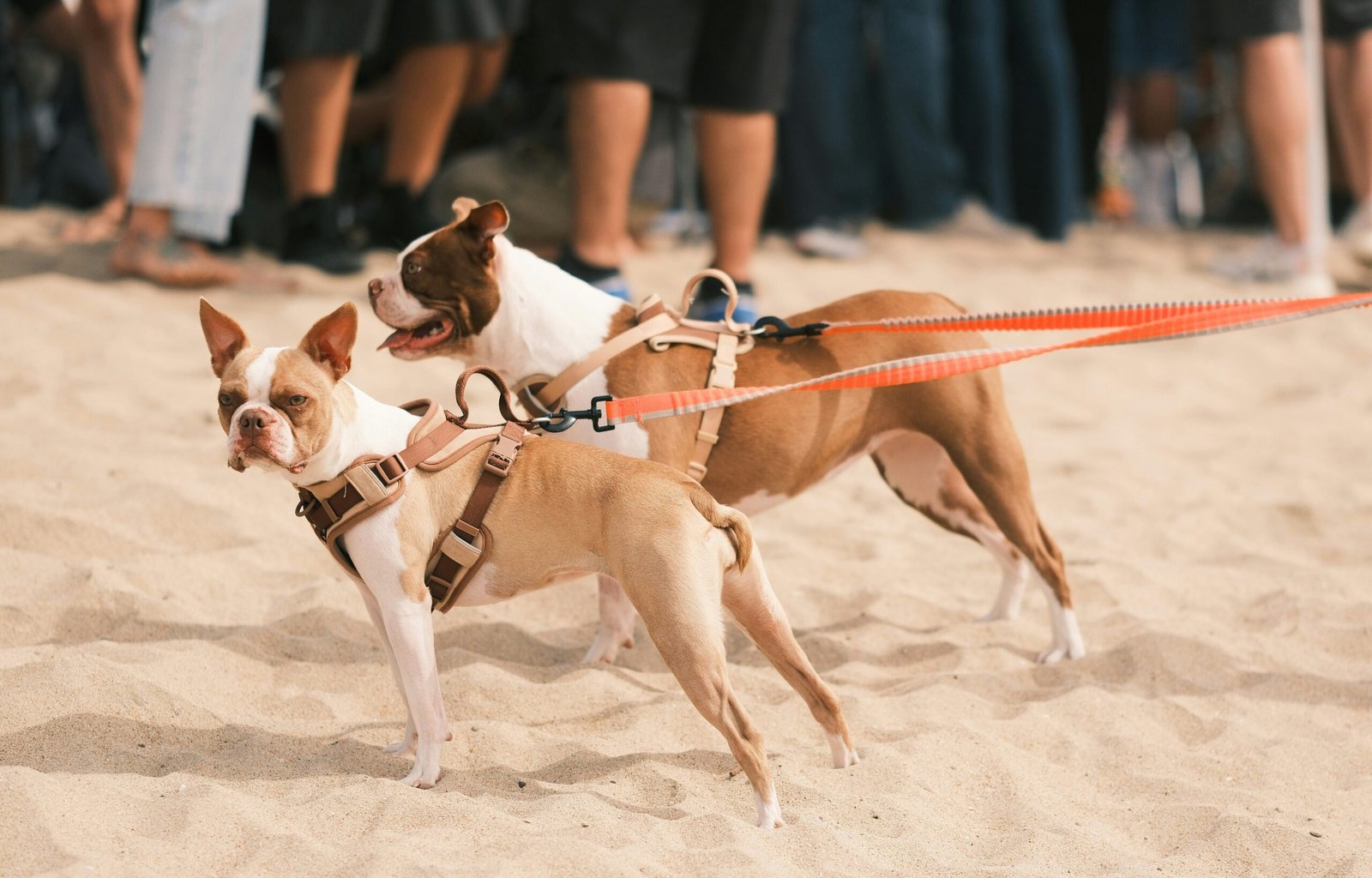
Knowing how to fit a support harness correctly can make a genuine difference for a senior dog’s comfort, safety, and mobility, and it matters considerably more at this stage of life than it would for a younger, healthier dog. As dogs age, joint pain, arthritis, or hip dysplasia can make everyday movements, walking, climbing stairs, getting into the car, considerably more difficult. A well-fitted support harness reduces strain, provides genuine stability, and lets you assist your dog gently and safely rather than grabbing at a collar or pulling on an already painful area.
Finding the right harness is only half the job, and it is arguably the easier half. The real work is in the fitting itself, snug enough to offer genuine support, but not so tight that it causes discomfort or restricts movement in a body that already has less tolerance for either extreme than it did five years ago. A senior dog’s thinner skin, reduced muscle mass, and often heightened sensitivity around specific joints mean that a fitting mistake which a younger dog might simply shrug off can cause real, lasting discomfort for an older one.
This guide walks through measuring your dog correctly, positioning the harness, and checking for a proper fit before and during movement, with specific attention to what changes once the dog wearing the harness is a senior rather than a young adult. For specific harness recommendations organised by mobility need, our guide to the best senior dog harness covers six options matched to exactly that.
This post may contain affiliate links. If you buy through these links, I may earn a small commission at no extra cost to you. As an Amazon Associate, I earn from qualifying purchases.
Table of Contents
Why Proper Fit Matters More for a Senior Dog
A support harness is more than an accessory. For many senior dogs, it is genuinely a lifeline, and the right fit is what determines whether it actually functions as one rather than becoming yet another source of daily discomfort layered on top of existing joint pain.
A well-fitted harness evenly distributes a dog’s weight, reducing pressure on the hips, spine, and joints. This matters more for a senior dog because cartilage that has already thinned with age has less natural capacity to absorb uneven or concentrated pressure than it did in earlier years. A harness that fits imperfectly on a young, healthy dog might simply be a minor annoyance. The same imperfect fit on a senior dog with early arthritis can actively work against everything else being done to manage that dog’s comfort, whether that is joint supplements, a proper diet, or an orthopedic bed at home.
A poor fit has consequences that compound with age in both directions. A harness that is too loose can cause chafing against skin that has become thinner and more delicate over the years, or allow a dog with reduced strength to slip out entirely at exactly the moment support was needed most. One that is too tight restricts movement and causes discomfort around the chest and shoulders, and a senior dog’s already-limited patience for anything uncomfortable means this often shows up as outright resistance to wearing the harness at all, rather than simple tolerance. Over time, either failure mode can worsen existing mobility issues or create entirely new pressure points on a body that has less room to absorb the mistake.
Step-by-Step: How to Fit a Support Harness for a Senior Dog
Step 1: Measure your dog accurately before purchasing or adjusting anything. Measure chest girth around the widest part of the ribcage, just behind the front legs. Measure the neck at the base, where a collar naturally rests. Note your dog’s current weight as well, since many harnesses are size-graded by weight range, and a senior dog’s weight can shift meaningfully over a year through muscle loss even if the number on the scale looks similar. Always check the specific manufacturer’s sizing chart rather than assuming your dog’s usual size, since every brand measures slightly differently and a senior dog’s changing body shape makes this check more important than it was in earlier years.
Step 2: Loosen all straps before putting the harness on. When you first take a harness out of the box, loosen every strap fully. This makes it considerably easier to slide over your dog’s head or around their body without resistance, and for an anxious or arthritic senior dog, this small step keeps the whole process calmer and avoids the sudden pulling or twisting motion that a tight, unadjusted harness would otherwise require.
Step 3: Position the harness correctly for its specific type. Front-lift harnesses should rest comfortably around the chest and shoulders, never pressing into the throat, a particular concern for a senior dog that may already have reduced neck flexibility. Rear-lift harnesses should cradle the hips without pinching or sagging, especially important for a dog with hip dysplasia where the surrounding tissue is already sensitive. Full-body harnesses should distribute weight evenly across both sections rather than concentrating it on whichever end feels easier to adjust. Check that no straps are twisted or bunched, and that padding covers every pressure point, since a senior dog’s thinner skin has less natural cushioning to compensate for a strap sitting in the wrong place.
Step 4: Adjust gradually for a snug but comfortable fit. Tighten each strap incrementally rather than all at once, watching your dog’s reaction at each stage rather than fitting the harness as if to a diagram. You are aiming for snug enough that the harness does not slip, but loose enough that you can slide two fingers between the harness and your dog’s fur. Check specifically for pinching around the armpits, shoulders, or hips, the three areas where a senior dog is most likely to already carry some sensitivity. If your dog shows discomfort or resists walking once the harness is on, loosen slightly and readjust rather than assuming the resistance is simply behavioural or that the dog will adjust to it over time.
Step 5: Test the fit during actual movement, not just while standing still. Take your dog for a short walk indoors or on grass and watch how the harness moves with their body, since a senior dog’s altered gait from joint pain or muscle loss can interact with the harness differently than it would on a younger dog standing for a fitting check. It should stay secure without shifting or rubbing against any point. If you notice slipping or pulling in any direction, readjust again before relying on the harness for a longer walk or an actual lift up stairs, where a poor fit under real load matters considerably more than it does during a calm indoor test.
Every senior dog’s shape is different, shaped by years of muscle loss, weight changes, and whatever joint conditions have developed along the way, and small adjustments often make a meaningful difference to comfort and support. For the fuller case on why getting this right matters as dogs age specifically, our guide on why good support harnesses help ageing dogs covers that in more depth.
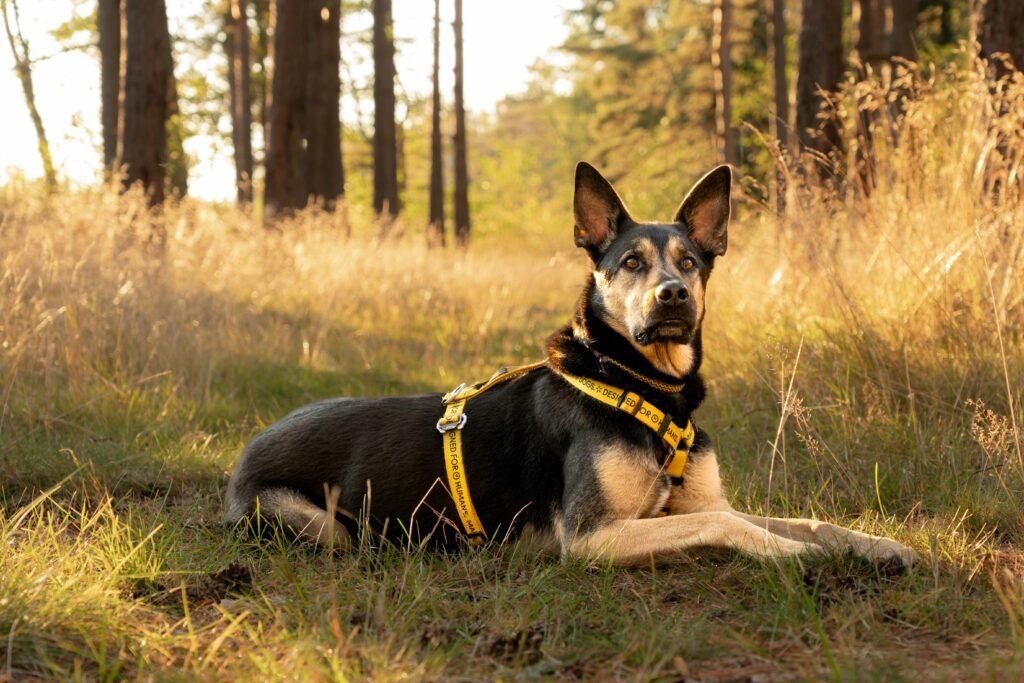
Common Fitting Mistakes Owners Make With Senior Dogs Specifically
Fitting the harness to an old measurement. A senior dog’s body changes meaningfully over a year, through muscle loss, weight gain from reduced activity, or occasional bloating, and a harness fitted correctly a year ago may no longer sit correctly today even without a dramatic change in overall weight.
Assuming resistance means stubbornness rather than discomfort. A senior dog that suddenly resists a harness it previously tolerated well is very often responding to a genuine fit problem, a strap that has loosened, a pressure point that has become more sensitive, or a joint that has grown more painful since the harness was last checked, rather than simply being difficult.
Leaving the harness on too long between checks. Extended wear that a younger dog’s skin would tolerate without issue can cause chafing or pressure sores more easily on a senior dog’s thinner, less resilient skin, particularly in warm weather or on longer outings.
Ignoring gradual changes in gait. As arthritis or muscle loss progresses, the way a senior dog actually moves within the harness shifts too, and a fit that worked well for how the dog moved six months ago may not account for a new limp, a shortened stride, or a new tendency to favour one side.
Signs the Harness Needs Readjusting as Your Senior Dog Ages
Watch for new or worsening redness, hair loss, or visible irritation anywhere the harness makes contact, all signs that the fit no longer matches your dog’s current body shape or skin sensitivity. Watch for a dog that has become noticeably more reluctant to have the harness put on, or that shows signs of discomfort partway through a walk that were not present before. Watch for straps that now sit noticeably looser or tighter than they did at the last check without any deliberate adjustment on your part, often the first sign of a real change in weight or muscle mass. And watch for any new hesitation or altered gait specifically while wearing the harness that does not appear when the dog moves without it, which can indicate the harness itself has started working against your dog’s current mobility pattern rather than supporting it.
Any of these signs is a reasonable prompt to remeasure and refit rather than assuming the original fit still applies, since a senior dog’s body rarely stays static for long, and a harness that quietly stops fitting well is easy to miss until the discomfort has already been building for weeks.
FAQ
How tight should a support harness be on a senior dog?
Snug but not restrictive. You should be able to slide two fingers between the harness and your dog’s body. If it is too tight, it can cause chafing or restrict breathing, both more likely to cause lasting discomfort on a senior dog’s more sensitive skin.
Can my senior dog wear a support harness all day?
It is best to use the harness only when needed, for walks, stairs, or lifting support, and to remove it between uses. Extended wear can cause skin irritation or pressure points more readily on an older dog’s thinner skin than it would on a younger one.
What if my senior dog resists wearing the harness?
Introduce it gradually. Let your dog smell and inspect it first, then use treats and calm encouragement while putting it on. Confirm it is not too tight or rubbing anywhere, since discomfort, not stubbornness, is the most common cause of resistance in an older dog specifically.
How often should I check or adjust the fit for a senior dog?
Check every few weeks rather than assuming the fit stays constant, and immediately if your dog gains or loses weight. Senior dogs change shape more readily than younger ones through muscle loss and shifting activity levels, and straps can loosen over time simply through regular use.
What type of harness is best for a senior dog specifically?
For most senior dogs, a full-body or rear-lift harness offers the strongest support, relieving pressure from the joints and making it easier to assist your dog without straining your own back or hips. Our guide to the best senior dog harness covers which type fits which specific mobility need.
Final Thoughts
Fitting a support harness correctly makes a genuine difference to a senior dog’s comfort, mobility, and confidence, and it deserves more ongoing attention than a one-time setup. The right fit ensures your dog gets the help they need without discomfort, slipping, or unnecessary strain, and the right fit today is not guaranteed to remain the right fit in six months, given how much a senior dog’s body can change over that time.
Whether your dog is recovering from an injury, managing arthritis, or simply needs a bit of extra lift, a properly fitted and periodically rechecked harness restores a genuine sense of independence and keeps daily movement safe. Take the time to measure, adjust, and test the fit properly now, and revisit that fit regularly as your dog continues to age, since a few extra minutes spent checking can add months of easier, more confident movement for your dog.



Pingback: Best Support Harness For Senior Dogs (best of 2025)